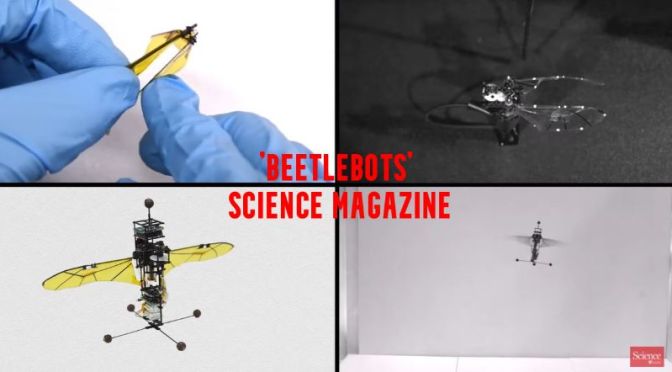
Beetles are virtually crash resistant. Their wings fold up when they collide with objects, and then quickly spring back into place. That helps the insects stay on course and fly straight, rather than spiral to the ground, while exerting little energy. Researchers have now built a winged robot that mimics this capability.
The “beetlebot” keeps flying, even after it crashes into poles, researchers report this month in Science. The energy-efficient robot could even navigate narrow environments, such as collapsed buildings, to aid rescue missions, the team says.
The field of psychology underwent a replication crisis and saw a sea change in scientific and publishing practices, could ecology be next? News Intern Cathleen O’Grady joins host Sarah Crespi to talk about the launch of a new society for ecologists looking to make the field more rigorous.
Sarah also talks with Andrew Storfer, a professor in the School of Biological Sciences at Washington State University, Pullman, about the fate of the Tasmanian devil. Since the end of the last century, these carnivorous marsupials have been decimated by a transmissible facial tumor. Now, it looks like—despite many predictions of extinction—the devils may be turning a corner.
How water chemistry is shifting researchers’ thoughts on where life might have arisen, and a new model to tackle climate change equitably and economically.
In this episode:
00:46 A shallow start to life on Earth?
It’s long been thought that life on Earth first appeared in the oceans. However, the chemical complexities involved in creating biopolymers in water has led some scientists to speculate that shallow pools on land were actually the most likely location for early life.
The COVID-19 pandemic has massively shifted the scientific landscape, changing research and funding priorities across the world. While this shift was necessary for the development of things like vaccines, there are concerns that the ‘covidization’ of research could have long-term impacts on other areas of research.
The Hayabusa2 mission successfully delivers a tiny cargo of asteroid material back to Earth, and a team in China claims to have made the first definitive demonstration of computational ‘quantum advantage’.
Limiting carbon emissions is essential to tackling climate change. However, working out how to do this in a way that is fair to nations worldwide is notoriously difficult. Now, researchers have developed a model that gives some surprising insights in how to equitably limit carbon.
Imagine a robot trained to think, respond, and behave using you as a model. Now imagine it assuming one of your roles in life, at home or perhaps at work. Would you trust it to do the right thing in a morally fraught situation?
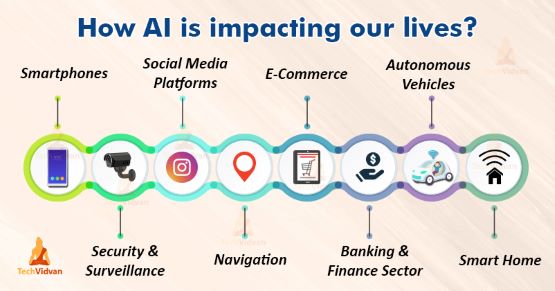
That’s a question worth pondering as artificial intelligence increasingly becomes part of our everyday lives, from helping us navigate city streets to selecting a movie or song we might enjoy — services that have gotten more use in this era of social distancing. It’s playing an even larger cultural role with its use in systems for elections, policing, and health care.
Staff Writer Meredith Wadman and host Sarah Crespi discuss what to expect from the two messenger RNA–based vaccines against COVID-19 that have recently released encouraging results from their phase III trials and the short-term side effects some recipients might see on the day of injection.
Sarah also talks with researcher Xing Chen, a project co-leader and postdoctoral scientist at the Netherlands Institute for Neuroscience, about using brain stimulation to restore vision. Researchers have known for about 70 years that electrical stimulation at certain points in the brain can lead to the appearance of a phosphene—a spot of light that appears not because there’s light there, but because of some other stimulation, like pressing on the eyeball. If electrical stimulation can make a little light appear, how about many lights? Can we think about phosphenes as pixels and draw a picture for the brain? How about a moving picture?
This week, world leaders are announcing a series of pledges to protect and sustainably use the world’s oceans. The pledges form the crowning achievement of the ‘High Level Panel for a Sustainable Ocean Economy’ a multinational group formed back in 2018.
The panel has sought to bring together research, published in a number of so-called ‘blue papers’ and special reports by scientists, policy- and legal-experts from around the world – all with the ear of 14 participating world leaders.
Erna Solberg, the prime minister of Norway, co-led the Panel. In this podcast, she speaks with Springer Nature’s editor-in-chief Philip Campbell about the panel’s work.