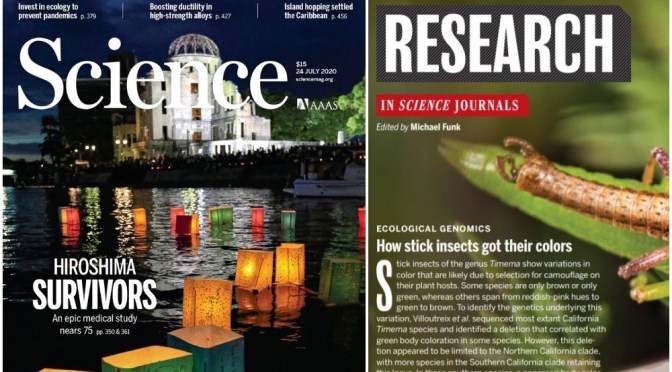

 Contributing Correspondent Dennis Normile talks about a long-term study involving the survivors of the Hiroshima and Nagasaki bombings. Seventy-five years after the United States dropped nuclear bombs on the two cities in Japan, survivors are still helping scientists learn about the effects of radiation exposure.
Also this week, Sarah talks with Winnie Lau, senior manager for preventing ocean plastics at Pew Charitable Trusts about her group’s paper about what it would take to seriously fight the flow of plastics into the environment. This week’s episode was produced with help from Podigy.
 NPR News reports on Federal Agents being sent to states to stem violent crime, Covid-19 and the possibilities for ‘natural herd immunity, federal funding for public lands and more.
 When did people arrive in the Americas? New evidence stokes debate. New evidence may push back the date on human arrival to the Americas, and an examination of science’s flaws.
In this episode:
00:59 Ancient Americans
Two papers suggest that humans were present in the Americas thousands of years before many people have thought. We examine the evidence. Research Article: Ardelean et al.; Research Article: Becerra-Valdivia and Higham; News and Views: Evidence grows that peopling of the Americas began more than 20,000 years ago
10:44 Coronapod
We discuss the latest results from vaccine trials around the world, and controversy in the US as COVID-19 data collection moves out of the CDC. News: Coronavirus vaccines leap through safety trials — but which will work is anybody’s guess
24:38 Research Highlights
How being green makes things easy for some frogs, and how waves will be affected by climate change. Research Highlight: How frogs became green — again, and again, and again; Research Highlight: Extreme Arctic waves set to hit new heights
27:11 How can science improve?
A new book highlights some of the flaws of how science is done. We caught up with the author to find out his thoughts on how science can be cleaned up. Books and Arts: Fraud, bias, negligence and hype in the lab — a rogues’ gallery
35:54 Briefing Chat
We take a look at some highlights from the Nature Briefing. This time we discuss a puzzling new insight into the expansion of the Universe, and an update to Plan S that will allow open-access research to be published in any journal. Nature News: Mystery over Universe’s expansion deepens with fresh data; Nature News: Open-access Plan S to allow publishing in any journal
 Many school districts are still debating whether to go with a virtual, in classroom or hybrid education model for the year, but some families are taking their children’s education into their own hands. Neighbors are banding together to form schooling “pods” with private instructors as a way to secure child care and make sure their kids don’t fall behind in school.
But this trend could deepen the educational divide along racial and class lines.
Guests: Axios’ Caitlin Owens, Margaret Talev, and Kendall Baker.
The U.K. and China made big news with promising results in vaccine development for the coronavirus — the US, Russia and at least five other countries are also working on possible vaccines.
But for a vaccine to work effectively, these countries should be working together. Instead, they’re clashing. Countries like the US and Canada have even accused Russia of stealing our vaccine research. Plus:
Guests: Axios’ Dave Lawler, Stef Kight, and Sara Fischer
NPR’s Tamara Keith and Amy Walter of the Cook Political Report join Judy Woodruff to discuss the latest political news, including what President Trump is saying about the coronavirus and competitor Joe Biden, whether those messages are resonating with voters and what pandemic legislation to expect from Congress before the school year begins.
 Lawmakers are back on the hill negotiating the next trillion dollar relief package for the struggling economy. Meanwhile, COVID-19 cases surge in 40 states. Finally, an update on the clash between protesters and police in Portland, Oregon.
 A selection of three essential articles read aloud from the latest issue of The Economist. This week, Huawei and the tech cold war; (8:55) millions of young minds are going to waste; (16:10) and a new material helps transistors become vanishingly small.
 The Economist reviews the world’s top headlines including Blackrock’s earnings, new Covid-19 cases rise in America and other countries, airline industry updates and more.