There can be few applications of digital technology more worthwhile than saving lives, but integrating digital technology into healthcare systems is uniquely complex. This episode provides an introduction to some of the challenges that healthcare providers face in their pursuit of digital innovation, and explores some of the paths forward.
Host Pete Swabey is joined by Professor Ann Blandford, deputy director for digital health at the UCL Institute of Healthcare Engineering; by Jackie Hunter, chief executive, clinical programmes & strategic relationships at AI-powered drug development firm Benevolent.AI; and by Elizabeth Sukkar, managing editor and global editorial lead for healthcare at The EIU. Sponsored by DXC Technology.
The riders who had pedaled on an empty stomach, however, had incinerated about twice as much fat during each ride as the men who consumed the shake first. The riders all had burned about the same number of calories while pedaling, but more of those calories came from fat when the men did not eat first.
Those riders also showed greater improvements in insulin sensitivity at the end of the study and had developed higher levels of certain proteins in their muscles that influence how well muscle cells respond to insulin and use blood sugar.
Working out on an empty stomach could amplify the health benefits of the activity, according to a well-timed new study of the interplay of meal timing, metabolic health and moving. The study, which involved sedentary men and moderate cycling, suggests that whether and when we eat may affect how exercise affects us.
Medicare negotiation of prescription-drug prices would bring U.S. government policies in line with those of other high-income countries, and the idea is popular with both the public and policy analysts. But it would represent a sea change for pharmaceutical firms, which will maintain that any threat to their pricing power will slow innovation.
Negotiating prices of 10 too-little drugs and 10 too-late drugs to levels currently paid in the United Kingdom would produce about $26.8 billion in savings in 2019 alone, most of which ($25.9 billion) would come from savings on drugs in the latter category. Over time, the drugs included could change. For instance, in 2020 this category might include Revlimid (lenalidomide), which generated $6.5 billion in 2018 U.S. sales; its price in the United Kingdom is 32% of that in the United States.
Americans all along the political spectrum favor allowing Medicare to negotiate the prices it pays for prescription drugs.1 In September, House Speaker Nancy Pelosi (D-CA) introduced what is now called the Elijah E. Cummings Lower Drug Costs Now Act of 2019 (H.R. 3), and the bill would have Medicare do just that.
Although there are draft pieces of legislation and regulation that take aim at the rising cost of drugs, H.R. 3 is the legislative tip of the spear for price negotiation. If it became law, Medicare would target drugs that claim the largest share of the health care budget and that face limited competition from generics or biosimilars. I propose an alternative set of drugs for price negotiation: those that have too little evidence to support full approval or are too late in their life cycle to justify continued high prices.
Any customer with an active prescription and an Alexa-enabled device will be able to access the medication management skill on the device, a Giant Eagle spokesperson told CNBC. Rachel Jiang, who leads the Amazon Alexa health and wellness team, said the company began developing the skill after noticing that customers were using the devices to create medication reminders.
Beyond a simple reminder, the skill also offers more information about medication regimens and can be used to order refills. When the skill is installed, Alexa, which was confirmed earlier this year to be HIPAA-compliant, will prompt users to set up a profile and passcode, which must be delivered each time Alexa is asked a question about a medication.
Amazon and Pittsburgh-based supermarket and pharmacy chain Giant Eagle have formed a partnership that will allow Amazon Echo devices to offer Giant Eagle pharmacy patients medication reminders, CNBC reports.
“What you want is more, small fat cells rather than fewer, large fat cells,” Jackson said. “A large fat cell is not a healthy fat cell. The center is farther away from an oxygen supply, it sends out bad signals and it can burst and release toxic contents.” Large fat cells are associated with insulin resistance, diabetes and inflammation, he added.
Jackson and his colleagues found that when omega-3 fatty acids bind to a receptor called FFAR4 on the cilia of fat stem cells, it prompts the fat stem cells to divide, leading to the creation of more fat cells. This provides the body with more fat cells with which to store energy, something that is healthier than storing too much fat in existing fat cells.
For years, researchers have known that defects in an ancient cellular antenna called the primary cilium are linked with obesity and insulin resistance. Now, researchers at the Stanford University School of Medicine have discovered that the strange little cellular appendage is sensing omega-3 fatty acids in the diet, and that this signal is directly affecting how stem cells in fat tissue divide and turn into fat cells.
The purpose of the centers is to increase customers’ understanding of Medicare, match them with people who can talk with them about their benefits or new plans to enroll in, and access in-store annual wellness visits.
In addition, Walgreens and UnitedHealthcare are partnering for a new AARP Medicare Advantage Walgreens health plan. The health plan aims to deliver lower prescription drug costs to members, as many of the plans have $0 premiums and $0 copays on primary care visits, preventive care and some generic drugs. The 46 plans will be sold across 24 states.
Under a multiyear agreement, UnitedHealthcare will open 14 Medicare service centers in Walgreens stores across the U.S., the organizations said Nov. 25.
UnitedHealthcare, the health insurance arm of UnitedHealth Group, will operate Medicare service centers in Walgreens stores across five cities: Las Vegas, Phoenix, Cleveland, Denver and Memphis, Tenn. The centers are slated to open in January 2020.
From a Neuroscience News & Research online article:
“The link between antibiotic exposure and Parkinson’s disease fits the current view that in a significant proportion of patients the pathology of Parkinson’s may originate in the gut, possibly related to microbial changes, years before the onset of typical Parkinson motor symptoms such as slowness, muscle stiffness and shaking of the extremities. It was known that the bacterial composition of the intestine in Parkinson’s patients is abnormal, but the cause is unclear. Our results suggest that some commonly used antibiotics, which are known to strongly influence the gut microbiota, could be a predisposing factor,” says research team leader, neurologist Filip Scheperjans MD, Ph.D. from the Department of Neurology of Helsinki University Hospital.
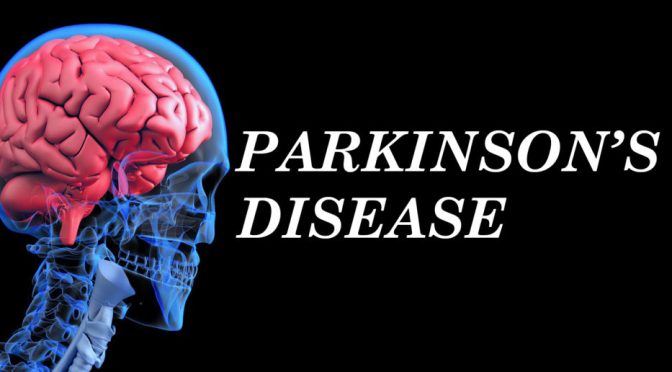
Higher exposure to commonly used oral antibiotics is linked to an increased risk of Parkinson’s disease according to a recently published study by researchers from the Helsinki University Hospital, Finland.
The strongest associations were found for broad-spectrum antibiotics and those that act against anaerobic bacteria and fungi. The timing of antibiotic exposure also seemed to matter.
The study suggests that excessive use of certain antibiotics can predispose to Parkinson’s disease with a delay of up to 10 to 15 years. This connection may be explained by their disruptive effects on the gut microbial ecosystem.
More than 60% of cancers in the U.S. occur in people older than 65. As the population grows older, so will the rate of cancer among seniors. The cancer incidence in the elderly is expected to rise 67% from 2010 to 2030, according to a 2017 study in the Journal of Clinical Oncology. Yet many oncologists don’t have geriatric training.
“When the doctor saw how physically active and mentally sharp my father was at 89 years of age, but that he had several chronic, serious medical problems, including end stage kidney disease, she didn’t advise him to have aggressive treatment like the first time around,” says Griggs, who lives in Rochester, N.Y.
Geriatric assessment is an approach that clinicians use to evaluate their elderly patients’ overall health status and to help them choose treatment appropriate to their age and condition. The assessment includes questionnaires and tests to gauge the patients’ physical, mental and functional capacity, taking into account their social lives, daily activities and goals.
From a British Medical Journal (BMJ) online release:
Although he had no pet birds, on closer questioning he had recently acquired a duvet and pillows containing feathers. His symptoms, chest radiograph and lung function tests improved after removal of all feather bedding, and he was also started on oral corticosteroid therapy. Our case reinforces the importance of taking a meticulous exposure history and asking about domestic bedding in patients with unexplained breathlessness. Prompt recognition and cessation of antigen exposure may prevent the development of irreversible lung fibrosis.
A 43-year-old non-smoker was referred with a 3-month history of malaise, fatigue and breathlessness. Blood avian precipitins were strongly positive. Lung function testing confirmed a restrictive pattern with impaired gas transfer. A ‘ground glass’ mosaic pattern was seen on CT imaging, suggestive of hypersensitivity pneumonitis.
Feather duvet lung (FDL), is an immunologically mediated form of hypersensitivity pneumonitis (HP), also sometimes called extrinsic allergic alveolitis. FDL is caused by inhalation of organic dust from duck or goose feathers found in duvets and pillows. Antigen inhalation triggers an immunological cascade, resulting in lung parenchymal inflammation. Repeated exposure may result in irreversible lung fibrosis.


 There can be few applications of digital technology more worthwhile than saving lives, but integrating digital technology into healthcare systems is uniquely complex. This episode provides an introduction to some of the challenges that healthcare providers face in their pursuit of digital innovation, and explores some of the paths forward.
 The riders who had pedaled on an empty stomach, however, had incinerated about twice as much fat during each ride as the men who consumed the shake first. The riders all had burned about the same number of calories while pedaling, but more of those calories came from fat when the men did not eat first.
 Medicare negotiation of prescription-drug prices would bring U.S. government policies in line with those of other high-income countries, and the idea is popular with both the public and policy analysts. But it would represent a sea change for pharmaceutical firms, which will maintain that any threat to their pricing power will slow innovation.
 Any customer with an active prescription and an Alexa-enabled device will be able to access the medication management skill on the device, a Giant Eagle spokesperson told CNBC. Rachel Jiang, who leads the Amazon Alexa health and wellness team, said the company began developing the skill after noticing that customers were using the devices to create medication reminders.
 “What you want is more, small fat cells rather than fewer, large fat cells,” Jackson said. “A large fat cell is not a healthy fat cell. The center is farther away from an oxygen supply, it sends out bad signals and it can burst and release toxic contents.” Large fat cells are associated with insulin resistance, diabetes and inflammation, he added.
 The purpose of the centers is to increase customers’ understanding of Medicare, match them with people who can talk with them about their benefits or new plans to enroll in, and access in-store annual wellness visits.

 “The link between antibiotic exposure and Parkinson’s disease fits the current view that in a significant proportion of patients the pathology of Parkinson’s may originate in the gut, possibly related to microbial changes, years before the onset of typical Parkinson motor symptoms such as slowness, muscle stiffness and shaking of the extremities. It was known that the bacterial composition of the intestine in Parkinson’s patients is abnormal, but the cause is unclear. Our results suggest that some commonly used antibiotics, which are known to strongly influence the gut microbiota, could be a predisposing factor,” says research team leader, neurologist Filip Scheperjans MD, Ph.D. from the Department of Neurology of Helsinki University Hospital.
 More than 60% of cancers in the U.S. occur in people older than 65. As the population grows older, so will the rate of cancer among seniors. The cancer incidence in the elderly is expected to rise 67% from 2010 to 2030, according to a 2017 study in the Journal of Clinical Oncology. Yet many oncologists don’t have geriatric training.
 Although he had no pet birds, on closer questioning he had recently acquired a duvet and pillows containing feathers. His symptoms, chest radiograph and lung function tests improved after removal of all feather bedding, and he was also started on oral corticosteroid therapy. Our case reinforces the importance of taking a meticulous exposure history and asking about domestic bedding in patients with unexplained breathlessness. Prompt recognition and cessation of antigen exposure may prevent the development of irreversible lung fibrosis.
 Intellicurious