To read full report: https://ec.europa.eu/health/sites/health/files/state/docs/2019_companion_en.pdf

To read full report: https://ec.europa.eu/health/sites/health/files/state/docs/2019_companion_en.pdf
Top 10 Specialties for Lawsuits:


To read entire report: https://www.medscape.com/slideshow/2019-malpractice-report-6012303?src=wnl_physrep_191120_malpractice2019&uac=308500MT&impID=2174462&faf=1#5
From a Genetic Engineering & Biotechnology News release:
 “This proof of concept study demonstrates a new paradigm that measurement of blood proteins can accurately deliver health information that spans across numerous medical specialties and that should be actionable for patients and their healthcare providers,” said Peter Ganz, MD, co-leader of this study and the Maurice Eliaser distinguished professor of medicine at UCSF and director of the Center of Excellence in Vascular Research at Zuckerberg San Francisco General Hospital and Trauma Center.
Specific patterns of protein levels in our blood could be used to provide a comprehensive “liquid health check” that gives a snapshot of health and potentially an indication of the likelihood that we will develop certain diseases or health risk factors in the future, according to research by scientists in the U.S. and U.K. working with SomaLogic. The results of their proof-of-concept study involving more than 16,000 participants, and published in Nature Medicine, showed that while the accuracy of models based on specific protein expression patterns varied, they were all either better predictors than models based on traditional risk factors, or would constitute more convenient and less expensive alternatives to traditional testing.
Study published in Nature Medicine: https://www.nature.com/articles/s41591-019-0665-2
 In a WTOP-FM interview, Health Affairs Editor-In-Chief Alan Weil assesses how consumers may (or may not) benefit from two long-anticipated rules, recently unveiled by the Trump Administration, that increase price transparency for both hospitals and insurers.
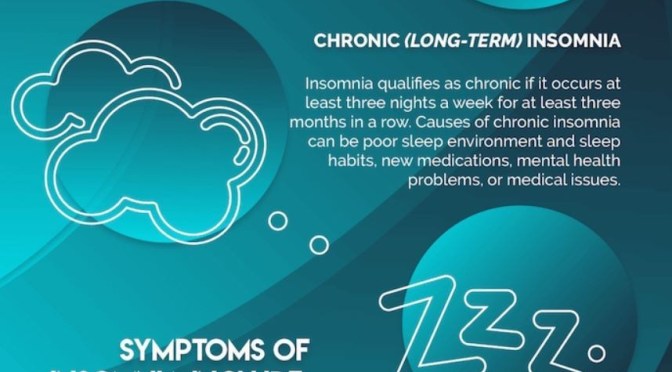
 Beyond the constant tossing and turning of a sleepless night, it might surprise you to know that insomnia is affecting a fair hunk of the Australian population. A recent study released by the Sleep Health Foundation found that 15 per cent of us suffer from chronic insomnia disorder, and very few people are choosing to access help.
Guests:
Professor Robert Adams, Professor in Respiratory and Sleep Medicine for Flinders University, and lead researcher for Chronic Insomnia Disorder in Australia study for Sleep Health Foundation
Dr Moira Junge, health psychologist specialising in treating sleep disorders, board member for Sleep Health Foundation
From a Harvard news release:
 …a new study from the Harvard John A. Paulson School for Engineering and Applied Sciences (SEAS) and Harvard’s Wyss Institute for Biologically Inspired Engineering has found that an orally administered liquid salt called Choline and Geranate (CAGE) can physically reduce the absorption of fats from food with no discernible side effects in rats, and reduces total body weight by about 12 percent.
 “A reduction in body weight of 12 percent is like getting a human from 200 pounds down to 176, which is a significant change,” said first author Md Nurunnabi, a former Postdoctoral Fellow at the Wyss Institute and SEAS who is now an Assistant Professor of Pharmaceutical Sciences at The University of Texas at El Paso. “Our goal is to translate this work into a product that can help people maintain a healthier weight, and this study marks the very beginning of that journey.”
CAGE, which is a salt in its liquid state, was created a few years ago by Samir Mitragotri, the Hiller Professor of Bioengineering and Hansjörg Wyss Professor of Biologically Inspired Engineering, as part of an effort to improve the body’s absorption of medicines.
To read more: https://www.seas.harvard.edu/news/2019/11/locking-fats-cages-treat-obesity
From a STAT online article:
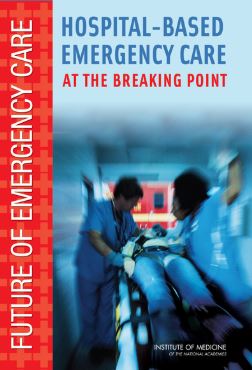 The specialty of emergency medicine is firmly grounded in social justice and providing access to expert care to everyone who comes in. That means treating anyone, with any condition, at any time. And yet, embedded into emergency department operations is a system that might be perceived as unjust: the concept of triage. The emergency queue isn’t “first come, first served.” It’s nonlinear by design, since triage prioritizes the severity of illness. The severely ill or injured receive immediate attention. Everyone else, to various degrees, must wait.
There are situations when waiting feels immoral to me, not merely inconvenient. Being an emergency doctor means shouldering burdens for perceived injustices that we have little, if any, control over. Most of the beds were locked up with patients boarding in the ED, which means they are waiting for an inpatient bed to become available in the hospital.
Hospitals have high expectations regarding how quickly patients are seen in the emergency department, and my colleagues and I share that goal. But there’s less urgency when it comes to discharging patients from the hospital, which would unclog the backup in the emergency department — and its waiting room.
From a Milwaukee Journal Sentinel online article:

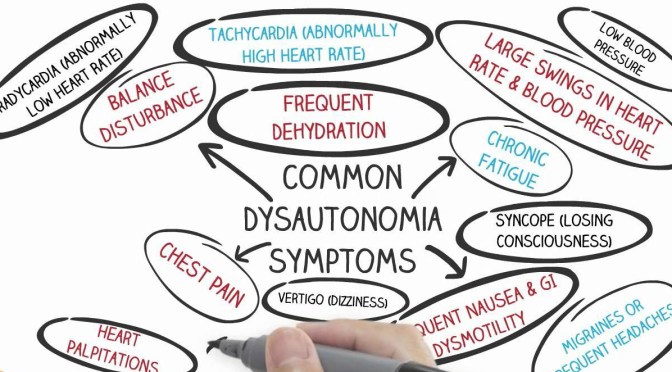
“Dysautonomia is probably significantly more common than we realize,” says Jeremy Cutsforth-Gregory, a neurologist at Mayo Clinic in Rochester, Minnesota. “I think it’s significantly underdiagnosed.” In about half of POTS cases, he adds, the patient’s disease grows out of the immune response to an infection.
Ryan Cooley, a doctor and co-director of the Dysautonomia Center at Aurora Medical Center in Grafton, says detecting the disorder is especially challenging because “typically there isn’t a dominant symptom or physical finding.”
Perhaps the most common clue to the disorder is that patients find that when they stand up from a chair their heart races and they feel light-headed.
To read more: https://www.jsonline.com/story/news/2019/11/14/invisible-illness-leaves-millions-undiagnosed-barely-functioning/2507547001/
From a Science Magazine online article:
 They found that these physically active mice had fewer inflammatory cells (leukocytes) than sedentary mice, an effect they traced to diminished activity of hematopoietic stem and progenitor cells (HSPCs). The lower activity of HSPCs was due at least in part to exercise-induced reduction in the levels of leptin, a hormone produced by fat tissue that regulates cells within the hematopoietic bone marrow niche.
Regular physical activity is associated with a lower rate of death from heart disease, but the underlying mechanisms are not fully understood. Frodermann et al. examined the effect of exercise on cardiovascular inflammation, a known risk factor for atherosclerosis, by studying mice that voluntarily ran for long distances on exercise wheels.
To read more: https://science.sciencemag.org/content/366/6469/1091.2
From a The Lancet online article:
 As a consultant, I had profoundly failed to appreciate the experience of fatigue and apathy among patients. More than excessive tiredness, the fatigue was overwhelming, turning simple activities into insurmountable, exhausting challenges. It was frustrating and I fell into the trap of overexertion when I did have energy, thus exhausting myself and sabotaging the day’s recovery plan. Had staff not been so adept at encouraging me when I lacked energy and holding me back when I tried to overdo things, I would have squandered much valuable rehabilitation time.





 Intellicurious