New research suggests that face masks may offer more protection against coronavirus infection than previously thought. It suggests that coughs and sneezes may be projected much further than scientists had thought possible. The World Health Organisation is considering whether to update its guidance on face masks and the White House may recommend that Americans wear them. Meanwhile in the UK hospitality companies are turning their skills to help those in need. And for the second week in a row, applause has rung out from members of the public showing gratitude to NHS staff and other workers helping to keep the country going. Sophie Raworth presents BBC News at Ten coverage from Science Editor David Shukman and Social Affairs Correspondent Alison Holt.
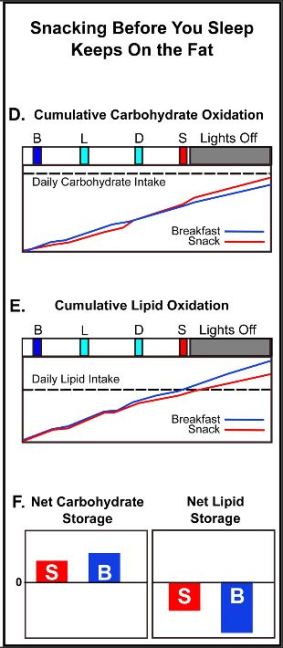
Schematic: Late-evening snacking interacts with the circadian rhythm of metabolism to inhibit LO.
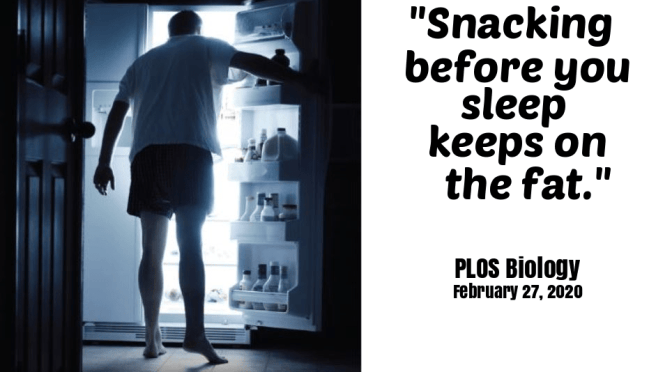
The major finding of this study is that the timing of feeding over the day leads to significant differences in the metabolism of an equivalent 24-h nutritional intake. Daily timing of nutrient availability coupled with daily/circadian control of metabolism drives a switch in substrate preference such that the late-evening Snack Session resulted in significantly lower LO compared to the Breakfast Session.
Developed countries are experiencing an epidemic of obesity that leads to many serious health problems, foremost among which are increasing rates of type 2 diabetes, metabolic syndrome, cardiovascular disease, and cancer. While weight gain and obesity are primarily determined by diet and exercise, there is tremendous interest in the possibility that the daily timing of eating might have a significant impact upon weight management [1–3]. Many physiological processes display day/night rhythms, including feeding behavior, lipid and carbohydrate metabolism, body temperature, and sleep.
These daily oscillations are controlled by the circadian clock, which is composed of an autoregulatory biochemical mechanism that is expressed in tissues throughout the body and is coordinated by a master pacemaker located in the suprachiasmatic nuclei of the brain (aka the SCN [1,4]). The circadian system globally controls gene expression patterns so that metabolic pathways are differentially regulated over the day, including switching between carbohydrate and lipid catabolism [1,3,5–9]. Therefore, ingestion of the same food at different times of day could lead to differential metabolic outcomes, e.g., lipid oxidation (LO) versus accumulation; however, whether this is true or not is unclear.
Scientists around the world are racing to develop a vaccine for COVID-19. But experts have said it could take a year to 18 months for one to hit the market. The process for testing and approving a vaccine is long and complicated.
That can be frustrating when the coronavirus is taking more and more lives every day. But cutting corners to push a vaccine through faster can lead to devastating consequences. We know that, because it’s happened before.
Facing shortages of critical equipment, medical workers must make life-or-death decisions about who receives care. WSJ’s Joe Palazzolo reports from an emergency room that’s running short on ventilators, and Chris Weaver explains the plans hospitals are putting in place to decide who gets them.
Arthur Caplan, a bioethicist at NYU’s School of Medicine, talks about how hospitals think about these difficult choices.
Exercise physiologists are healthcare professionals that work with patients who are deconditioned or have a variety of different health complications. They work with pulmonary and cardiac patients, as well as competitive athletes with a wide range of fitness issues.
Penn Medicine’s Christopher J. Kusmiesz, MS describes his role as “assessing a patient’s fitness level and providing recommendations and guidance so they can improve and reach their health and fitness goals.”
Exercise physiologists at Penn uses patient test results, recommendations from their cardiologist and the patient’s own goals to create an exercise program that is unique to each patient.
Octavian Report “Rostrum” spoke with him about a major theme in Shakespeare’s work and life: disease. Specifically, pandemic plagues, which ravaged London repeatedly throughout Shakespeare’s career, shuttering the theaters, and which appear (obliquely and otherwise) in some of his greatest plays.
The latest episode of the Rostrum’s coronavirus series features James Shapiro, the Larry Miller professor of English and comparative literature at Columbia University, and a leading expert on Shakespeare. Shapiro has published widely on this subject, most recently Shakespeare in a Divided America. He is also an advisor to the Royal Shakespeare Company and to the Public Theater.
James S. Shapiro (born 1955) is Professor of English and Comparative Literature at Columbia University who specialises in Shakespeare and the Early Modern period. Shapiro has served on the faculty at Columbia University since 1985, teaching Shakespeare and other topics, and he has published widely on Shakespeare and Elizabethan culture.
LIVRARIA LELLO OPENS THE FIRST “DRIVE-THRU BOOKSELLER” IN THE WORLD
From April 1st, between 10 am and 12 noon, from Monday to Friday, Livraria Mais Bela do Mundo will offer one book from its “The Collection” per day to all readers who subscribe the day before to which they intend to address the “Drive-Thru” of Livraria Lello.
.
The same should be done until 6 pm, to the email info@livrarialello.pt , sending your personal data (name, address, email and telephone contact).
. On the day of the survey, the reader will only have to stop the car in front of Livraria Lello and the delivery will be made by a collaborator directly through the window.
.
This is a true act of “Love in the Times of Cholera” by Livraria Lello and her team towards their readers, their city, which is their world. A way to give the community some comfort and some encouragement in these difficult times.
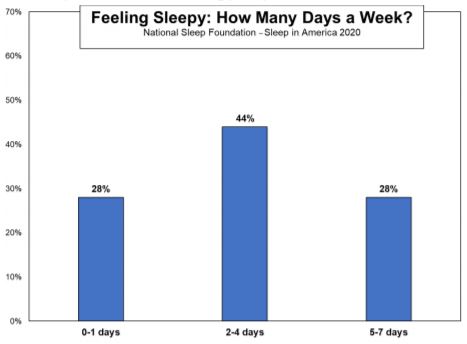
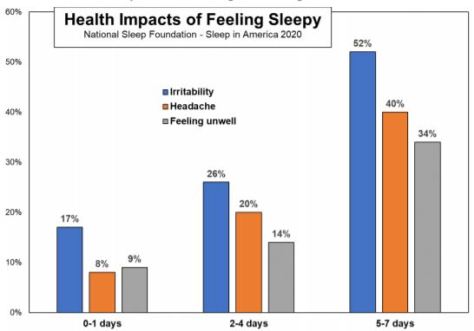
Just 16 percent say they don’t feel sleepy at all in a typical week (this excludes sleepiness at bedtime and when waking up). About half, by contrast, feel sleepy anywhere from three to seven days a week. That includes a big gender gap: Women report feeling sleepy 3.4 days a week, on average; men, 2.7 days.
Among the approximately three in 10 Americans who have feelings of sleepiness on five to seven days a week, 52 percent report often or sometimes experiencing irritability when sleepy; 40 percent, headaches; and 34 percent, feeling unwell apart from headaches. Each is far higher than among those with fewer experiences of sleepiness.
A selection of essential articles read aloud from the latest issue of The Economist. This week, the role of big government in the time of covid-19, (10:20) assessing the havoc the pandemic is causing in emerging countries, (17:45).
In just a few weeks a virus a ten-thousandth of a millimetre in diameter has transformed Western democracies. States have shut down businesses and sealed people indoors. They have promised trillions of dollars to keep the economy on life support. If South Korea and Singapore are a guide, medical and electronic privacy are about to be cast aside. It is the most dramatic extension of state power since the second world war.


 These daily oscillations are controlled by the circadian clock, which is composed of an autoregulatory biochemical mechanism that is expressed in tissues throughout the body and is coordinated by a master pacemaker located in the suprachiasmatic nuclei of the brain (aka the SCN [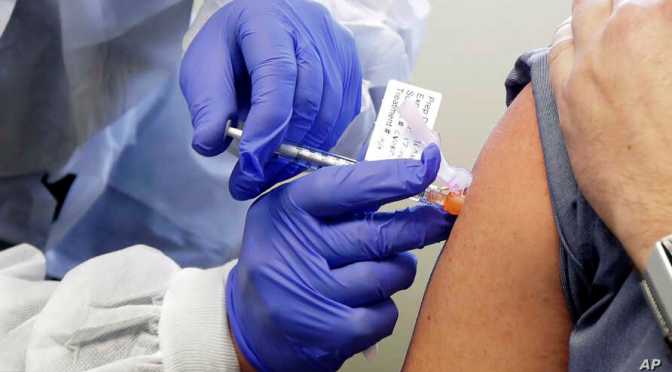
 Scientists around the world are racing to develop a vaccine for COVID-19. But experts have said it could take a year to 18 months for one to hit the market. The process for testing and approving a vaccine is long and complicated.
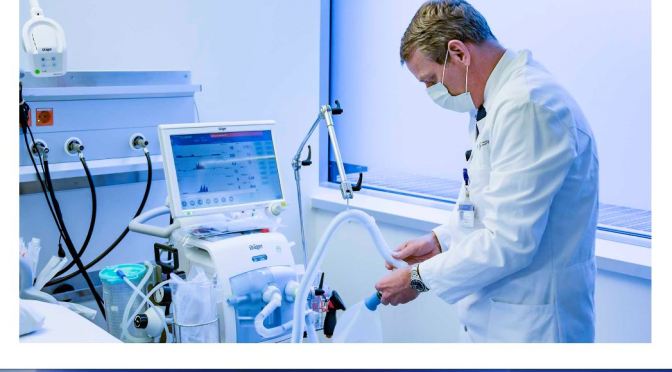
 Facing shortages of critical equipment, medical workers must make life-or-death decisions about who receives care. WSJ’s Joe Palazzolo reports from an emergency room that’s running short on ventilators, and Chris Weaver explains the plans hospitals are putting in place to decide who gets them.

 Octavian Report “Rostrum” spoke with him about a major theme in Shakespeare’s work and life: disease. Specifically, pandemic plagues, which ravaged London repeatedly throughout Shakespeare’s career, shuttering the theaters, and which appear (obliquely and otherwise) in some of his greatest plays.

 Bela do Mundo will offer one book from its “The Collection” per day to all readers who subscribe the day before to which they intend to address the “Drive-Thru” of Livraria Lello.
 This is a true act of “Love in the Times of Cholera” by Livraria Lello and her team towards their readers, their city, which is their world. A way to give the community some comfort and some encouragement in these difficult times.

 Intellicurious