Category Archives: Health

Post-Coronavirus Life: Bathroom Design And Hygiene Will Improve, While Bidet Sales Increase

From a CityLab online article (April 10, 2020):

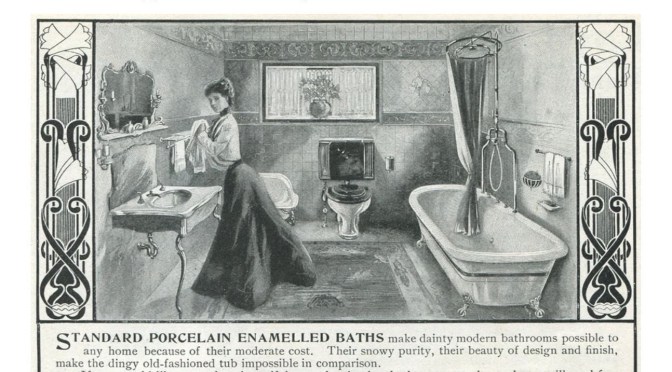
The Bidet bookWhat might that mean for the bathrooms of the post-coronavirus world? Americans have already demonstrated a keen fixation with this household feature: In the last 50 years, the number of home bathrooms per person has doubled. One could easily see the lavatory-building boom accelerate further as future homeowners keep the needs of the self-quarantined in mind. And many have speculated that sales of bidet attachments will surge as toilet-paper shortages encourage Americans to embrace this more sustainable alternative.

Alter predicted that disease-avoidance would rise to the fore of bathroom design a few years ago, when he observed the traumatizing effects of the 2003 SARS outbreak on Toronto, which killed 44 people. But home design in general — and bathroom design in particular — has long been influenced by infectious disease.

The modern bathroom developed alongside outbreaks of tuberculosis, cholera and influenza; its standard fixtures, wallcoverings, floorings, and finishes were implemented, in part, to promote health and hygiene in the home at a time of widespread public health concerns.

Read more


Society: Sleep Industry Helps Consumers “Sleep Less, More Productively” As Their Health Worsens

From a The Architectural Review online article (April 9, 2020):

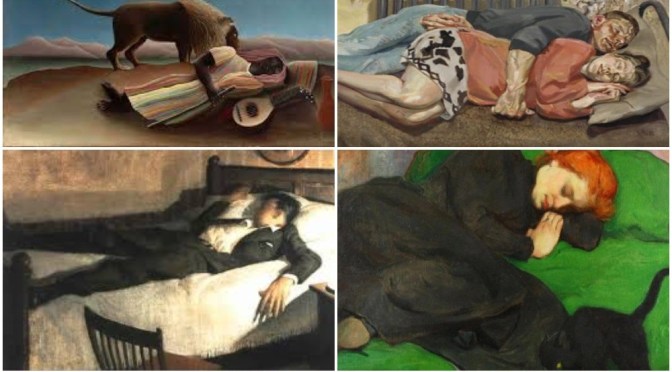
The Long Sleep by Briton RiviereThe sleep industry caters to a working consumer’s wish to sleep less, yet sleep more productively, and accommodates transnational industry which has joined the state as a custodian of biopolitics. Jonathan Crary’s 24/7 spells out in detail how the state and a capitalist economy are encroaching stupendously on the private sphere, in which sleep was one of the last vestiges of unfettered time.
About 15 years ago, someone calculated the financial loss US companies incurred through workers’ illicit practice of sleeping on the job. Indeed, the trope of the lazy sleeper is an old one, resignified at present in our more than callous attitude towards the homeless, whose sleeping bodies punctuate many a journey to and from work.

Even in this most passive stance – someone simply disregarding normative codes and regulations by giving in to a physical need – sleep seems suspiciously subversive. Less an act than a way of being, the sleeper, by sleeping when and where it is not condoned, challenges everyone else, who is doing/working/functioning/functionalised. Contrary to the tree falling in the forest, the sleeper in the workplace or in public space affects and thus ever so slightly transforms those around them.

Read more

Coronavirus / Covid-19: How Social Gatherings Were “Rocket Fuel” For Spread Of The Pandemic

From a The Guardian article (April 9, 2020):

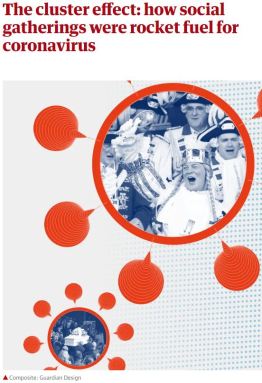
The Cluster Effect How Social Gatherings were Rocket Fuel for Coronavirus The Guardian April 9 2020A hundred days after a Chinese government website announced the discovery of a “pneumonia of unknown cause”, it has become clearer that the dynamics behind the virus’s rapid expansion across the globe has relied heavily on such “cluster effects”.

Each of the countries most heavily hit by the pandemic has reported similar stories of social, cultural or religious gatherings where large numbers spent numerous hours in close company – holding hands, kissing, sharing drinks from the same glass – which then turbo-charged the spread of the pandemic.

“Most infections didn’t take place in supermarkets or restaurants,” Streeck said of his preliminary findings. In Heinsberg, his team of coronavirus detectives could find scant evidence of the virus being transmitted via the surfaces of door handles, smart phones or other objects.

Read full article

The Elderly & Dementia: “Managing Daily Activities & Fall Prevention” (UCSF)

Presented by Sarah Dulaney, RN, CNS, a nurse at the UCSF Memory and Aging Center, and Helen Medsger, a family caregiver and LBD support group leader, as part of the Lewy Body Dementia Caregiver Webinar Series supported by the UCSF Memory and Aging Center and the Administration for Community Living.

Coronavirus/Covid-19: Francis Crick Institute On “Large-Scale, Reliable Testing” (LRB Podcast)

London Review of Books logoRupert Beale talks again to Thomas Jones about his work at the Francis Crick Institute, where he’s helping to set up a testing lab for Covid-19.

He talks about the challenges of creating a scalable process, explains why a successful antibody test could be hard to achieve, and finds some reasons to be hopeful.

You can find a full transcript of this episode HERE.

Coronavirus & The World: Grim Choices, Lockdowns & Ventilator Innovation

The Economist Editors Picks Podcast logoA selection of three essential articles read aloud from the latest issue of The Economist. This week, covid-19 presents grim choices between life, death and, ultimately, the economy (11:02), lockdowns in Asia have sparked a stampede home (17:52) And, Formula 1 comes up with a breathing machine for covid-19 patients.
Study: Middle-Aged Knees With Meniscal Tears – No Benefits To Surgery Over Exercise Therapy (BMJ)

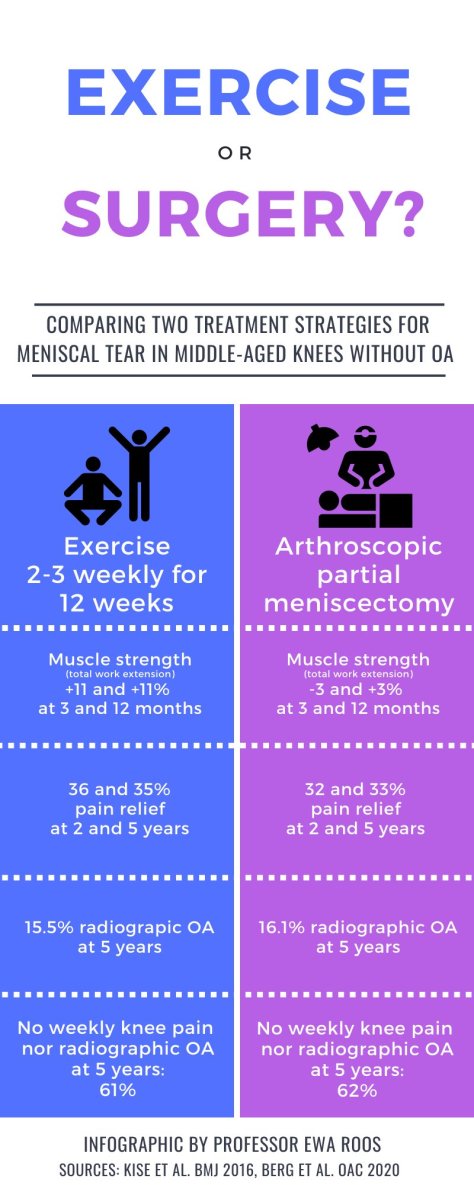
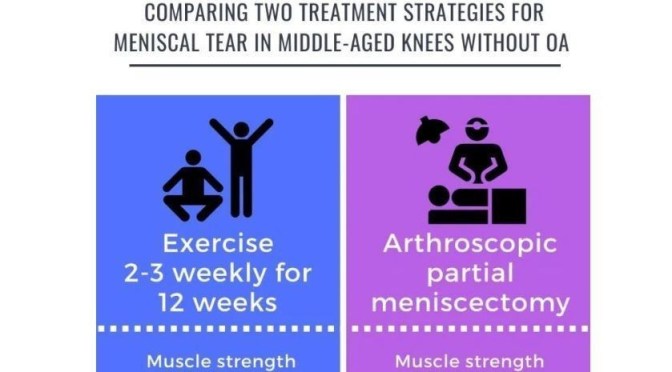
Exercise or Surgery - Meniscal Tear in Middle-Aged Knees BMJ

Conclusion: The study was inconclusive with respect to potential differences in progression of individual radiographic features after surgical and non-surgical treatment for degenerative meniscal tear. Further, we found no strong evidence in support of differences in development of incident radiographic knee osteoarthritis or patient-reported outcomes between exercise therapy and arthroscopic partial meniscectomy.

Objective: To evaluate progression of individual radiographic features 5 years following exercise therapy or arthroscopic partial meniscectomy as treatment for degenerative meniscal tear.

Design: Randomized controlled trial including 140 adults, aged 35-60 years, with a magnetic resonance image verified degenerative meniscal tear, and 96% without definite radiographic knee osteoarthritis. Participants were randomized to either 12-weeks of supervised exercise therapy or arthroscopic partial meniscectomy. The primary outcome was between-group difference in progression of tibiofemoral joint space narrowing and marginal osteophytes at 5 years, assessed semi-quantitatively by the OARSI atlas. Secondary outcomes included incidence of radiographic knee osteoarthritis and symptomatic knee osteoarthritis, medial tibiofemoral fixed joint space width (quantitatively assessed), and patient-reported outcome measures. Statistical analyses were performed using a full analysis set. Per protocol and as treated analysis were also performed.

Results: The risk ratios (95% CI) for progression of semi-quantitatively assessed joint space narrowing and medial and lateral osteophytes for the surgery group were 0.89 (0.55-1.44), 1.15 (0.79-1.68) and 0.77 (0.42-1.42), respectively, compared to the exercise therapy group. In secondary outcomes (full-set analysis) no statistically significant between-group differences were found.

Read full study


Personal Health: “Singing The Praises Of Prevention” (The Scientist Magazine)

From Bob Grant, The Scientist Magazine (April 1, 2020):

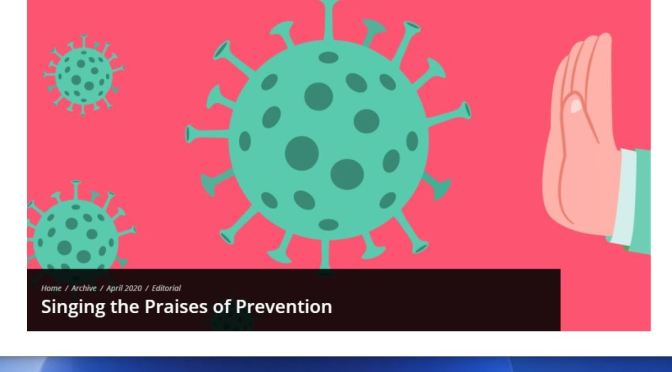
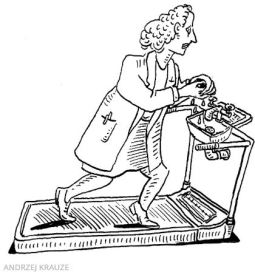
Prevention has been playing a growing role in other diseases, infectious and Singing the Praises of Prevention - The Scientist April 2020 - By Andrzej Krauzeotherwise, long before this latest global pandemic. Cancer, the focus of this issue, is ubiquitous, and one would be hard pressed to find a person anywhere on Earth whose life wasn’t in some way touched by the complex and vexing malady. 

This cancer-focused issue features a cover story in which we explore one facet of cancer prevention: exercise. In this feature story, Danish researcher Bente Klarlund Pedersen explains that studies have shown frequent exercise to be useful in avoiding cancer as well as in helping cancer patients lessen the side effects of their cancers and treatments. Her research and that of others is seeking to enumerate the molecular and cellular mechanisms that underlie the benefits exercise seems to offer cancer patients. 

But when one considers the practical ripples that biology sends through societies—issues of public health and the shared goal of minimizing the impact of diseases on a global scale—human behavior and prevention become vitally important.

Read full article