
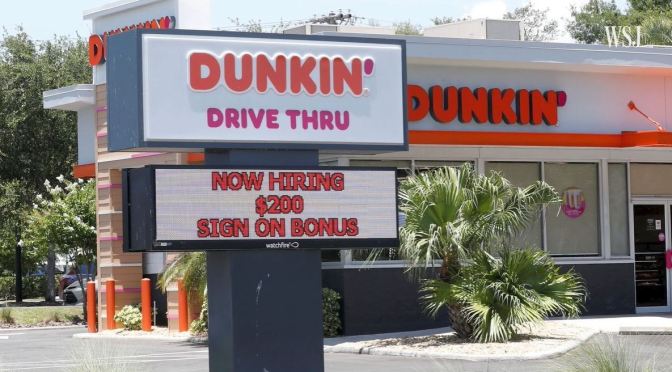
Low-wage work is in high demand, and employers are now competing for applicants, offering incentives ranging from sign-on bonuses to free food. But with many still unemployed, are these offers working? Photo: Bloomberg
Category Archives: Business
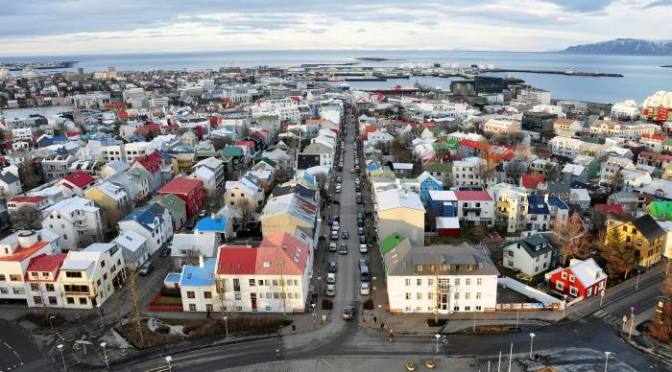
Views: What 4-Day Work Weeks Look Like In Iceland

Online Shopping: Alibaba Challenges Amazon (WSJ)
Inside the company’s automated warehouse in China Chinese e-commerce giant Alibaba is challenging Amazon by promising fast deliveries from China to anywhere in the world. WSJ visits Alibaba’s largest automated warehouse to see how robots and a vast logistics network are helping it expand globally. Composite: Clément Bürge

Future Of New Buildings: Benefits Of Using Wood
If we made 90% of our new buildings from wood, we could reduce our global CO2 emissions and improve our wellbeing, Tom Heap explains.

Sports Business: The High Cost Of Hosting Olympics
In 2018, the Rio games were estimated to have a total cost of $20 billion, far beyond the Rio organizing committee’s initial estimate of $2.8 billion. The city of Rio shelled out $8.2 billion on legacy builds, or builds intended to live well beyond the Olympic’s three-week life-cycle. Cities incurring overrun costs when hosting the Olympics is not just unique to just Rio; according to the Council on Foreign Relations, since 1960, every Olympics saw high overrun costs. As overrun costs become a growing concern, several cities withdrew their 2022 winter Olympic bids in 2014, citing the potential costs. The International Olympic Committee (IOC) enacted the Olympic Agenda 2020 in 2014; the agenda provided new regulations specifically to mitigate cost concerns. However, the IOC was faced with another challenge: hosting the Tokyo Olympics amid the Covid-19 pandemic.

Dining: Opening Up New Restaurants In London
The coronavirus pandemic has been catastrophic for the hospitality industry and the delay to the June 21 unlocking has led to more uncertainty. The FT’s Daniel Garrahan and food critic Tim Hayward meet Harts Group, the business behind Soho institution Quo Vadis and tapas chain Barrafina, as it opens a new Soho branch of its El Pastor taquerias

Analysis: The Business & Profitability Of Golf
In 2020, golf saw a surge in new players following the Covid-19 pandemic and social distancing measures. Callaway, the maker of golf balls, clubs, bags and apparel, has been thriving. But with movie theaters, travel and concerts expected to rebound, will golf club makers like Callaway and its rival Acushnet be able to maintain their momentum?

Analysis: How Will Fossil Watches Survive? (Video)
The global watchmaking industry has changed since the introduction of the smartphone and as demand for fitness trackers and smartwatches grow. Legacy watchmakers, like Fossil, have had to adapt and give customers new reasons to keep timepieces on their wrists. The company has been planning for the future by bringing its own smartwatches to market, initiating a multi-year turnaround plan and focusing on growing markets in China and India. But will that be enough?

Sports: How Big Money Changed Soccer (Video)
Soccer has its roots in the working class. So how did working class entertainment known as the ‘people’s game’ become a coveted business that remade fans into customers with billion-dollar deals?
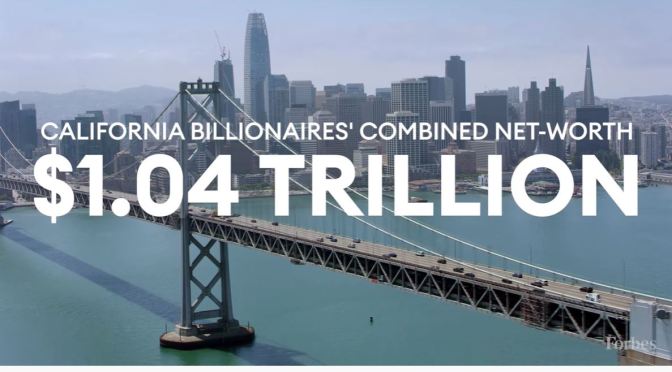
Wealth In 2021: U.S. States With Most Billionaires
News about billionaires like Elon Musk and Larry Ellison moving out of California might lead you to believe that tycoons have abandoned the state. Tesla’s “Technoking” Musk confirmed in December that he had moved to Austin, Texas. And that same month Ellison told employees at software firm Oracle that he was moving to the Hawaiian island of Lanai, which he owns. But it turns out that the Golden State has yet to lose its appeal for the ultra-wealthy. Forbes just released the 2021 list of the World’s Billionaires, and California is once again home to more billionaires than any other state, with 189 billionaire residents out of the 2,755 billionaires Forbes tracked globally. That’s 24 more than a year ago, due mostly to a surge in the number of new billionaires. New York comes in second with 126 billionaires, up from 118 last year. Altogether, 732 members of the 2021 list live in the U.S., including non-U.S. citizens, like Ireland’s John and Patrick Collison, the brothers who founded San Francisco-based payments firm Stripe. (There are 724 U.S. citizens on the list.) Large states dominate the top 10 states for these tycoons: seven out of the ten most populous U.S. states are also home to the most billionaires. One of the outliers, Massachusetts, a tech hub, has 7 more billionaires than a year ago; the fastest vaccine development in history—spurred by the Covid-19 pandemic—minted several new biotech billionaires who live in the state. Seven states don’t have any billionaire residents that Forbes could find: Alabama, Alaska, Delaware, New Hampshire, North Dakota, Vermont and West Virginia. (Jim Justice, the governor of West Virginia, used to be a billionaire but was recently revealed to have borrowed $850 million from Greensill Capital, a U.K. based lender that has filed for insolvency.) Read the full profile on Forbes: https://www.forbes.com/sites/krisztia…
 Intellicurious