Dubbed Galaxy of Horrors, the fun but informative series resulted from a collaboration of scientists and artists and was produced by NASA’s Exoplanet Exploration Program Office, located at NASA’s Jet Propulsion Laboratory in Pasadena, California. The same program is behind the popular Exoplanet Travel Bureau poster series, which imagines humans visiting some of the thousands of known worlds outside our solar system.
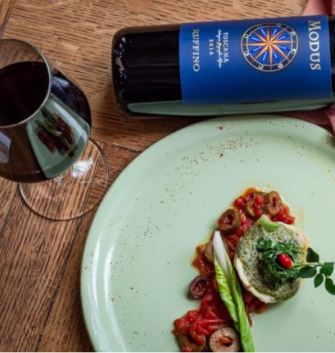
Legend has it that Le Tre Rane was the name of an inn that a young Leonardo da Vinci opened on Florence’s Ponte Vecchio, with a vision of a pioneering cooking style that would embody fine dining and healthy eating, while heightening the taste of being together.
Stefano Frassineti has taken the helm in the kitchen at Le Tre Rane. Born in Chianti and a career cook for almost 30 years, Stefano believes in dishes based on tradition that evolve into an unmistakable identity. He takes an orchestra of seasonal ingredients from personally sourced Tuscan suppliers and conducts them with endless curiosity and creativity. Eight seasonal menus will rotate year round—the current one is centred around freshly pressed extra-virgin olive oil—in addition to an à la carte menu featuring Tuscan meat (and the occasional fish) courses. Start with a delicate ricotta and chard pie, continue with hunter’s chicken tortelli and opt for a beef tagliata or bistecca alla Fiorentina.
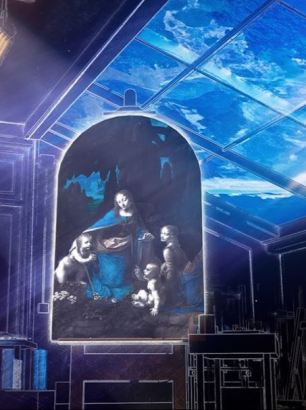
The secrets of Leonardo’s masterpiece are revealed in four distinct spaces. Each space invites you to look at ‘The Virgin of the Rocks’ in a new way.
The mind of Leonardo
Start your journey in a landscape populated by the thoughts and ideas of Leonardo as he sets about painting ‘The Virgin of the Rocks’.
The studio
Discover the secrets only science and conservation can reveal in this projection-filled space which unlocks the mysteries of how ‘The Virgin of the Rocks’ was painted and reveals the lost composition hidden beneath the painted surface.
The light and shadow experiment
Take part in the room-sized experiment to discover the dramatic effects of light and shadow on Leonardo’s composition for ‘The Virgin of the Rocks’.
The imagined chapel
At the end of your journey, you will come face to face with the original masterpiece where it hangs on the walls of an imagined chapel for you to contemplate how ‘The Virgin of the Rocks’ might have appeared in its original setting as part of an elaborate altarpiece.
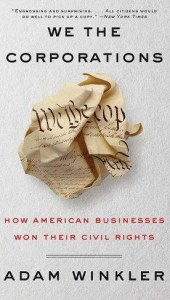
Adam Winkler, author of our October pick for the NewsHour-New York Times book club, Now Read This, joins William Brangham to discuss “We the Corporations,” and William announces the November book selection.
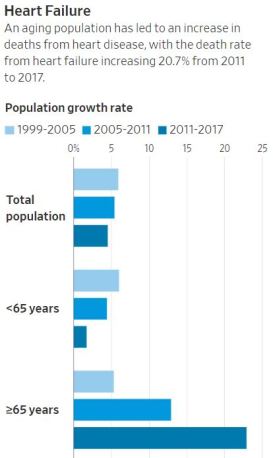
The rapid aging of the population, together with high rates of obesity and diabetes in all ages, are pushing both the rate and number of deaths from heart failure higher, the study said. Most deaths from heart failure occur in older Americans, but they are rising in adults under 65, too, the study showed.
The findings help explain why a decadeslong decline in the death rate from cardiovascular disease has slowed substantially since 2011 and started rising in middle-aged people, helping drive down U.S. life expectancy.
Deaths from heart failure, one of the nation’s biggest killers, are surging as the population ages and the health of younger generations worsens.
The death rate from the chronic, debilitating condition rose 20.7% between 2011 and 2017 and is likely to keep climbing sharply, according to a study published Wednesday in the journal JAMA Cardiology.
We headed west and hugged the shallow shoreline, casting at shadows of fish as the sun mixed with clouds making it more difficult to sight fish. We curled around a point of land I instantly recognized as Cambridge Beaches, where I stayed with my parents on my first visit to the island and where my sister celebrated her honeymoon.
Mr. Linnell used a push pole to move the skiff quietly along shore as he chatted up guests snorkeling nearby, expertly keeping them away from our bonefish spots by urging the snorkelers to take in sights a safe distance away.
I HAD NEVER considered fly fishing for bonefish in Bermuda. Chasing the elusive, silver-green creatures, prized for their fight, was something you did at remote outposts and rustic camps, where showering was optional and accommodations primitive. Such a trip could be fun for a few days, but you’d never dare drag your wife or kids along.
Mr. Chambers, a 48-year-old physical therapist in Jersey City, N.J., modified his sleep, diet and exercise routines. Eighteen months later, his performance on a battery of cognitive tests improved, particularly in areas like processing speed and executive function, such as decision-making and planning.
Most surprising, says Dr. Isaacson, is that the MCI patients who followed at least 60% of their recommendations showed cognitive improvement. However, MCI patients who followed less than 60% of the recommendations experienced cognitive declines similar to the control groups, he notes.
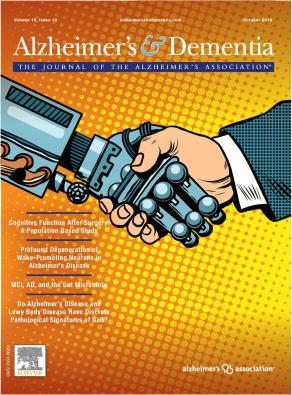
Mr. Chambers is among 154 patients in a study, published Wednesday in Alzheimer’s & Dementia: The Journal of the Alzheimer’s Association, that doctors say shows encouraging results. Among healthy patients, people who made changes in nutrition and exercise showed cognitive improvements on average. People who were already experiencing some memory problems also showed cognitive improvement—if they followed at least 60% of the recommended changes.
In 2015, the Laser Interferometer Gravitational Wave Observatory (LIGO) facilities in the US directly detected ripples in space-time known as gravitational waves. These waves were produced by the final spiral of two oribiting black holes that smashed into each other, sending ripples across the universe.
In this Podcast Extra, Benjamin Thompson speaks to Cole Miller from the University of Maryland about the quest to detect gravitational waves, which were first hypothesised by Albert Einstein back in 1916.
On a single charge, Helia can cover a range of 900 kilometres – the distance from London to Edinburgh. Again, compared to the Tesla 3, the Cambridge University team’s car has double the range on a battery a quarter of the size.
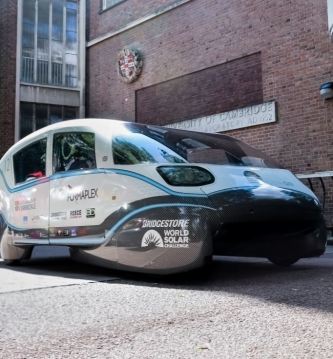
The ability to cover this distance is aided by Helia’s chassis and body panels made from carbon fibre, which grant it a kerb weight of 550 kilograms.
Students from Cambridge University have built an ultra-efficient electric car that drives using only as much power as it takes to boil a kettle.
The Cambridge University Eco Racing (CUER) student society built the four-seater car, named Helia, with efficiency as the main goal.
Their achievement has been to produce a car that can travel 80 kilometres-per-hour using only 2500 watts, or as much power as it takes to boil a single kettle, which is equivalent to 31 watt-hours-per-kilometre.
The prevailing narrative of “battling cancer” in Western society has its own issues, with its discourse of personal triumph that values individual responsibility and determination. But the alternative – to lie outright – might seem inconceivable, particularly to those accustomed to the norms of Western culture. It is, however, a common practice in China, rooted in the belief that telling a person about their diagnosis can make their condition deteriorate quicker.
The plot line of The Farewell is familiar to me. Like Billi’s Nai Nai, my aunt was diagnosed with metatastic lung cancer. Nobody in the family told her – nor did the doctors when she later underwent surgery to remove a tumour. The last time I saw her was in north-eastern China a few years ago. Her once-plump figure had shrunk to a wiry frame. She was in her early 70s, in good spirits, but a far cry from the feisty matriarch who used to dominate conversations.
The Farewell is a heartfelt film, punctuated by moments of unexpected – and unexpectedly uplifting – humour. In a darkly comical scene in a printing shop, Nai Nai’s younger sister demands that the results of a medical report be doctored to edit out references to cancerous nodules and replaced with the nebulous term “benign shadows”.




 Legend has it that Le Tre Rane was the name of an inn that a young Leonardo da Vinci opened on Florence’s Ponte Vecchio, with a vision of a pioneering cooking style that would embody fine dining and healthy eating, while heightening the taste of being together.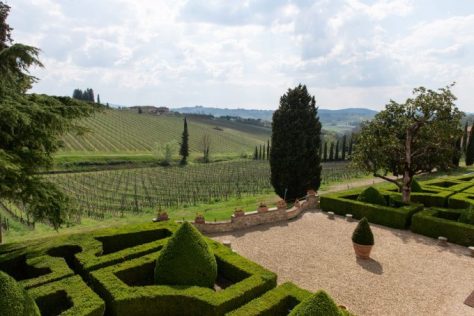

 The mind of Leonardo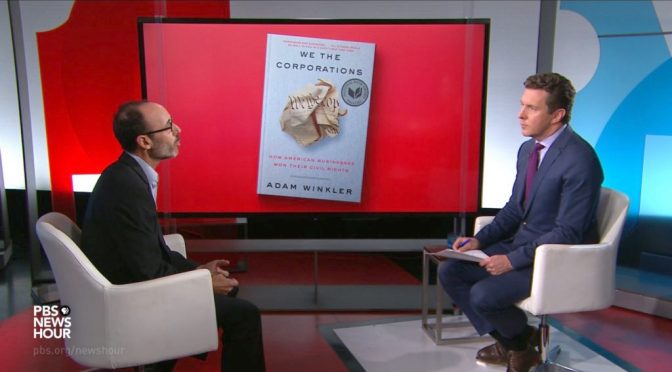
 Adam Winkler, author of our October pick for the NewsHour-New York Times book club, Now Read This, joins William Brangham to discuss “We the Corporations,” and William announces the November book selection.
 The findings help explain why a decadeslong decline in the death rate from cardiovascular disease has slowed substantially since 2011 and started rising in middle-aged people, helping
 We headed west and hugged the shallow shoreline, casting at shadows of fish as the sun mixed with clouds making it more difficult to sight fish. We curled around a point of land I instantly recognized as Cambridge Beaches, where I stayed with my parents on my first visit to the island and where my sister celebrated her honeymoon.
 Mr. Chambers, a 48-year-old physical therapist in Jersey City, N.J., modified his sleep, diet and exercise routines. Eighteen months later, his performance on a battery of cognitive tests improved, particularly in areas like processing speed and executive function, such as decision-making and planning.
 In 2015, the Laser Interferometer Gravitational Wave Observatory (LIGO) facilities in the US directly detected ripples in space-time known as gravitational waves. These waves were produced by the final spiral of two oribiting black holes that smashed into each other, sending ripples across the universe.
 The ability to cover this distance is aided by Helia’s chassis and body panels made from carbon fibre, which grant it a kerb weight of 550 kilograms.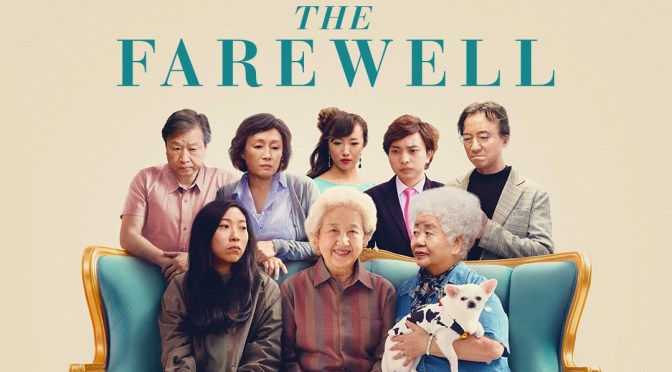
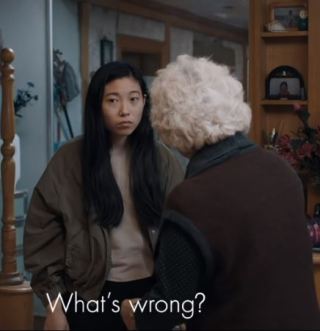 The plot line of The Farewell is familiar to me. Like Billi’s Nai Nai, my aunt was diagnosed with metatastic lung cancer. Nobody in the family told her – nor did the doctors when she later underwent surgery to remove a tumour. The last time I saw her was in north-eastern China a few years ago. Her once-plump figure had shrunk to a wiry frame. She was in her early 70s, in good spirits, but a far cry from the feisty matriarch who used to dominate conversations.
