A 10-million-year biogeographic holding pen primed the Great American Biotic Interchange
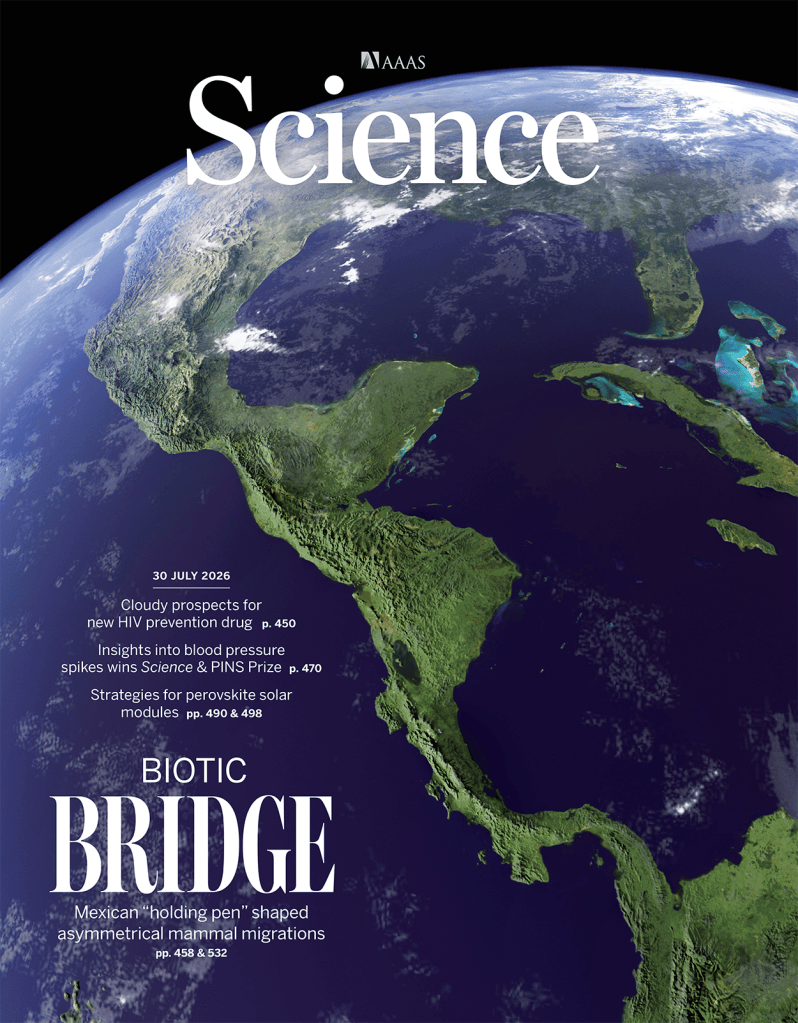
For millions of years after the breakup of the supercontinent Gondwana, South America was disconnected from other landforms, a time period that has been referred to as its “splendid isolation.” This isolation allowed for the evolution of mammals with distinctive features, including xenarthrans, sprassodont carnivores, and notoungulates. The formation of the Panamanian land bridge facilitated connection of North and South American faunas, with a bias from north to south. Tseng et al. looked at fossils from low latitudes in México and found that northern mammals accumulated in the region before the connection (see the Perspective by McGuire and Williams). This allowed for more rapid dispersal south and further supports that the land bridge first formed during the Pliocene rather than the Miocene.
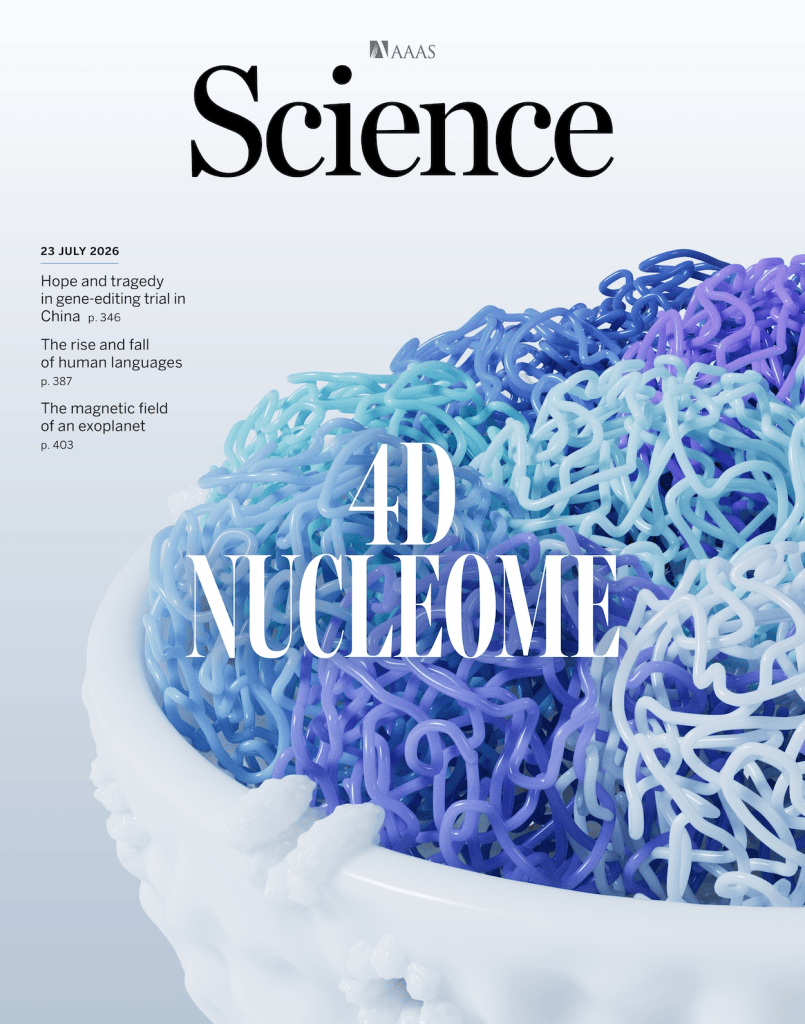
SCIENCE MAGAZINE: The latest issue features Strands of DNA-like thread coil, loop, and spill upward, evoking the genome’s dynamic three-dimensional architecture within the nucleus of a living cell.