

From a The Guardian article (April 9, 2020):
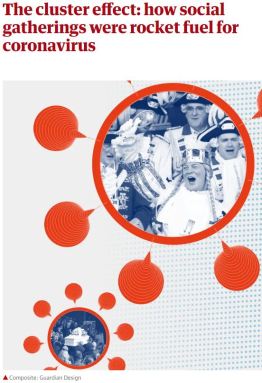 A hundred days after a Chinese government website announced the discovery of a “pneumonia of unknown cause”, it has become clearer that the dynamics behind the virus’s rapid expansion across the globe has relied heavily on such “cluster effects”.
Each of the countries most heavily hit by the pandemic has reported similar stories of social, cultural or religious gatherings where large numbers spent numerous hours in close company – holding hands, kissing, sharing drinks from the same glass – which then turbo-charged the spread of the pandemic.
“Most infections didn’t take place in supermarkets or restaurants,” Streeck said of his preliminary findings. In Heinsberg, his team of coronavirus detectives could find scant evidence of the virus being transmitted via the surfaces of door handles, smart phones or other objects.
 An interview with Dr. Anthony Fauci about what it will take to open America back up after the coronavirus pandemic: “It isn’t like a light switch, on and off.”
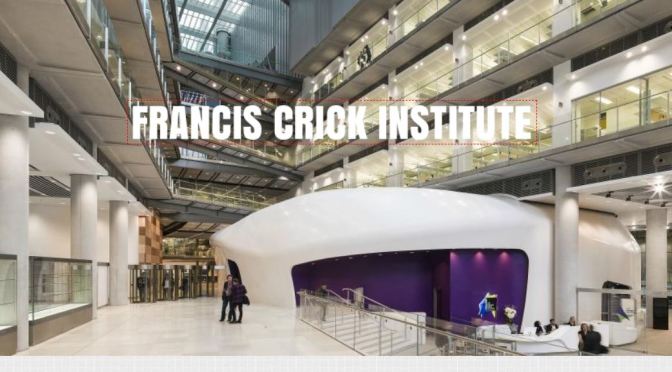
 Rupert Beale talks again to Thomas Jones about his work at the Francis Crick Institute, where he’s helping to set up a testing lab for Covid-19.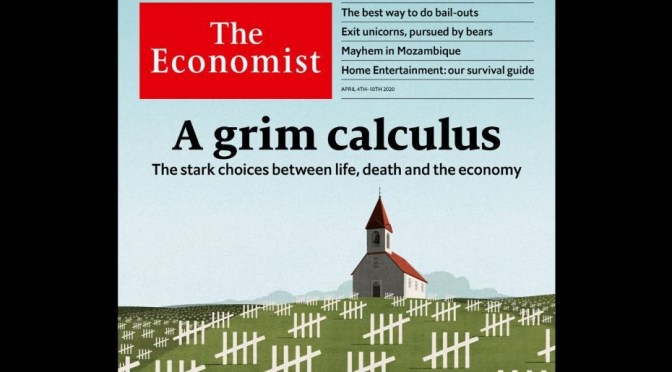
 A selection of three essential articles read aloud from the latest issue of The Economist. This week,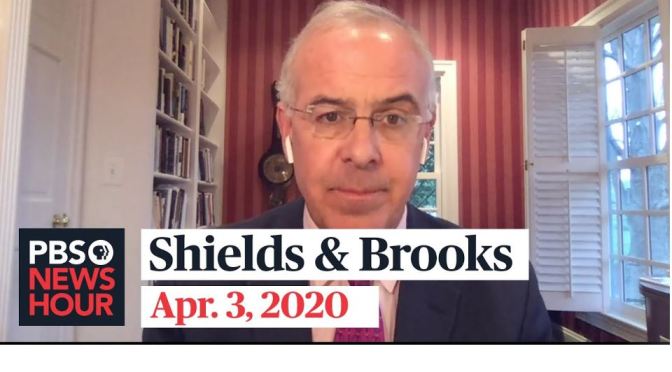
 Food and medicine shopping is essential during the COVID-19 pandemic, but requires getting out and standing close to strangers at a time when social distancing and sheltering-in-place are recommended to slow spread of disease.

 On this week’s show, Contributing Correspondent Kai Kupferschmidt talks with host Sarah Crespi about modeling coronavirus spread and the role of forecasts in national lockdowns and other pandemic policies. They also talk about the launch of a global trial of promising treatments.
  Intellicurious