First up this week, Staff Writer Meredith Wadman talks with host Sarah Crespi about how male sex hormones may play a role in higher levels of severe coronavirus infections in men. New support for this idea comes from a study showing high levels of male pattern baldness in hospitalized COVID-19 patients.
Next, Jason Qian, a Ph.D. student in the systems biology department at Harvard Medical School, joins Sarah to talk about an object-tracking system that uses bacterial spores engineered with unique DNA barcodes. The inactivated spores can be sprayed on anything from lettuce, to wood, to sand and later be scraped off and read out using a CRISPR-based detection system. Spraying these DNA-based identifiers on such things as vegetables could help trace foodborne illnesses back to their source. Read a related commentary piece.
In this audio interview conducted on June 3, 2020, the editors discuss two new studies: one comparing test swabs collected by health care workers with swabs collected by the patients themselves and one assessing hydroxychloroquine treatment in people who had been exposed to Covid-19 but weren’t yet ill.
The continuing spread of SARS-CoV-2 remains a Public Health Emergency of International Concern. What physicians need to know about transmission, diagnosis, and treatment of Covid-19 is the subject of ongoing updates from infectious disease experts at the Journal.
Eric Rubin is the Editor-in-Chief of the Journal. Lindsey Baden is a Deputy Editor of the Journal. Stephen Morrissey, the interviewer, is the Executive Managing Editor of the Journal.
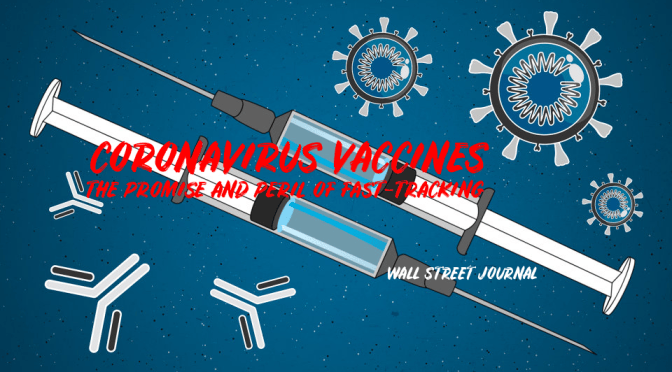
As the coronavirus continues to spread around the globe, companies and academic labs are racing to develop a vaccine that would help society get back to normal. But there could also be costs to moving too quickly.
WSJ’s Daniela Hernandez explains. Photo illustration: Laura Kammermann
Originating during the Black Death of the Middle Ages, face coverings to protect against the transmission of disease are not just medical requirements; they’re now a fashion statement. Mark Phillips talks with medical historian Mark Honigsbaum (“The Pandemic Century”) about the purpose and style of facemasks.
President Trump’s preferred coronavirus treatment is the focus of a new study suggesting it could cause more harm than good, but not everybody agrees. We discuss the fallout as trials around the world are paused and countries diverge over policy advice.
12:12 Are we rushing science?
Coronavirus papers are being published extremely quickly, while normally healthy scientific debate is being blown up in the world’s press. Is there a balancing act between timely research and accurate messaging?
18:49 One good thing
Our hosts pick out things that have made them smile in the last week, including hedgerow brews and a trip into the past using AI.
A bar in the Swiss Alps. A megachurch in South Korea. Scientists are focusing on certain superspreading events that might be responsible for an outsized portion of coronavirus cases.
Bojan Pancevski explains how this understanding could be key to reopening.
The first results from vaccine trials are in and they are encouraging, but scientists are still urging caution. We hear the lowdown on the types of vaccines being developed and what hope there is of rolling them out any time soon.
01:38 Trump vs the WHO
President Trump has given the WHO an ultimatum in a tweet, threatening to pull out of the organisation within 30 days unless unclear demands are met. We discuss what this means for the pandemic, the USA and the future of international health cooperation
12:06 Where are we with vaccines?
The first results from vaccine trials are in and they are encouraging, but scientists are still urging caution. We hear the lowdown on the types of vaccines being developed and what hope there is of rolling them out any time soon.
Our hosts pick out things that have made them smile in the last week, including hopeful antibody research, at-home sketch comedy and printable board games.


 First up this week, Staff Writer Meredith Wadman talks with host Sarah Crespi about how male sex hormones may play a role in higher levels of severe coronavirus infections in men. New support for this idea comes from a study showing high levels of male pattern baldness in hospitalized COVID-19 patients.
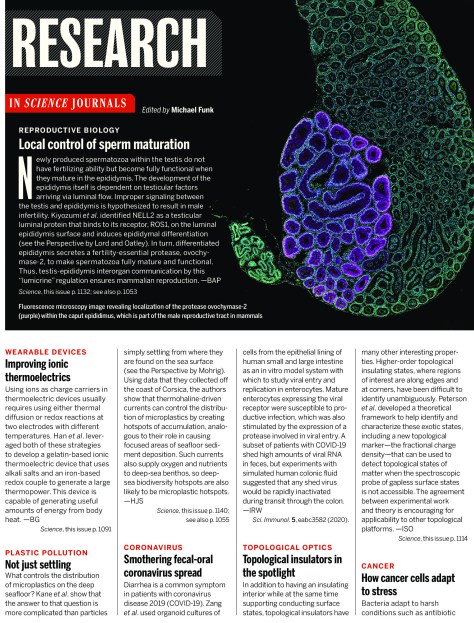
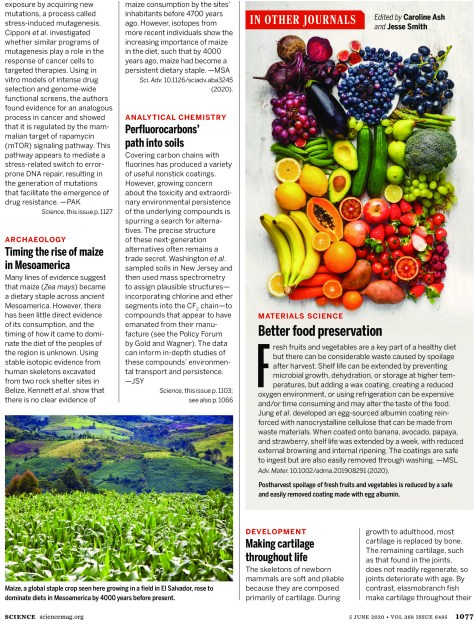

 A selection of three essential articles read aloud from the latest issue of The Economist. This week, how the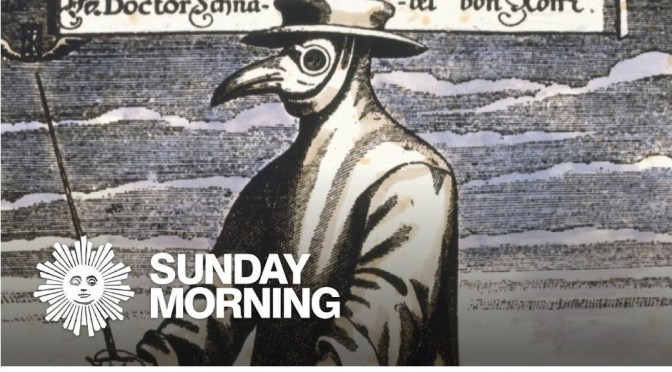

 President Trump’s preferred coronavirus treatment is the focus of a new study suggesting it could cause more harm than good, but not everybody agrees. We discuss the fallout as trials around the world are paused and countries diverge over policy advice.

 A bar in the Swiss Alps. A megachurch in South Korea. Scientists are focusing on certain superspreading events that might be responsible for an outsized portion of coronavirus cases.
 Intellicurious