Did you know the food choices you make every day could help you feel younger? Try these 8 diet tips for feeling your best at any age.
Get more healthy living tips from the Mayo Clinic App: http://mayocl.in/2tbMb57

Did you know the food choices you make every day could help you feel younger? Try these 8 diet tips for feeling your best at any age.
Get more healthy living tips from the Mayo Clinic App: http://mayocl.in/2tbMb57
Tech ownership among older adults is growing with no signs of slowing down.
 • For many devices, adoption among adults ages 50 and older is comparable to younger generations. Adults ages 50
and older are adopting smartphones, wearables, home assistants/smart speakers, and smart home technology at
nearly the same rate as adults ages 18–49.
• Younger adults have abandoned tablets, but older adults are adopting tablets at an increasing rate: More than half
(52%) of adults ages 50 and older own a tablet.
• Once adopted, usage of smartphones, wearables, tablets, home assistants/smart speakers, and smart home
technology is high with most owners using their technology daily.
While older adults are highly engaged with their devices, many are not using the technology to its full potential.
• Adults ages 50 and older are using smartphones and tablets to maintain social connections, find information, and for
entertainment, but only a few are using their device to automate their home or conduct transactions.
• Engaging in social media is one of the most common uses of a tech device (e.g., computer, tablet, or smartphone).
• Though 49% claim to own a smart TV, only 42% are using streaming or online options to watch shows.
• Nearly half (46%) of all smart home assistant/smart speaker owners do not use their device daily.
From a PLOS Medicine online study:
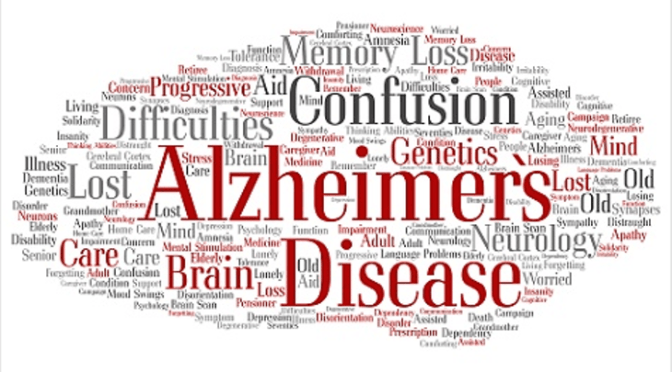
Depression is associated with increased odds of dementia, even more than 20 years after diagnosis of depression, and the association remains after adjustment for familial factors. Further research is needed to investigate whether successful prevention and treatment of depression decrease the risk of dementia.
The risk of dementia is increased for decades after a diagnosis of depression, where those diagnosed with especially severe depressions are at increased risk.
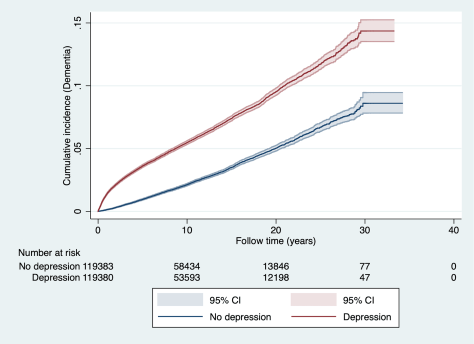
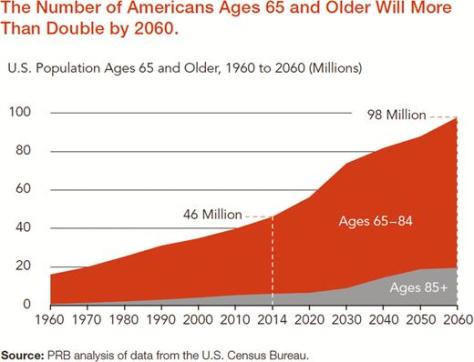
Dementia is common among the elderly, causing severe individual suffering as well as societal strain. As the proportion of people aged 65 years and above is rapidly increasing in the world population, the number of individuals with dementia is expected to double within 20 years, and this condition was estimated to have a worldwide cost of US$604 billion in 2010. Effective treatments for dementia remain scarce; however, a preventive approach may be possible through the identification of high-risk individuals and potentially modifiable risk factors.
From a MedPageToday online article:
 “Amyloid is important in initiating disease, but the actual damage in the brain is probably due to the accumulation of tau,” Holtzman told MedPage Today. “Normally, tau protein is inside cells, but there is more and more evidence suggesting that its spread to different parts of the brain is responsible for the progression of Alzheimer’s disease.”
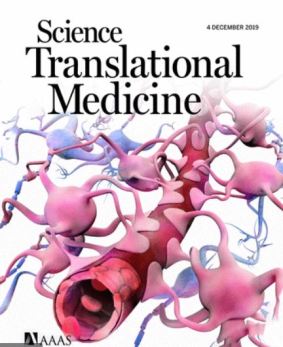
Two studies in January explored how sleep might be associated with Alzheimer’s tau pathology. The first, led by Brendan Lucey, MD, and David Holtzman, MD, both of Washington University in St. Louis, found that older adults who had less slow-wave sleep had higher levels of brain tau.
The findings, published in Science Translational Medicine, suggested that poor quality sleep in late life may signal deteriorating brain health.
Sleep patterns predicted amyloid and tau burden, reported Matthew Walker, PhD, of the University of California Berkeley, and co-authors, in June.
From a Cedars-Sinai.org online release:
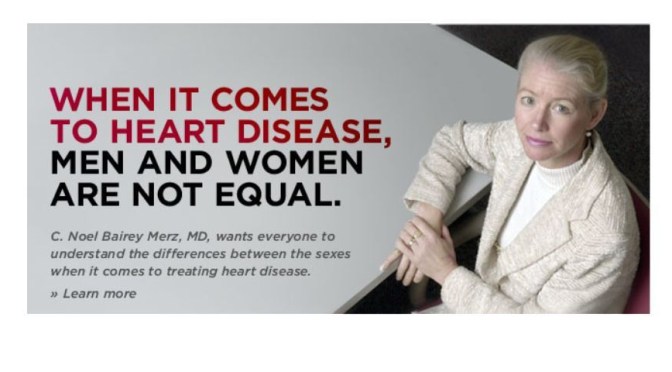
 “Our data showed that rates of accelerating blood pressure elevation were significantly higher in women than men, starting earlier in life,” said Cheng, the Erika J. Glazer Chair in Women’s Cardiovascular Health, who also serves as director of Cardiovascular Population Sciences at the Barbra Streisand Women’s Heart Center. “This means that if we define the hypertension threshold the exact same way, a 30-year old woman with high blood pressure is probably at higher risk for cardiovascular disease than a man with high blood pressure at the same age.”

(January 15, 2020) – New research from the Smidt Heart Institute at Cedars-Sinai showed for the first time that women’s blood vessels – including both large and small arteries – age at a faster rate than men’s. The findings, published Wednesday in the journal JAMA Cardiology, could help to explain why women tend to develop different types of cardiovascular disease and with different timing than men.
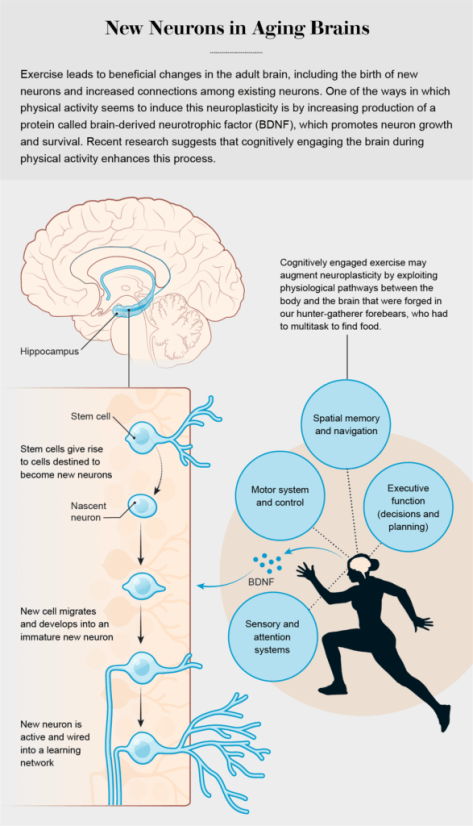

Researchers have also documented clear links between aerobic exercise and benefits to other parts of the brain, including expansion of the prefrontal cortex, which sits just behind the forehead. Such augmentation of this region has been tied to sharper executive cognitive functions, which involve aspects of planning, decision-making and multitasking—abilities that, like memory, tend to decline with healthy aging and are further degraded in the presence of Alzheimer’s. Scientists suspect that increased connections between existing neurons, rather than the birth of new neurons, are responsible for the beneficial effects of exercise on the prefrontal cortex and other brain regions outside the hippocampus.
As a neuroscientist, professor emeritus of psychology, musician and best-selling author, Daniel Levitin has extensively studied the brain and its impact on aging. His latest book, “Successful Aging,” explores the questions: what happens in the brain as we age and what are the keys to aging well? NewsHour Weekend’s Christopher Booker recently spoke to Levitin to learn more.
From an Innovation In Aging online release:
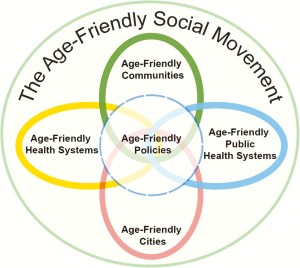 Becoming an Age-Friendly Health System entails reliably acting on a set of four evidence-based elements of high-quality care and services, known as the “4Ms,” for all older adults. When implemented together, the 4Ms represent a broad shift to focus on the needs of older adults:
The Age-Friendly Health Systems movement, initiated in 2017, recognizes that an all-in, national response is needed to embrace the health and well-being of the growing older adult population. Like public health, health systems, including payers, hospitals, clinics, community-based organizations, nursing homes, and home health care, need to adopt a new way of thinking that replaces unwanted care and services with aligned interventions that respect older adults’ goals and preferences. Becoming an Age-Friendly Health System entails reliably acting on a set of four evidence-based elements of high-quality care and services, known as the “4Ms,” for all older adults.




 Intellicurious