Category Archives: Society

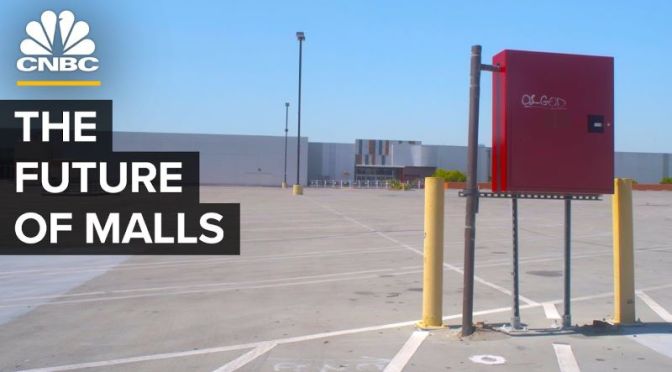
Analysis: ‘Why U.S. Malls Are Disappearing’ (Video)

Shopping malls in the U.S. were already in decline before the Covid-19 pandemic as consumers shifted away from traditional brick-and-mortar stores to e-commerce. The outbreak has only exacerbated the challenges at malls as social distancing has placed restrictions on stores, movie theaters and restaurants.

So what will become of malls in America after the pandemic ends? Shopping malls across the U.S. have been reeling as restaurant and retail tenants struggle to keep their doors open. Data compiled by Coresight Research shows about a quarter of U.S. malls could close over the next three to five years, accelerating a trend that began before the pandemic.

Simon Property Group — the nation’s biggest mall owner — said earlier this month that its fourth-quarter revenue dropped by 24% on a year-over-year basis to $1.1 billion. However, some analysts think Simon — with its portfolio of A-rated malls and a healthy balance sheet — will benefit as distressed malls operated by its rivals close their doors. The company is also expected to see gains from new additions like hotels and luxury residences.

“Unfortunately there are a lot of centers that don’t fit that high profile and that have lost their competitive edge,” said Piper Sandler analyst Alexander Goldfarb. “The thing about Simon is they’ve been really focused on maintaining it, and that’s both been through a combination of culling the lower productive centers as well as making sure that they keep investing in their top centers.”

Simon Property Group CEO David Simon said the company is also getting a lift from increasing traffic at some of its locations and from tenants paying their rent on time. Malls are a big tax driver for the communities they serve and employ lots of people locally. Watch the video above to find out more about the struggles U.S. malls face and what could become of them after the pandemic ends.
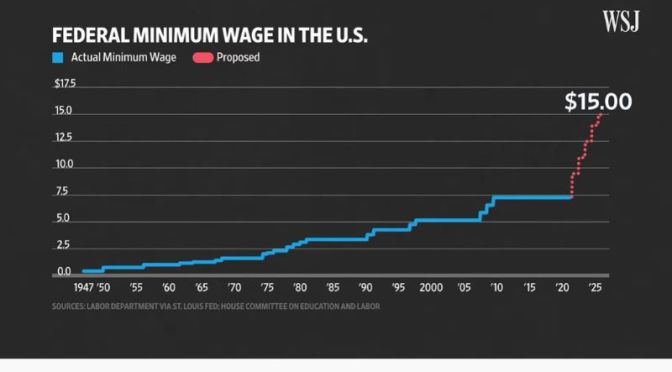
The Economy: How A $15 Minimum Wage Effects It

Biden has identified raising the minimum wage as a key goal of his administration, but economists and lawmakers disagree on the potential impact. WSJ asked two economists and a minimum-wage worker what the costs and benefits of a $15 minimum wage might be. Photo: Bill Clark/Congressional Quarterly/Zuma Press

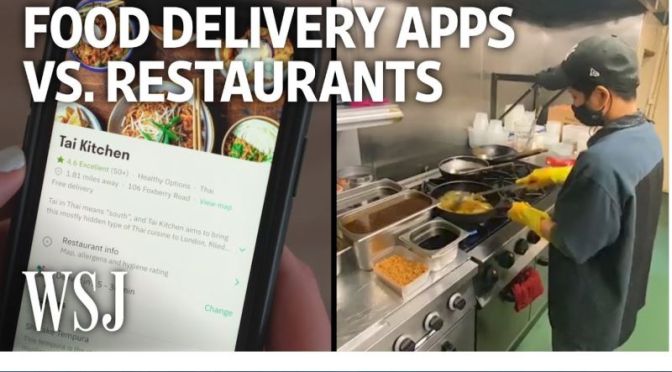
Analysis: ‘Food Delivery Apps vs Restaurants’ (WSJ)

Demand for food delivery has soared amid the pandemic, but restaurants are struggling to survive. In a fiercely competitive industry, delivery services are fighting to gain market share while facing increased pressure to lower commission fees and provide more protection to their workers. Video/Photo: Jaden Urbi/WSJ

Analysis: The Rise & Fall Of E-Cigarette Maker ‘Juul’

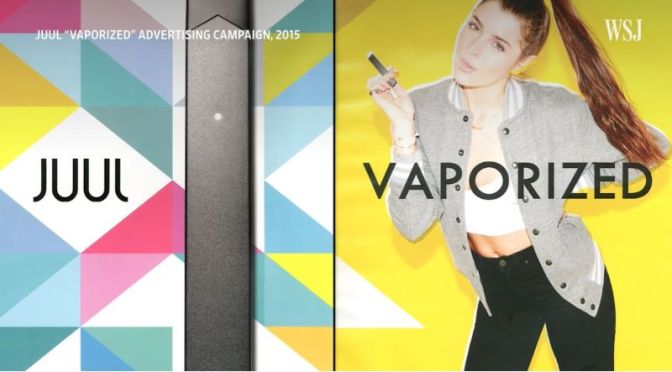
In 2017, Juul catapulted to the top of the e-cigarette market. But the company’s valuation has fallen just as quickly, as a series of crises have led to hundreds of lawsuits alleging that the company marketed its products to teens. Photo Illustration: Jacob Reynolds/WSJ

Business: ‘LEGO – A $38 Billion Toy Empire’ (Video)

The LEGO brick may not look like much but it is the cornerstone of the $38.5 billion Danish company. Today, LEGO’s blockbuster portfolio includes collaborations with The Beatles, Star Wars, and Frozen, a mega-hit movie franchise and 8 LEGOland theme parks. A toy that was once thought of for little boys is seeing its largest growth coming from girls and adults. But in the early 2000s, the company made several missteps and came extremely close to declaring bankruptcy. Here’s how LEGO reclaimed its status as one of the most successful toy companies in the world.

Analysis: Overpopulation – Are Environmental Issues Caused By It? (Video)

Around 390,000 new humans are born every day. So, on a planet with dwindling resources and an increasing strain on natural systems… is curbing our booming population the key to solving our environmental woes?

In 2018, just North America and China were responsible for almost half of the world’s CO2 emissions. These are also the countries with the highest concentrations of the world’s wealthiest people. Their populations are living longer and having fewer babies, so their population growth is actually slowing down. By contrast, the poorest half of the world—where most global population growth is currently concentrated — produces only 10% of the world’s CO2 emissions.

These populations typically lack the technology and wealth that result in high energy expenditure, increased industrialization, and pollution. So, in climate change projections that take these imbalances into account, it’s been shown that redistributing wealth—so, reducing both extreme wealth and extreme poverty—has as much impact on carbon emissions as reducing overall population would.

Even in projected scenarios where a reduction in population does make a difference in emissions, it’s not enough of a difference to affect projected temperature rise. No amount of population reduction would achieve the reduction in emissions necessary to keep global warming below 2 degrees Celsius in our near future.

Technology Podcast: Covid “Growth”, Magnetic Tape & Herbal Remedies

Covid-19 has catalysed scientific advancement and boosted technological optimism. Could innovation be the answer to decades of slowing growth in Western countries? Also, why magnetic tape still reigns supreme in “cold” data storage. And how effective are traditional herbal remedies at treating tropical diseases?

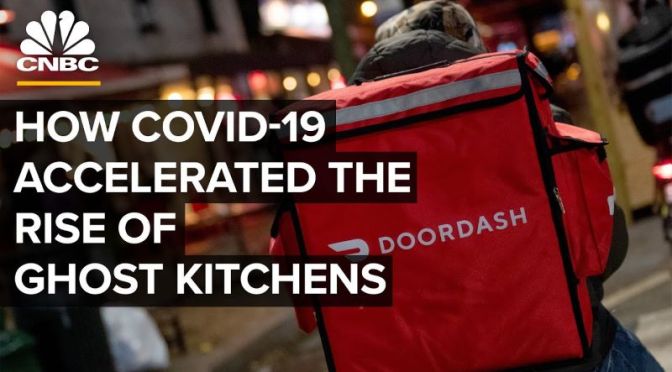
Delivery-Only Dining: ‘How Covid Accelerated Rise Of Ghost Kitchens’

Ghost kitchens are kitchens designed for delivery-only businesses, without dine-in areas or customer facing storefronts. The pandemic has ravaged dine-in eateries, and companies that have focused on delivery could come out on top if the current trends continue. Watch the full video to see why ghost kitchens are taking over the restaurant industry.

Here are some of the top Ghost Kitchens:

Kitchen United

With a $10 million dollar investment from Google Ventures, Kitchen United has been one of the leanest (and fastest-growing) startups in the space. Founder Jim Collins has turned down hundreds of millions of investment dollars to focus on growing more organically. Currently, Kitchen United plans on conquering the global restaurant space — with 5,000 kitchens planned in the next four years.

All in all, Kitchen United offers a turn-key, light-capital model, delivering a complete, code-safe kitchen replete with appliances and cooking implements. All that’s left to do is to…cook.

CloudKitchens

The fastest-growing and most investor-friendly ghost kitchen startup, CloudKitchens, has already taken in over $400 million from investors. $150 million interestingly invested by its founder (former Uber superstar) Travis Kalanick. Like Kitchen United, CloudKitchens offers fully-equipped kitchens (branded as “smart kitchens”) for the delivery-only model. Honestly, you can’t ignore a project that Travis is a part of.

DoorDash Kitchens

Another not-so-surprising entry into the ghost kitchen space is DoorDash, which has already premiered locations in San Francisco and Redwood City. Currently, DoorDash’s model is focused on catering to high-delivery areas for established brands like Chic-Fil-A, but we’re sure they have plans in the works for new locations, as well.

For the time being, DoorDash Kitchens is still in the experimentation phase, with only a few locations. And, like others on this list, it provides everything a restauranteur would need for a single monthly fee.

UberEats

For the moment, we’ll set aside the possible conflicts associated with Uber’s ex co-founder Travis Kalanick — who’s also operating CloudKitchens. We’re sure that bridge will need crossing at some point if Uber expands its operations. For the time being, the ridesharing company has been keeping a low profile in the ghost kitchen space. To date, it has been testing ghost kitchens in a few markets, though it remains curiously reluctant to share the delicious details pertaining to its Paris operations.

Virtual Kitchen Co.

Another new entry is Virtual Kitchen Co. — which already operates several successful ghost kitchens. They plan to open 15 more kitchens over the next few years, driven by $15 million dollar Series A.  Again, Virtual Kitchen Co. offers a similar pricing structure: Restaurants can pay a monthly fee for everything.

The one small difference here is that Virtual Kitchen Co. seems to be targeting existing restaurants that want to enter the delivery space.

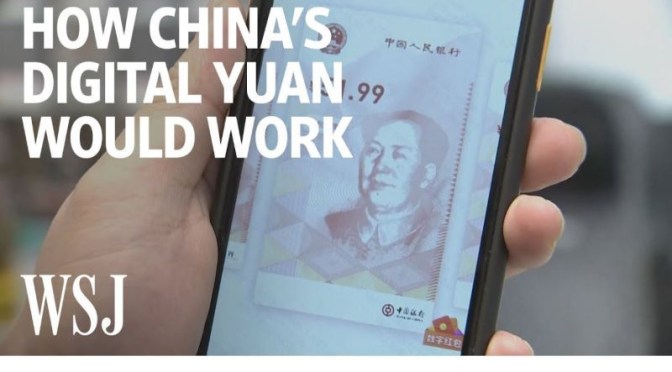
Anaylysis: China Tests New ‘Digital Currency’ That Replaces Cash (WSJ Video)

China is testing a digital yuan, aiming to accelerate the replacement of cash and increase state control in a society where digital payments via Wechat Pay and Alipay are already the norm. Here’s what Beijing’s new system looks like—and how it would work. Photo credit: Florence Lo/Reuters