
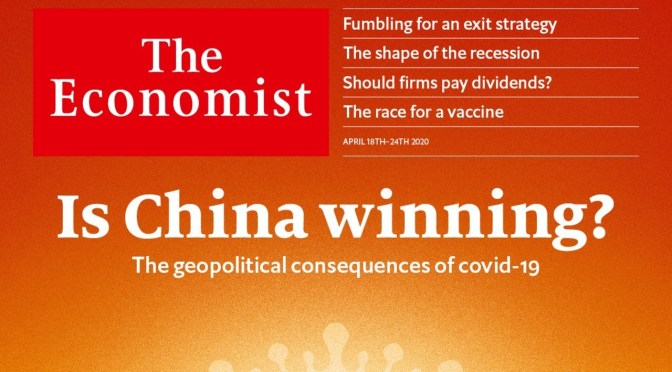
 A selection of three essential articles read aloud from the latest issue of The Economist. This week, is China the pandemic’s big geopolitical winner? (8:30) Saudi Arabia has declared a ceasefire in Yemen, but the Houthis are fighting on. (14:13) And, how Britain’s glossy magazines are adjusting to a gloomy world.
Category Archives: News
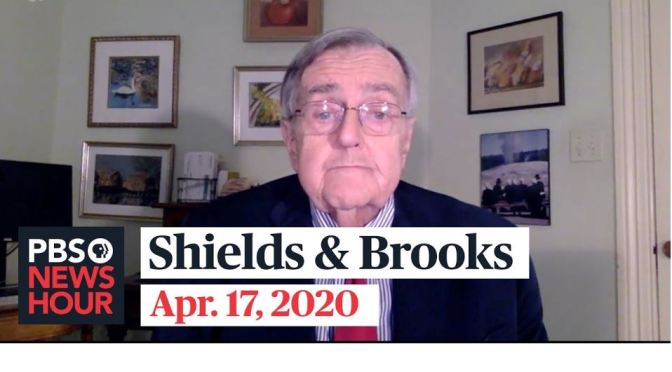
Political News: “Shields & Brooks” On Coronavirus Reopening, Joe Biden (PBS)
Syndicated columnist Mark Shields and New York Times columnist David Brooks join Judy Woodruff to discuss the week’s news, including the Trump administration’s guidance to states about when to reopen amid the pandemic, the ongoing struggle to conduct more COVID-19 tests, Trump’s criticism of Democratic governors and what Sen. Bernie Sanders’ endorsement means for former Vice President Joe Biden.
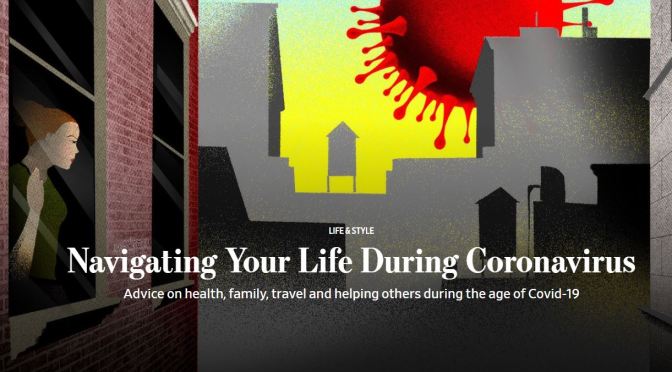
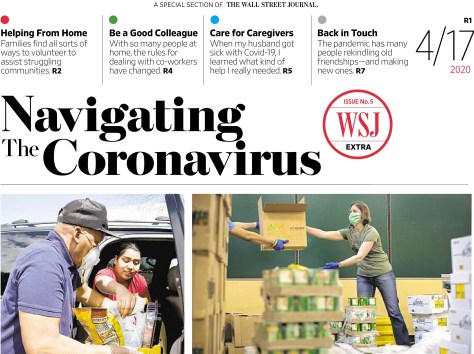
Health News: “Navigating The Coronavirus” – Wall Street Journal (April 17)
From the Wall Street Journal (April 17, 2020):
As the coronavirus pandemic upends work, travel and home life, the rules are shifting for what people can and can’t do in their daily lives. The WSJ is continuously updating advice and information on how to stay safe, healthy and connected, and how to help others.
Aid to a Friend Caring for a Coronavirus Patient
“Because I am organized in my job and day-to-day life, I took on my husband’s care thinking I would have it all quickly in hand. But things didn’t turn out that way,” writes Leslie Yazel, whose husband came down with coronavirus-related pneumonia. Here, she offers what she learned about the best ways to help those who are caring for someone with coronavirus.
Get a Good Night’s Sleep

Covid-19 Podcast: Testing Lab Challenges, WHO Funding & Immune System Issues (Nature.com)
 Benjamin Thompson, Noah Baker, and Amy Maxmen discuss Trump withholding funds from the WHO, and how COVID-19 kills. We also hear about controlling misinformation while communicating risk.
In this episode:
01:15 Understanding bottlenecks
After listening to last week’s episode of Coronapod, researchers in the USA were inspired to start collecting data about the challenges facing labs carrying out testing. After more than 4,000 responses to their online survey, we discuss their goals.
03:08 A hole in the WHO’s funding
US President Donald Trump has announced plans to withhold funding for the WHO, pending a review of the organization’s handling of the pandemic. We discuss the decision and ask what it means for the global response to COVID-19.
News: Nature‘s rolling coronavirus news blog
05:55 Responding to the immune system
We investigate the role of the immune system in the death of COVID-19 patients and what this could mean for treatments. Could some therapeutics actually be undermining the body’s ability to fight the virus?
News: How does COVID-19 kill? Uncertainty is hampering doctors’ ability to choose treatments
13:54 One good thing this week
Our hosts pick out things that have made them smile in the last 7 days, including seasonal memories from Sierra Leone, a trip to the supermarket, and the 99-year old war veteran who has raised millions for charity.
BBC News: Coronavirus: Capt Tom Moore’s NHS fundraiser hits £17m
18:33 Communicating complex data
Clearly communicating risks and evidence is key for governments and other organisations if they are to best inform the public during the pandemic. But what is the best way to do it? We hear the methods that communications experts and behavioural scientists recommend to keep the public informed, and keep misinformation at bay.
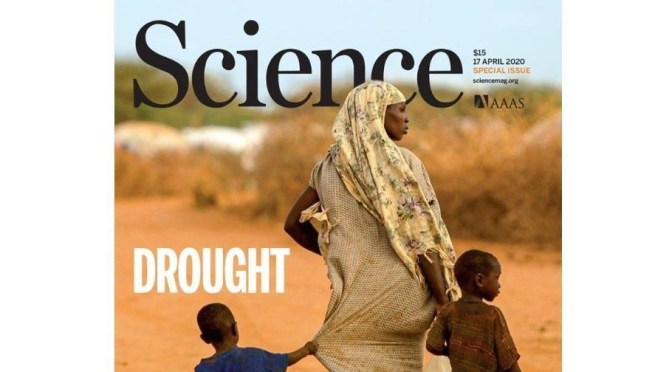
TOP JOURNALS: RESEARCH HIGHLIGHTS FROM SCIENCE MAGAZINE (APRIL 17, 2020)
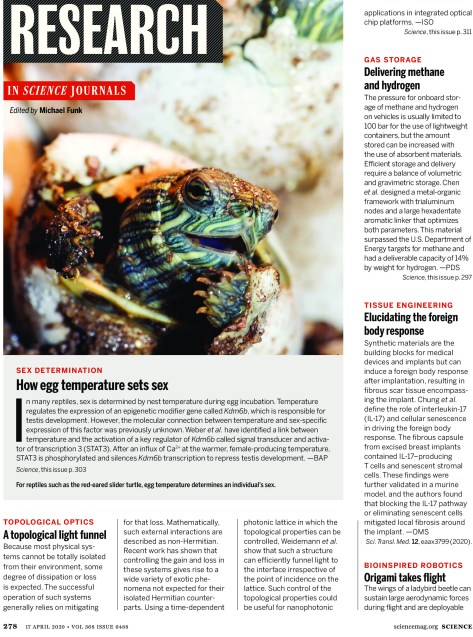
Top New Science Podcasts: Countries’ Coronavirus Comebacks, Managing Water & The Ancient Wari
 Contributing Correspondent Kai Kupferschmidt talks with host Sarah Crespi about countries planning a comeback from a coronavirus crisis. What can they do once cases have slowed down to go back to some sort of normal without a second wave of infection?
Contributing Correspondent Lizzie Wade joins Sarah to talk about water management and the downfall of the ancient Wari state. Sometimes called the first South American empire, the Wari culture successfully expanded throughout the Peruvian Andes 1400 years ago.
Also this week, Yon Visell of the University of California, Santa Barbara, talks with Sarah about his Science Advances paper on the biomechanics of human hands. Our skin’s ability to propagate waves along the surface of the hand may help us sense the world around us.
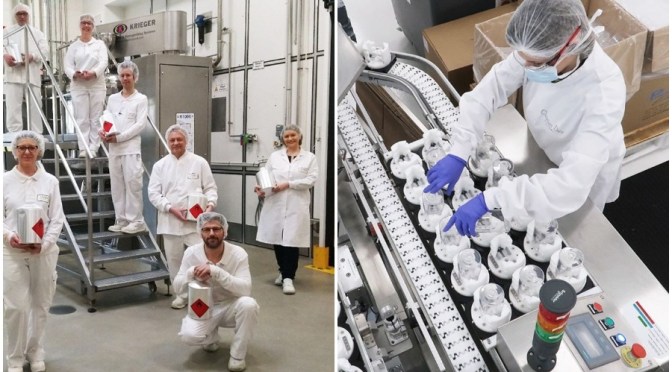
Health: LVMH And Fashion Industry Now Making Hand Sanitizer, Masks And Protective Gear (Podcast)
 Jamie Waters explains how the fashion industry emerged as a vital contributor in the fight against the pandemic. Many brands, big and small, have pivoted to make masks and other protective equipment.

Social Distancing: 3-D Simulation Of How Respiratory Droplets Spread Coronavirus
From The New York Times (April 14, 2020):
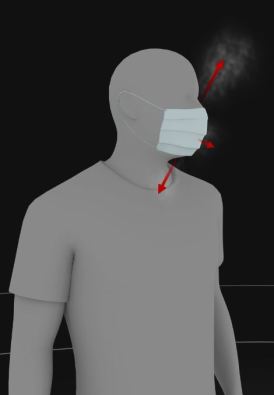
But as this simulation suggests, and scientists have argued, droplets can travel farther than six feet. And small droplets known as aerosols can remain suspended or travel through the air before they eventually settle on surfaces. This is how they could disperse over the next 20 minutes.
The Centers for Disease Control and Prevention encourages people to stay home. If you must venture out, you should stay at least six feet away from others. The World Health Organization recommends a minimum of three feet of separation.
Scientists are learning about the novel coronavirus in real time, and those who study similar respiratory illnesses say that until it is better understood, no guideline is likely to offer perfect safety. Instead, understanding the possible transmission routes for the virus can help us see why keeping our distance is so important.
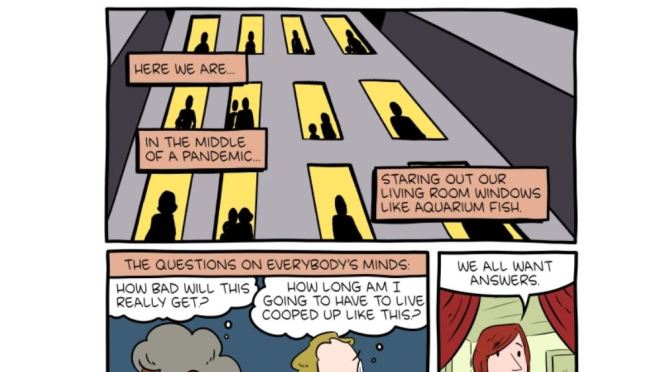
Statistics: The Difficulty In Predicting The Future Of The Covid-19 Pandemic


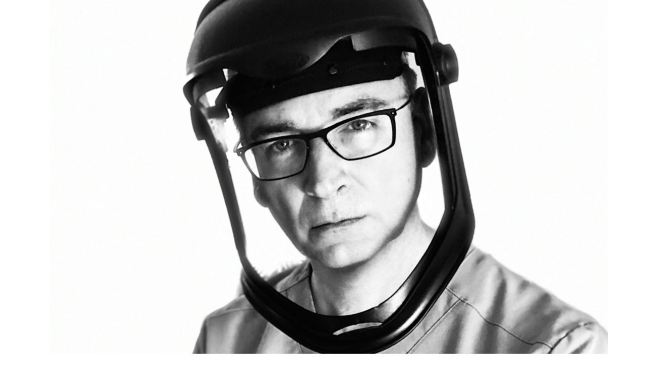
Coronavirus/Covid-19: “Face Shields” Are Best In Preventing Transmission Says Epidemiologist
From web post by Michael B. Edmond (April 11, 2020):
Our goal should be to have a face shield for every person in the country. It should be worn anytime a person leaves their home, while in any public place, and even at work. From news reports, it appears that face shields are already being more commonly worn in other nations, particularly in some Asian countries.
The advantages of face shields are their durability allowing them to be worn an indefinite number of times, the ability to easily clean them after use, their comfort, and they prevent the wearer from touching their face. Importantly, they cover all the portals of entry for this virus–the eyes, the nose, and the mouth. Moreover, the supply chain is significantly more diversified than that of face masks, so availability is much greater.
Some are critical of any strategy that isn’t perfect. But let’s think about the influenza vaccine. Although the effectiveness varies from year to year, on average it’s 40%. We push this vaccine hard in the hospital and in the community. Could we expect that face shields are at least 40% effective in reducing the transmission of COVID-19? I think so. Universal shielding would bend the curve more quickly and accelerate the ability to reduce social distancing and restrictions on movement.
.
Face shields are a simple solution that if implemented universally would have a major impact on public health. Until we have a vaccine, this may be our best intervention for preventing transmission in the community.
.
.
Michael B. Edmond, MD, MPH, MPA, MBA is the Chief Quality Officer and Associate Chief Medical Officer for University of Iowa Health Care and Clinical Professor of Infectious Diseases at the University of Iowa Carver College of Medicine. He previously served as the Richard P. Wenzel Professor of Internal Medicine, Chair of the Division of Infectious Diseases, and Hospital Epidemiologist at Virginia Commonwealth University in Richmond.
 Intellicurious