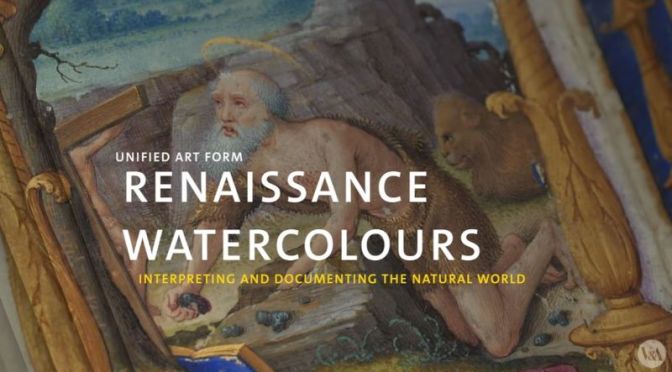
Focussing on the three types of object featured in the V&A display Renaissance Watercolours: illuminated manuscripts, portrait miniatures and coloured drawings, this film showcases the qualities that made watercolour the medium of choice for many artists during the Renaissance.
A modern-day painting of a pomegranate, using traditional watercolour techniques, by artist Lucy Smith, also demonstrates how watercolour painting remains a versatile medium, ideal for capturing life-like details that help us to record our diverse world.
The Pentagon is the headquarters building of the United States Department of Defense. As a symbol of the U.S. military, the phrase The Pentagon is also often used as a metonym for the Department of Defense and its leadership.
The Pentagon is the world’s largest office building, with about 6,500,000 square feet (150 acres; 0.60 km2) of floor space, of which 3,700,000 sq ft (85 acres; 0.34 km2) are used as offices.[7][8] Some 23,000 military and civilian employees,[8] and another 3,000 non-defense support personnel, work in the Pentagon. It has five sides, five floors above ground, two basement levels, and five ring corridors per floor with a total of 17.5 miles (28.2 km)[8] of corridors. The central five-acre (2.0 ha) pentagonal plaza is nicknamed “ground zero” on the presumption that it would be a prime target in a nuclear war.
Every legacy has a compelling origin. The soon-to-be-launched Landsat 9 is the intellectual and technical product of eight generations of Landsat missions, spanning nearly 50 years.
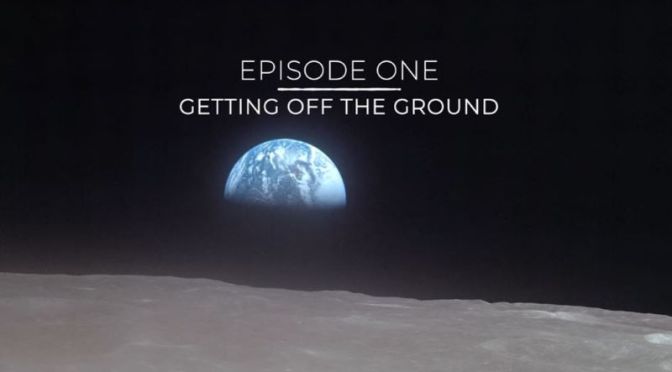
Episode One answers the question “why?” Why did the specific years between 1962 and 1972 call for a such a mission? Why did leadership across agencies commit to its fruition? Why was the knowledge it could reveal important to the advancing study of earth science?
In this episode, we’re introduced to William Pecora and Stewart Udall, two men who propelled the project into reality, as well as Virginia Norwood who breathed life into new technology. Like any worthwhile endeavor, Landsat encountered its fair share of resistance. Episode one explores how those challenges were overcome with the launch of Landsat 1, signifying a bold step into a new paradigm.
Additional footage courtesy of Gordon Wilkinson/Texas Archive of the Moving Image and the US Geological Survey. The Landsat Program is a series of Earth-observing satellite missions jointly managed by NASA and the U.S. Geological Survey (USGS). Landsat satellites have been consistently gathering data about our planet since 1972. They continue to improve and expand this unparalleled record of Earth’s changing landscapes for the benefit of all.
Music: “The Missing Star,” “Brazenly Bashful,” “Light Tense Weight,” “It’s Decision Time,” “Patisserie Pressure,” from Universal Production Music Credit: NASA’s Goddard Space Flight Center Matthew R. Radcliff (USRA): Lead Producer Ryan Fitzgibbons (USRA): Lead Producer Kate Ramsayer (USRA): Lead Producer LK Ward (USRA): Lead Writer Ryan Fitzgibbons (USRA): Lead Editor Jeffrey Masek (NASA/GSFC): Lead Scientist Marc Evan Jackson: Narrator Terry Arvidson (Lockheed Martin): Interviewee Aaron E. Lepsch (ADNET): Technical Support
Award-winning food writer Mark Riddaway travels back through the centuries to tell the fascinating, surprising and often downright bizarre stories of some of the everyday ingredients found at London’s Borough Market.
Discover how the strawberries we eat today had their roots in a clandestine trip to South America by a French spy whose surname happened to be Strawberry, why three-quarters of Britain’s late-18th-century intake of tea was sold on the black market, and what Sigmund Freud found so fascinating about eel genitalia.
From the humble apples and onions that we’ve grown on these shores for centuries, to more exotic ingredients like cinnamon and bananas that travel from across the world to finesse our food, Borough Market: Edible Histories offers a chance to digest the charming stories behind every last morsel.
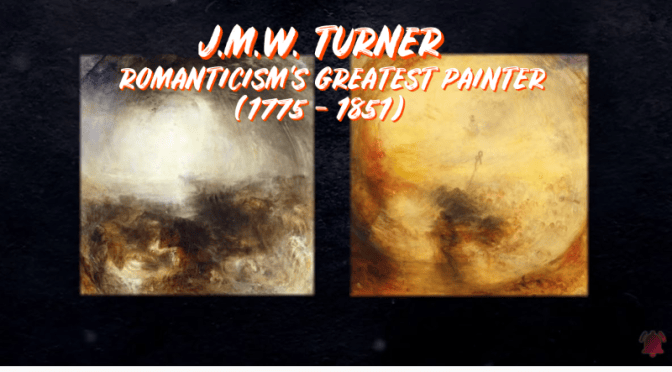
Joseph Mallord William Turner RA, known contemporarily as William Turner, was an English Romantic painter, printmaker and watercolourist. He is known for his expressive colourisations, imaginative landscapes and turbulent, often violent marine paintings.
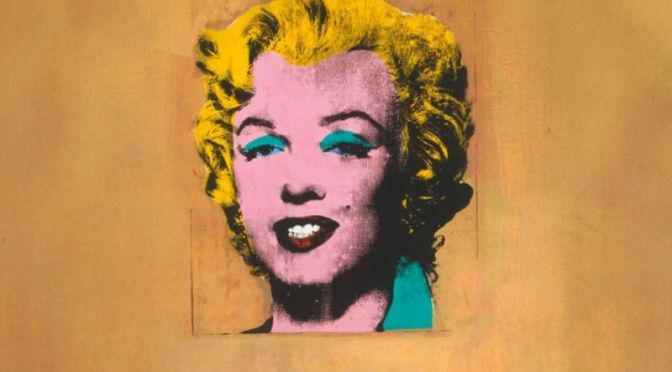
In 1967, Warhol established a print-publishing business, Factory Additions, through which he published a series of screenprint portfolios on his signature subjects. Marilyn Monroe was the first one. He used the same publicity still of the actress that he had previously used for dozens of paintings. Each image here was printed from five screens: one that carried the photographic image and four for different areas of color, sometimes printed off-register. About repetitions Warhol said, “The more you look at the same exact thing, the more the meaning goes away, and the better and emptier you feel.”
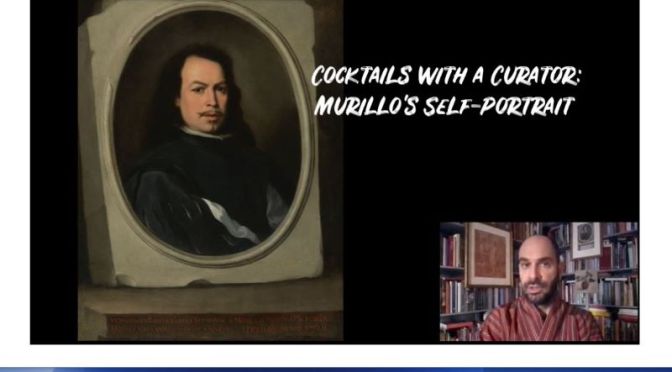
In this week’s episode of “Cocktails with a Curator,” delve into the life and times of Bartolomé Esteban Murillo, one of the most celebrated painters of seventeenth-century Spain. Look closely at his self-portrait for clues about the Seville-born artist—a trompe l’oeil stone frame points to his fascination with the antiquities excavated in his hometown, and the sitter seems to be looking forward, into the future, after surviving a traumatic period when Seville was ravaged by plague. Acquired by Henry Clay Frick in 1904, the painting stayed with the family until 2014, when it was gifted to the museum by Dr. and Mrs. Henry Clay Frick II. This week’s complementary cocktail, the Rebujito, conjures the warm spring days of Seville’s Feria de Abril (April Fair) and goes well with Thanksgiving leftovers.
Inveraray Castle is home to one of the most important private collections of historical archives in all of Britain – a collection of records, documents and diaries, dating back to the 13th century. The restoration of the private archival documents is a gradual, painstaking and expensive process. In fact, a single damaged page can cost up to a hundred pounds to repair.
Inveraray Castle is a country house near Inveraray in the county of Argyll, in western Scotland, on the shore of Loch Fyne, Scotland’s longest sea loch. It is one of the earliest examples of Gothic Revival architecture. It has been the seat of the Dukes of Argyll, chiefs of Clan Campbell, since the 18th century.
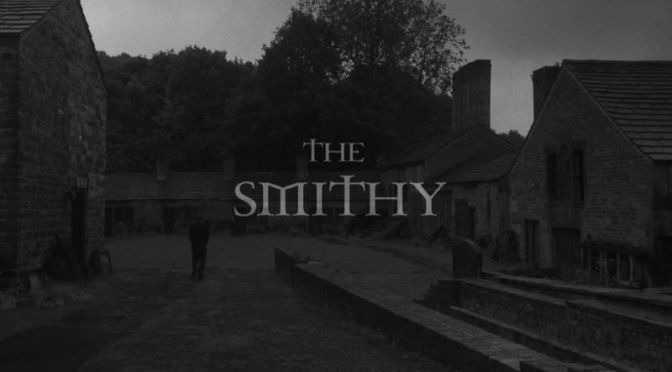
The word Smithy is a middle English word from Old Norse Smithja : meaning a blacksmith’s workshop or forge. In Sheffield and other parts or Northern England, blacksmiths themselves are often referred to as smithies.
Follow this Smithy on his gloomy walk to work and witness the dark forces, skill and energy that go into giving a new blade its shape, form and life. Filmed using a mixture of 16mm film and digital.
The feel and sound tip their cap to the old world view of the craft but in reality the subject is a non fictional blacksmith working at his beautiful old forge today in Sheffield.
Blacksmith David Southgate Soundscape Jordan Hatfield Atmospheres GYerro & Max H Locations Sheffield UK
News, Views and Reviews For The Intellectually Curious