
Category Archives: Health

New Survey: 58% Of Older Adults Are ‘Likely’ To Get A Covid-19 Vaccine (Nov ’20)

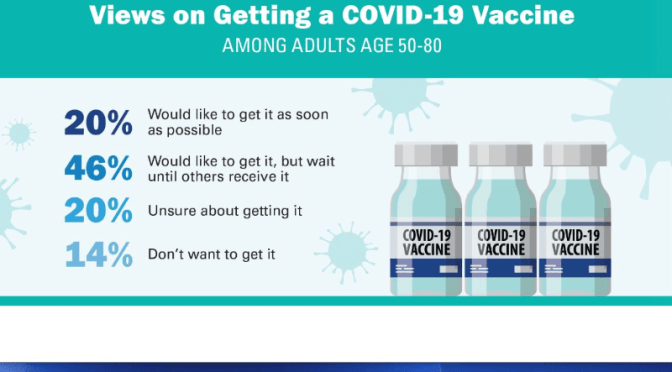
When asked how likely they would be to get a COVID-19 vaccine when available and if no cost to them, 58% of older adults indicated they would be likely to get a COVID-19 vaccine (33% very likely, 25% somewhat likely), 28% said they were unlikely (11% somewhat unlikely, 17% very unlikely), and 14% were unsure or did not know.
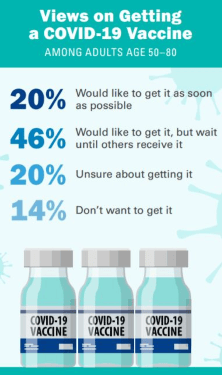
About two in three older adults (63%) indicated they received a flu shot last flu season. Seven in ten either received one since August 2020 (34%) or intended to get one this flu season (38%). Nearly half of adults age 50–80 (49%) believed that getting a flu vaccine is more important this year compared to other years, 44% said it is just as important, and 7% said it was less important.

Interest in getting a COVID-19 vaccine was more common among those age 65–80 compared with those 50–64 (63% vs. 54%), men compared with women (64% vs. 52%), and Whites compared with Hispanics and Blacks (63% vs. 51% vs. 40%). Individuals who lived with others, had higher household incomes, or had more education were also more likely to report they would get a COVID vaccine.

Half of adults age 50–80 (52%) said they personally knew someone who had COVID-19, and 2% reported having had it themselves. One in five older adults (19%) indicated they personally knew someone who died from COVID-19. The likelihood of getting a COVID-19 vaccine did not differ based on whether respondents knew someone who had COVID-19 or who died from it.

In deciding whether to get a COVID-19 vaccine, older adults rated the following as very important: how well it works (80%), their own research (56%), and if it was recommended by their doctor (52%), public health officials (42%), or family and friends (13%). Cost was rated as very important by 30% of older adults.
Website

Morning News Podcast: Thanksgiving Travel & College Covid Concerns

Last week, the Centers for Disease Control and Prevention issued a warning against holiday travel. The day after 1 million Americans got on a plane, it’s the highest volume of travelers airports have seen since the pandemic.

  • Plus, how the country’s largest public university system is handling Thanksgiving.
  • And, the life and death implications of delaying the presidential transition.

Guests: Axios’ Joann Muller, and Russell Contreras and State University of New York Chancellor Jim Malatras.

Health: Three Exercise Benefits For The Brain

Memory

Many studies suggest that exercise can help protect our memory as we age. This is because exercise has been shown to prevent the loss of total brain volume (which can lead to lower cognitive function), as well as preventing shrinkage in specific brain regions associated with memory. For example, one magnetic resonance imaging (MRI) scan study revealed that in older adults, six months of exercise training increases brain volume.

Another study showed that shrinkage of the hippocampus (a brain region essential for learning and memory) in older people can be reversed by regular walking. This change was accompanied by improved memory function and an increase of the protein brain-derived neutropic factor (BDNF) in the bloodstream.

Blood vessels

The brain is highly dependent on blood flow, receiving approximately 15% of the body’s entire supply – despite being only 2-3% of our body’s total mass. This is because our nervous tissues need a constant supply of oxygen to function and survive. When neurons become more active, blood flow in the region where these neurons are located increases to meet demand. As such, maintaining a healthy brain depends on maintaining a healthy network of blood vessels.

Regular exercise increases the growth of new blood vessels in the brain regions where neurogenesis occurs, providing the increased blood supply that supports the development of these new neurons. Exercise also improves the health and function of existing blood vessels, ensuring that brain tissue consistently receives adequate blood supply to meet its needs and preserve its function.

Inflammation

Recently, a growing body of research has centred on microglia, which are the resident immune cells of the brain. Their main function is to constantly check the brain for potential threats from microbes or dying or damaged cells, and to clear any damage they find.

With age, normal immune function declines and chronic, low-level inflammation occurs in body organs, including the brain, where it increases risk of neurodegenerative disease, such as Alzheimer’s disease. As we age, microglia become less efficient at clearing damage, and less able to prevent disease and inflammation. This means neuroinflammation can progress, impairing brain functions – including memory.

Read more

Covid-19 Podcast: Death Rates Are Falling – What This Means For Pandemic

The COVID-19 mortality rate is falling around the world. We discuss the reasons behind this – the role of new drugs, the treatment strategies the have been learned, or re-learned, and the ever-present worry that these hard won victories could be undone by rising infection rates.

In this episode:

00:44 An increase in survival rates

The COVID-19 mortality rate is falling around the world. We discuss the reasons behind this – the role of new drugs, the treatment strategies the have been learned, or re-learned, and the ever-present worry that these hard won victories could be undone by rising infection rates.

News Feature: Why do COVID death rates seem to be falling?

10:53 More vaccine good news

This week, Moderna released preliminary results for its COVID-19 vaccine candidate, the third positive indication from a string of vaccine announcements. Although the full data are yet to be published, do these results give us more reasons to feel hopeful?

News: COVID vaccine excitement builds as Moderna reports third positive result

Health: Covid-19 Vaccine Threatened By Mistrust Of Science & Politicians

A vaccine for covid-19 could be rolled out before the end of the year. But a worrying rise in mistrust of vaccines threatens its effectiveness. Now & Next is a series from The Economist Films: https://films.economist.com/nowandnext/

Health & Nature: ‘How Bats Can Transmit Viruses’

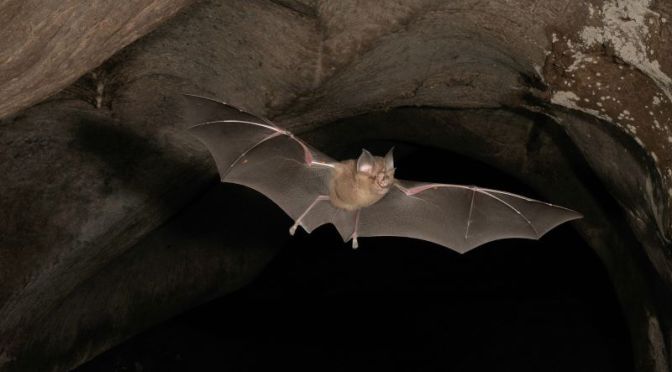
When it comes to viruses jumping from animals to humans, bats hold a unique place in the transmission chain. Christopher Golden and James Longman investigate an abandoned mine for signs of poaching or viruses impacting the bat population.