
Category Archives: Health
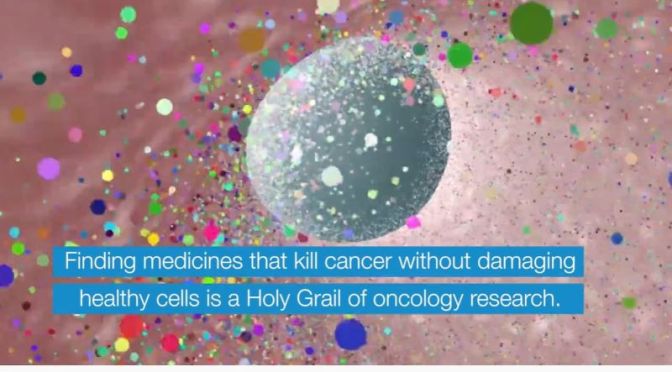
Research: New ‘Smart Cell Therapies’ To Treat Cancer
Finding medicines that can kill cancer cells while leaving normal tissue unscathed is a Holy Grail of oncology research. In two new papers, scientists at UC San Francisco and Princeton University present complementary strategies to crack this problem with “smart” cell therapies—living medicines that remain inert unless triggered by combinations of proteins that only ever appear together in cancer cells.
Biological aspects of this general approach have been explored for several years in the laboratory of Wendell Lim, PhD, and colleagues in the UCSF Cell Design Initiative and National Cancer Institute– sponsored Center for Synthetic Immunology. But the new work adds a powerful new dimension to this work by combining cutting-edge therapeutic cell engineering with advanced computational methods.
For one paper, published September 23, 2020 in Cell Systems, members of Lim’s lab joined forces with the research group of computer scientist Olga G. Troyanskaya, PhD, of Princeton’s Lewis-Sigler Institute for Integrative Genomics and the Simons Foundation’s Flatiron Institute.
Using a machine learning approach, the team analyzed massive databases of thousands of proteins found in both cancer and normal cells. They then combed through millions of possible protein combinations to assemble a catalog of combinations that could be used to precisely target only cancer cells while leaving normal ones alone. In another paper, published in Science on November 27, 2020, Lim and colleagues then showed how this computationally derived protein data could be put to use to drive the design of effective and highly selective cell therapies for cancer.
“Currently, most cancer treatments, including CAR T cells, are told ‘block this,’ or ‘kill this,’” said Lim, also professor and chair of cellular and molecular pharmacology and a member of the UCSF Helen Diller Family Comprehensive Cancer Center. “We want to increase the nuance and sophistication of the decisions that a therapeutic cell makes.”
Over the past decade, chimeric antigen receptor (CAR) T cells have been in the spotlight as a powerful way to treat cancer. In CAR T cell therapy, immune system cells are taken from a patient’s blood, and manipulated in the laboratory to express a specific receptor that will recognize a very particular marker, or antigen, on cancer cells. While scientists have shown that CAR T cells can be quite effective, and sometimes curative, in blood cancers such as leukemia and lymphoma, so far the method hasn’t worked well in solid tumors, such as cancers of the breast, lung, or liver.
Cells in these solid cancers often share antigens with normal cells found in other tissues, which poses the risk that CAR T cells could have off-target effects by targeting healthy organs. Also, solid tumors also often create suppressive microenvironments that limit the efficacy of CAR T cells. For Lim, cells are akin to molecular computers that can sense their environment and then integrate that information to make decisions. Since solid tumors are more complex than blood cancers, “you have to make a more complex product” to fight them, he said.
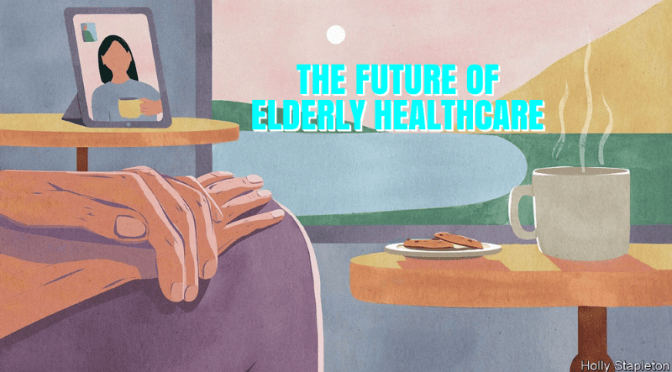
Post Covid: “The Future Of Elderly Care’ (Video)
Across the rich world around half of covid-19 deaths have been in care homes. Countries need to radically rethink how they care for their elderly—and some innovative solutions are on offer.

Covid-19 Podcast: New Studies On Transmission
In this audio interview conducted on November 25, 2020, the editors look at new studies of disease transmission in closed environments and provide updates on convalescent plasma and hydroxychloroquine.
Covid-19: How The U.S. Will Roll Out Vaccine (Video)
The worsening pandemic continues to mean millions of Americans out of work. For older employees in particular, this kind of long-term unemployment can represent the end of a career — especially when they may be facing age discrimination and bias. Economics correspondent Paul Solman looks at the problem as part of his series Unfinished Business.
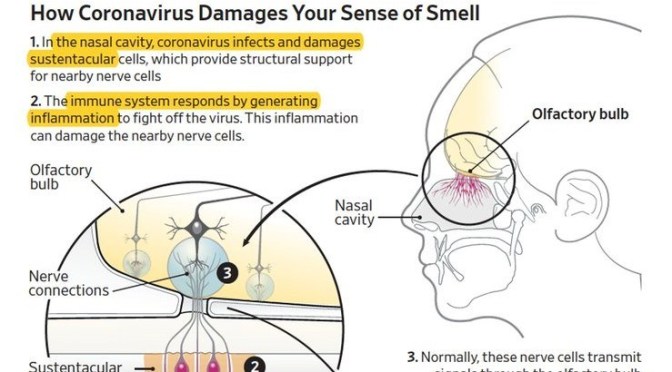
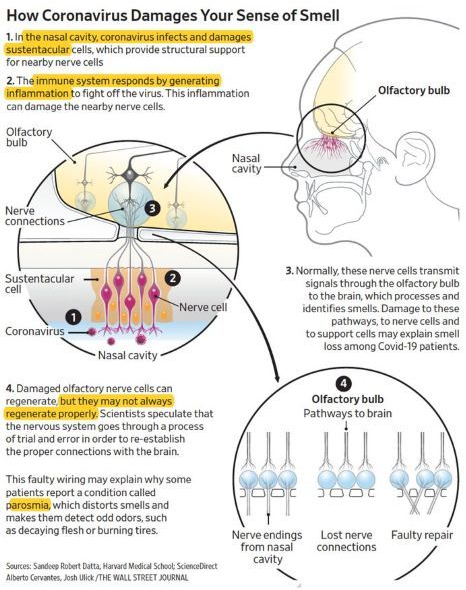
Infographic: ‘How Covid-19 Damages Sense Of Smell’
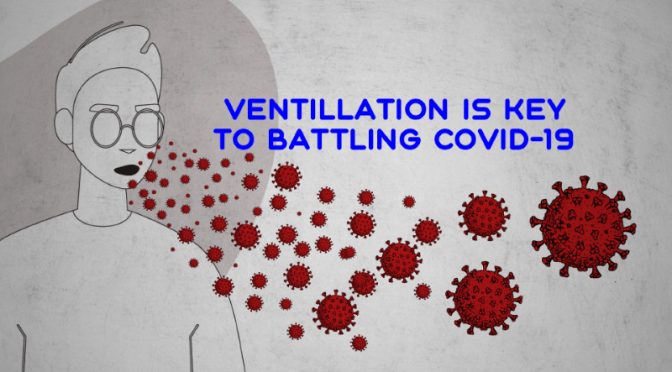
Covid-19: ‘Ventilation Key To Limiting Spread’ (Video)
As the weather gets colder and people head indoors, the risk of catching Covid-19 is rising. WSJ explains why air ventilation and filtration are one of our biggest defenses against the coronavirus this winter.
Illustration: Nick Collingwood/WSJ
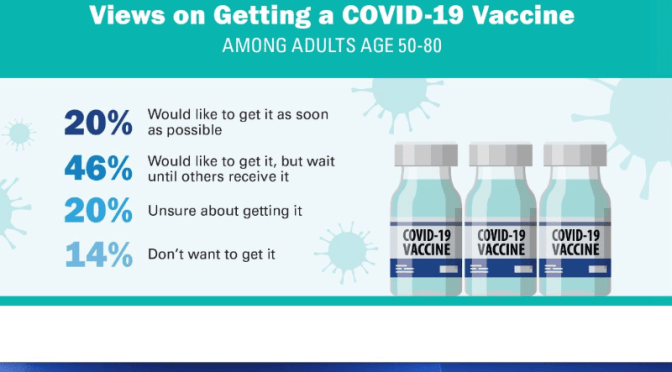
New Survey: 58% Of Older Adults Are ‘Likely’ To Get A Covid-19 Vaccine (Nov ’20)

When asked how likely they would be to get a COVID-19 vaccine when available and if no cost to them, 58% of older adults indicated they would be likely to get a COVID-19 vaccine (33% very likely, 25% somewhat likely), 28% said they were unlikely (11% somewhat unlikely, 17% very unlikely), and 14% were unsure or did not know.
About two in three older adults (63%) indicated they received a flu shot last flu season. Seven in ten either received one since August 2020 (34%) or intended to get one this flu season (38%). Nearly half of adults age 50–80 (49%) believed that getting a flu vaccine is more important this year compared to other years, 44% said it is just as important, and 7% said it was less important.
Interest in getting a COVID-19 vaccine was more common among those age 65–80 compared with those 50–64 (63% vs. 54%), men compared with women (64% vs. 52%), and Whites compared with Hispanics and Blacks (63% vs. 51% vs. 40%). Individuals who lived with others, had higher household incomes, or had more education were also more likely to report they would get a COVID vaccine.
Half of adults age 50–80 (52%) said they personally knew someone who had COVID-19, and 2% reported having had it themselves. One in five older adults (19%) indicated they personally knew someone who died from COVID-19. The likelihood of getting a COVID-19 vaccine did not differ based on whether respondents knew someone who had COVID-19 or who died from it.
In deciding whether to get a COVID-19 vaccine, older adults rated the following as very important: how well it works (80%), their own research (56%), and if it was recommended by their doctor (52%), public health officials (42%), or family and friends (13%). Cost was rated as very important by 30% of older adults.
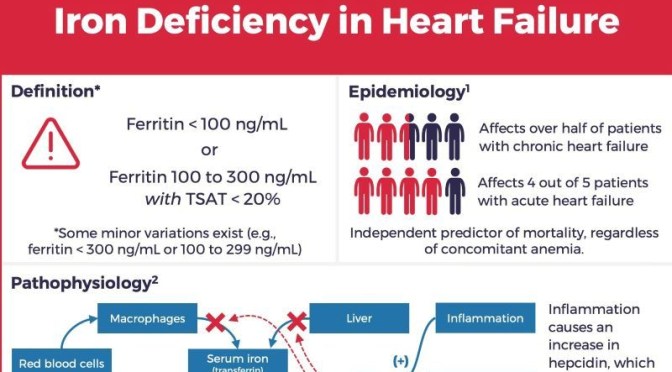
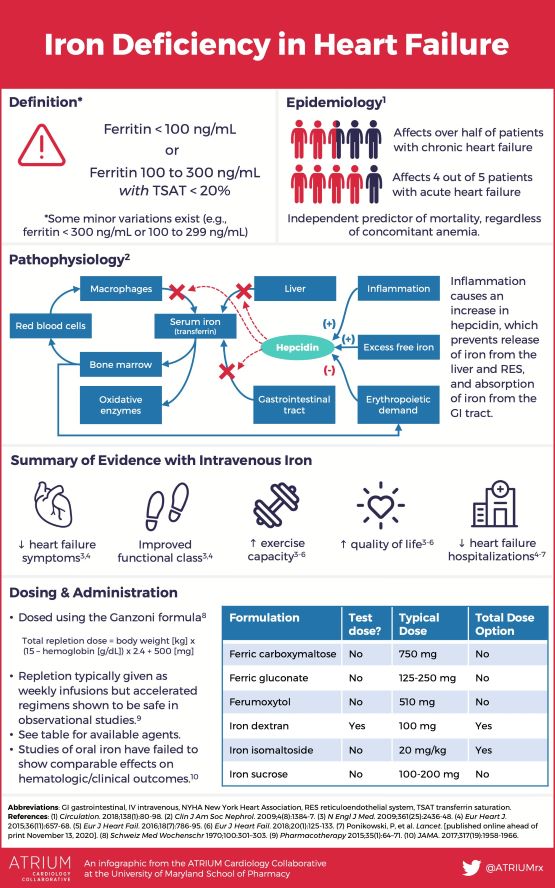
Health: Iron Deficiency In Heart Failure Infographic

Morning News Podcast: Thanksgiving Travel & College Covid Concerns

Last week, the Centers for Disease Control and Prevention issued a warning against holiday travel. The day after 1 million Americans got on a plane, it’s the highest volume of travelers airports have seen since the pandemic.
- Plus, how the country’s largest public university system is handling Thanksgiving.
- And, the life and death implications of delaying the presidential transition.
Guests: Axios’ Joann Muller, and Russell Contreras and State University of New York Chancellor Jim Malatras.
 Intellicurious