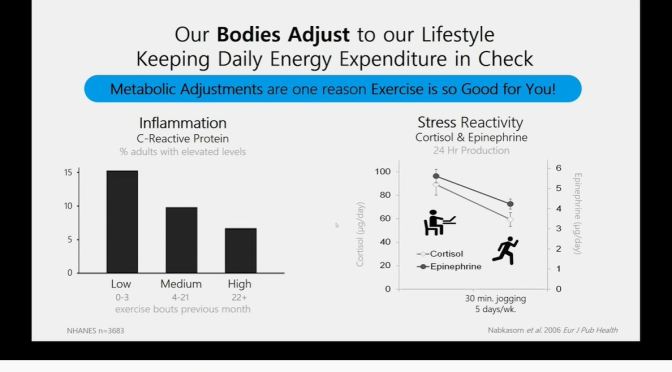
Human physical activities differ significantly from other species. How, when and why did these capabilities evolve? What adaptations underlie them? And how did the evolution of human physical activity affect other key human characteristics that have advanced our species?
Herman Pontzer explores the evolution of human metabolism and its role in our evolution and health. From an evolutionary perspective, life is a game of turning energy into offspring. The strategies that species use to acquire energy, in the form of food, and allocate energy to the essential tasks of growth, maintenance, movement, and reproduction, are incredibly diverse and reflect the ecological pressures and opportunities encountered. There is a deep evolutionary history of the human metabolic strategy and our divergence from other apes.
Timeline: 00:00 – Start 01:38 – The Evolution of Human Metabolism
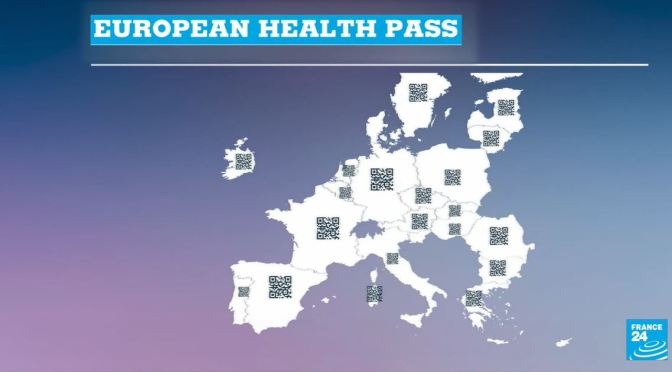
The EU has been working for months on a joint digital travel #certificate for those vaccinated, freshly tested, or recently recovered from the virus. The free certificates, which will contain a QR code with advanced security features, will allow people to move between #European countries without having to quarantine or undergo extra coronavirus tests upon arrival. The pass is already available in France.
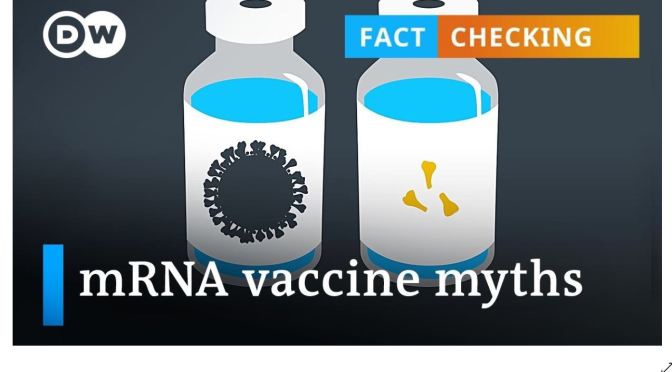
With so many myths about COVID-19 vaccines regarding their impact on our health, many people don’t know what to believe. In our fact check, find out what you need to know about the mRNA vaccines — as we expose the myths and reveal the facts.
More than a year into the pandemic, scientists are still debating Covid-19’s origins. WSJ breaks down key events in three locations in China – a seafood market, a lab and a mine – to piece together how the global health crisis might have started. Photo composite: George Downs
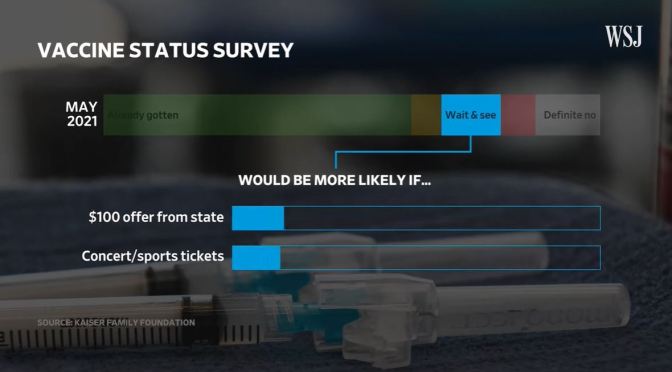
Across the country, states are shelling out incentives ranging from free beer to $1 million lotteries to encourage residents to get their Covid-19 shots. But is the effort to boost vaccination rates working? And is it worth the cost? Photo composite: Adam Falk/The Wall Street Journal
Almost 2 billion doses of Covid-19 vaccine have been administered worldwide to date. But is it enough to wipe out Sars-CoV-2? Of course, those shots are not evenly spread across all continents. In terms of sheer numbers,
North America and Europe managed about 370 million shots each. South America with Covid-stricken countries like Brazil has a lot of catching up to do. Africa and its more than 1.3 billion people only received 34 million doses so far while Asia is storming ahead with more than 1 billion shots. But that doesn’t mean Asia is fully vaccinated. Far from it.
There are huge gaps, like in Vietnam, a country that has long been praised for its response to the pandemic. Now it is faced with new outbreaks and a new variant.
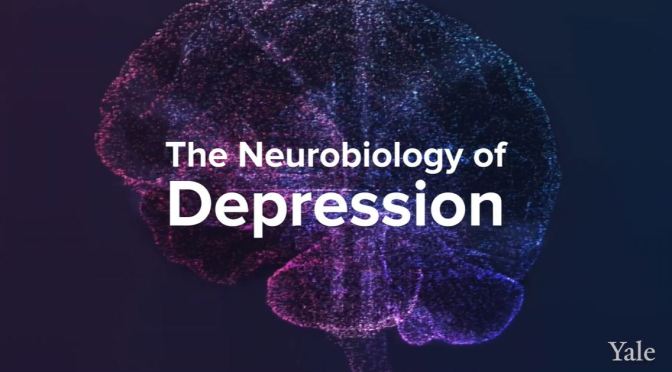
For many people, depression turns out to be one of the most disabling illnesses that we have in society. Despite the treatments that we have available, many people are not responding that well. It’s a disorder that can be very disabling in society. It’s also a disorder that has medical consequences. By understand the neurobiology of depression we hope to be able more to find the right treatment for the patient suffering from this disease. The current standard of care for the treatment of depression is based on what we call the monoamine deficiency hypothesis. Essentially, presuming that one of three neurotransmitters in the brain is deficient or underactive. But the reality is, there are more than 100 neurotransmitters in the brain. And billions of connections between neurons. So we know that that’s a limited hypothesis. Neurotransmitters can be thought of as the chemical messengers within the brain, it’s what helps one cell in the brain communicate with another, to pass that message along from one brain region to another. For decades, we thought that the primary pathology, the primary cause of depression was some abnormality in these neurotransmitters, specifically serotonin or norepinephrine. However, norepinephrine and serotonin did not seem to be able to account for this cause, or to cause the symptoms of depression in people who had major depression. Instead, the chemical messengers between the nerve cells in the higher centers of the brain, which include glutamate and GABA, were possibilities as alternative causes for the symptoms of depression. When you’re exposed to severe and chronic stress like people experience when they have depression, you lose some of the connections between the nerve cells. The communication in these circuits becomes inefficient and noisy, we think that the loss of these synaptic connections contributes to the biology of depression. There are clear differences between a healthy brain and a depressed brain. And the exciting thing is, when you treat that depression effectively, the brain goes back to looking like a healthy brain, both at the cellular level and at a global scale. It’s critical to understand the neurobiology of depression and how the brain plays a role in that for two main reasons. One, it helps us understand how the disease develops and progresses, and we can start to target treatments based on that. We are in a new era of psychiatry. This is a paradigm shift, away from a model of monoaminergic deficiency to a fuller understanding of the brain as a complex neurochemical organ. All of the research is driven by the imperative to alleviate human suffering. Depression is one of the most substantial contributors to human suffering. The opportunity to make even a tiny dent in that is an incredible opportunity.SHOW LESS
News, Views and Reviews For The Intellectually Curious