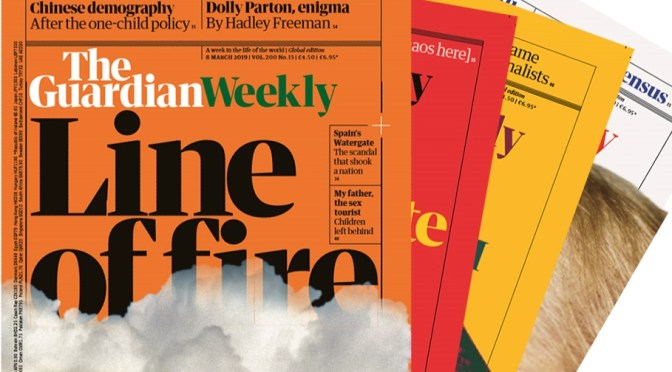
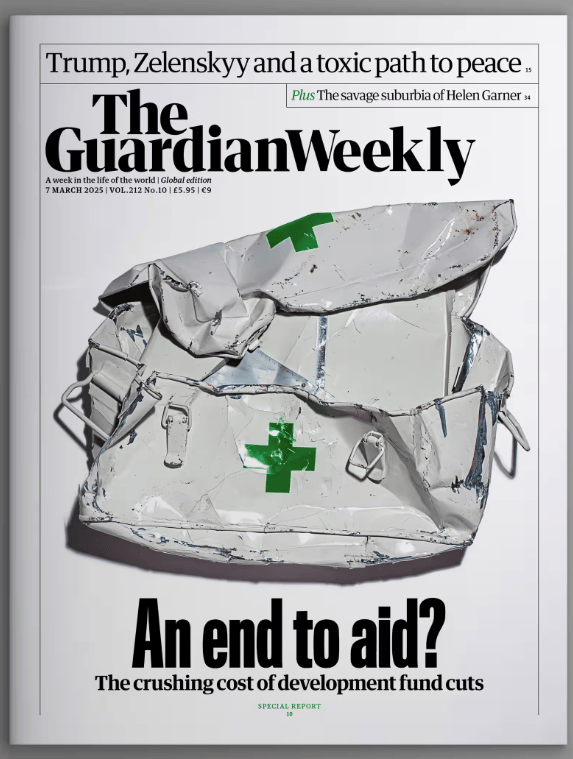
Spotlight | Can Keir Starmer be Europe’s bridge to Trump? Amid the fallout from Volodymyr Zelenskyy’s catastrophic trip to Washington and efforts to secure a peace plan for Ukraine, is Britain’s prime minister the man for a critical moment? Kiran Stacey reports
Science | Is the world ready for bigger waves? In some seas, swells are growing noticeably larger. Scientists say coastal communities should be prepared for damaging consequences – but also potential opportunities. By James Bradley
Feature | The savage suburbia of Helen Garner Over 50 years, the Australian has become one of her country’s most revered and beloved authors, writing as if readers were her friend, party to her most candid thoughts. Is she finally going to get worldwide recognition? By Sophie Elmhirst
Opinion | Defiance, not subservience, is how we resist Trump The US president has utterly changed the rules of engagement. World leaders must learn this – and quickly, argues Simon Tisdall
Culture | Gracie Abrams, the year’s biggest pop star The US singer’s unfiltered approach to pop has made her a superstar. She talks to Alexis Petridis about the horror of American politics – and the solace of needlepoint
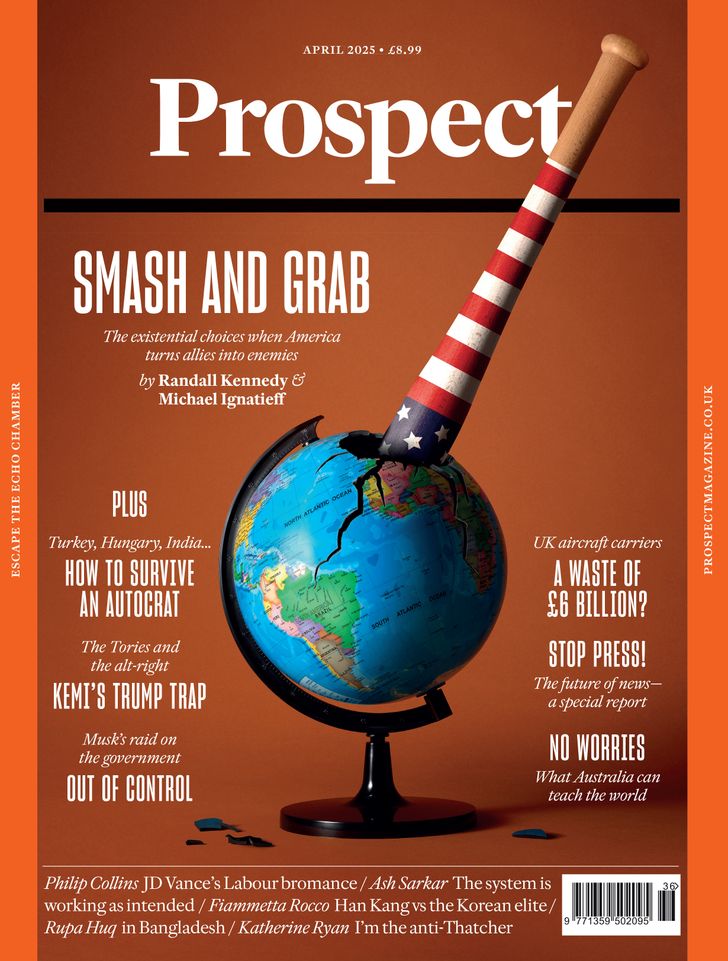
PROSPECT MAGAZINE (March 5, 2025): The latest issue features ‘Smash and Grab’ – The existential choices when America turns allies into enemies; Michael Ignatieff predicts a new world order and voices from illiberal states reflect on resisting autocrats. Plus, we examine British defence and the future of the media.
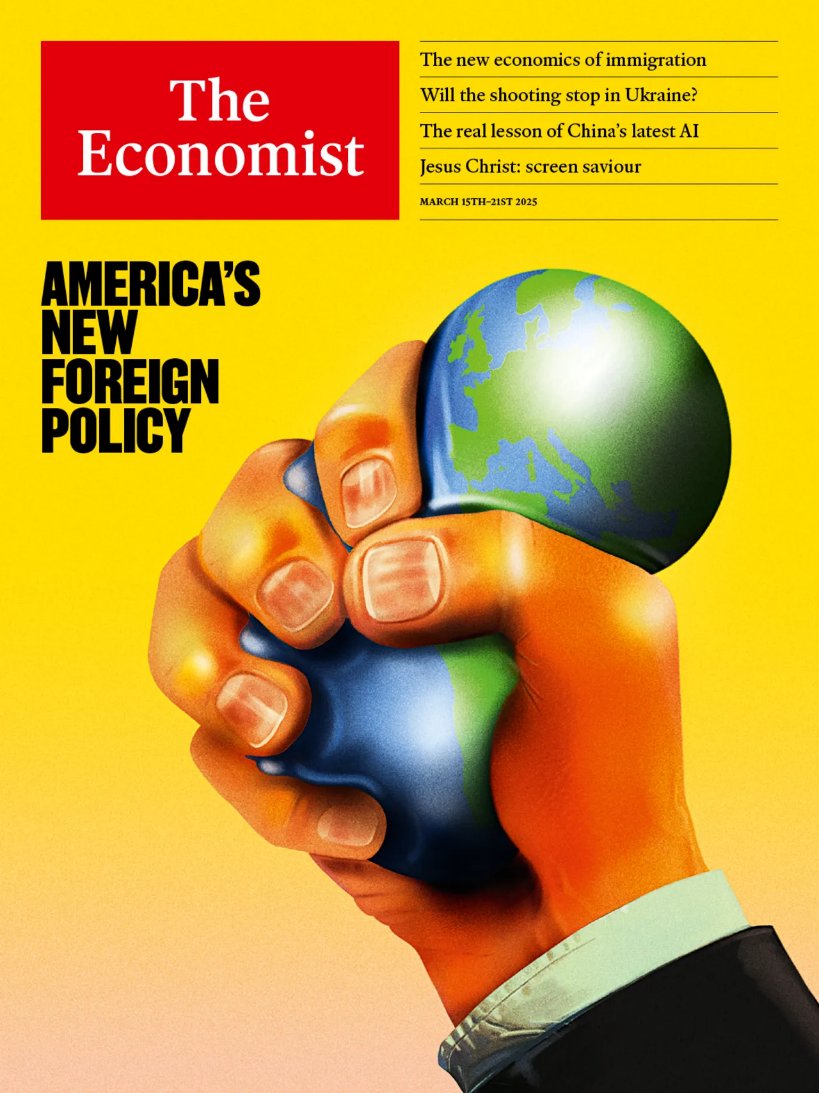
Donald Trump and his cronies are smashing up democratic norms, government institutions and the postwar international order. There are no signs yet that anyone will stop them
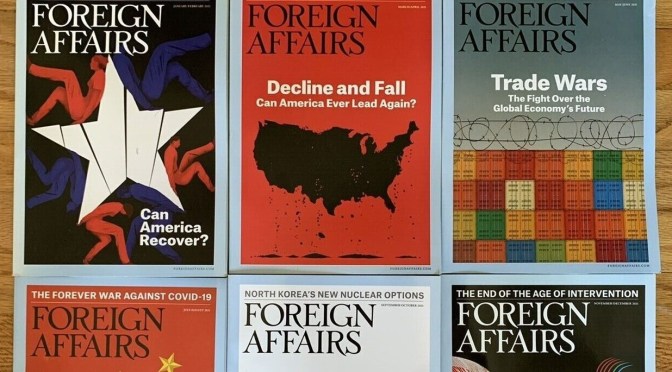
FOREIGN AFFAIRS MAGAZINE (February 6, 2025): In the months since Donald Trump won the U.S. presidential election in November, policymakers in Beijing have been looking to the next four years of U.S.-Chinese relations with trepidation. Beijing has been expecting the Trump administration to pursue tough policies toward China, potentially escalating the two countries’ trade war, tech war, and confrontation over Taiwan. The prevailing wisdom is that China must prepare for storms ahead in its dealings with the United States.
Trump’s imposition of ten percent tariffs on all Chinese goods this week seemed to justify those worries. China retaliated swiftly, announcing its own tariffs on certain U.S. goods, as well as restrictions on exports of critical minerals and an antimonopoly investigation into the U.S.-based company Google. But even though Beijing has such tools at its disposal, its ability to outmaneuver Washington in a tit-for-tat exchange is limited by the United States’ relative power and large trade deficit with China. Chinese policymakers, aware of the problem, have been planning more than trade war tactics. Since Trump’s first term, they have been adapting their approach to the United States, and they have spent the past three months further developing their strategy to anticipate, counter, and minimize the damage of Trump’s volatile policymaking. As a result of that planning, a broad effort to shore up China’s domestic economy and foreign relations has been quietly underway.








 Intellicurious