

In the spring of 45 BCE Cicero hid in a wood all day, wrote every night that nothing can be known for certain, and spent the same nights trying to buy land on which to make his dead daughter a god. What was in his mind? The essay guesses twice, and grades both guesses by his own rules.
Why we’re pointing you there
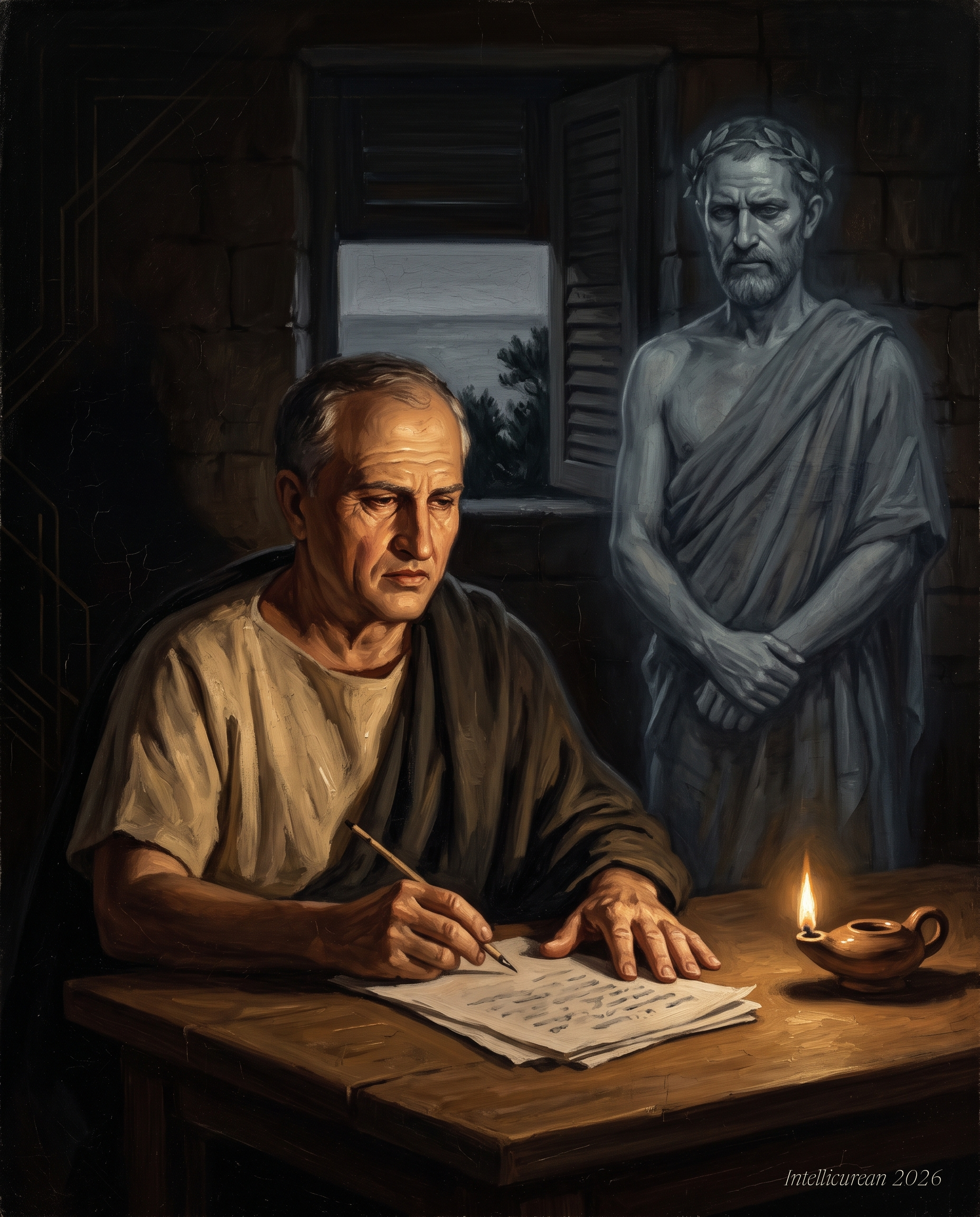
Most writing about Cicero’s grief for Tullia quotes the letters and moves on. Michael Cummins reads them as a working file: the philosopher checking the dates of other parents’ bereavements before he dares cite them, refusing a visit from his teenage wife, ordering columns from Chios for a shrine he never built. Then he notices who else is in the room. Demosthenes, the orator Cicero spent his life measuring himself against, had also lost an only daughter, and had been attacked in an Athenian court for grieving her too little. Cicero cited the attack, months after his own loss, in a book about grief.
What we liked most is how the two men are made to meet. Not in an invented dialogue, but in a cento: every sentence its speaker’s own, from public-domain translations named on the page, and only the arrangement the essay’s. Demosthenes never speaks of his daughter, because he never did. The essay ends fourteen centuries later in a library in Verona, with the first reader we know of who found these letters and wrote back. It is the second essay in a row with no machine in it, and the one we would hand to a sceptic.
Read the full essay at Intellicurean →
Essays & Reviews for the Intellectually Curious

