Tag Archives: Science Magazine

Science Podcast: Museum Collections & Pandemics, Mice That Hallucinate

Podcast Producer Meagan Cantwell talks with Pamela Soltis, a professor and curator with the Florida Museum of Natural History at the University of Florida and the director of the University of Florida Biodiversity Institute, about how natural collections at museums can be a valuable resource for understanding future disease outbreaks.

Read the National Academies of Sciences, Engineering, and Medicine report Biological Collections: Ensuring Critical Research and Education for the 21st Century. This segment is part of our coverage of the 2021 AAAS Annual Meeting.

Also on this week’s show, Katharina Schmack, a research associate at Cold Spring Harbor Laboratory, joins producer Joel Goldberg to talk about giving mice a quiz that makes them hallucinate. Observing the mice in this state helps researchers make connections between dopamine, hallucinations, and mental illness.
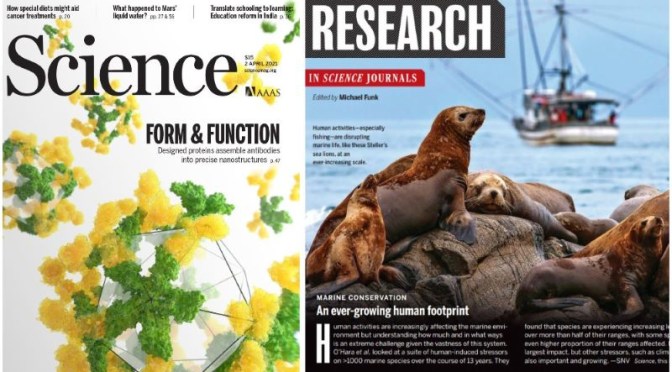
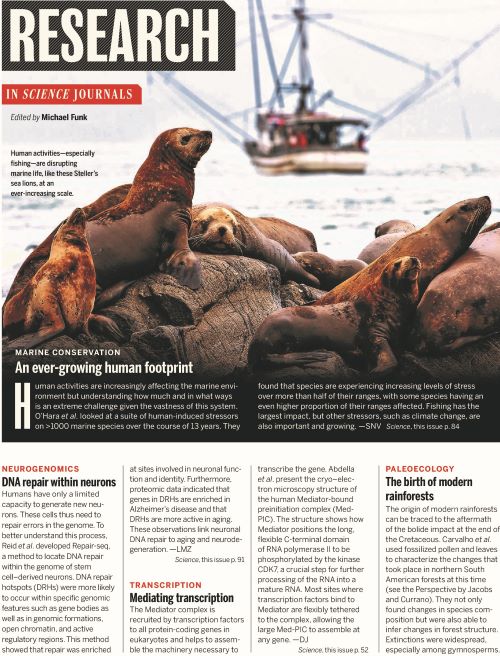
Science Of Aging: Social Insects May Hold Secrets

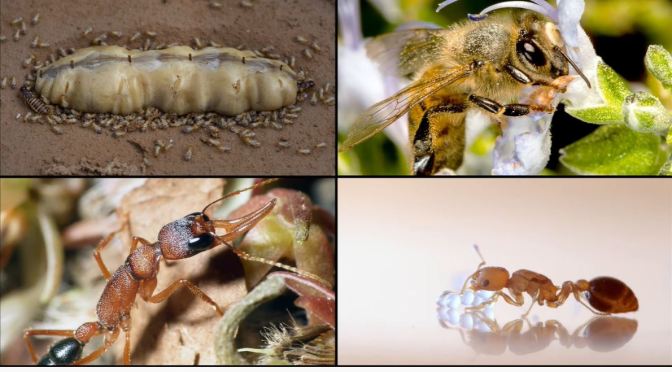
Bees, termites, and ants can teach us a lot about cooperation, communication, and the skills that keep societies together. But these so-called social insects may also hold secrets that could reshape our understanding of human aging. Many social insects exhibit surprising aging characteristics that cause their life spans to shift depending on their roles.

Following the death of a queen Indian jumping ant, for example, workers fight for the right to transform into an egg-laying ant. Much is at stake: the life expectancy of an egg-layer is five times longer than that of a worker’s. Though fruit flies, mice, and nematodes currently dominate aging research, some scientists say social insects’ aging behaviors could help dissect aging mechanisms in humans. This video will take you deep into the catacombs—er, honeycombs—of insect aging.

Read the story ($): https://scim.ag/3cFO0k0

Science: Social Insects As Models For Aging, Space Mission Crew Conflicts

Most research on aging has been done on model organisms with limited life spans, such as flies and worms. Host Meagan Cantwell talks to science writer Yao-Hua Law about how long-living social insects—some of which survive for up to 30 years—can provide new insights into aging.

Also in this episode, host Sarah Crespi talks with Noshir Contractor, the Jane S. & William J. White Professor of Behavioral Sciences at Northwestern University, about his AAAS session on keeping humans in harmony during long space missions and how mock missions on Earth are being applied to plans for a crewed mission to Mars. 

Science: Covid Treatments & Smart Cities Built With Smart Materials (Podcast)

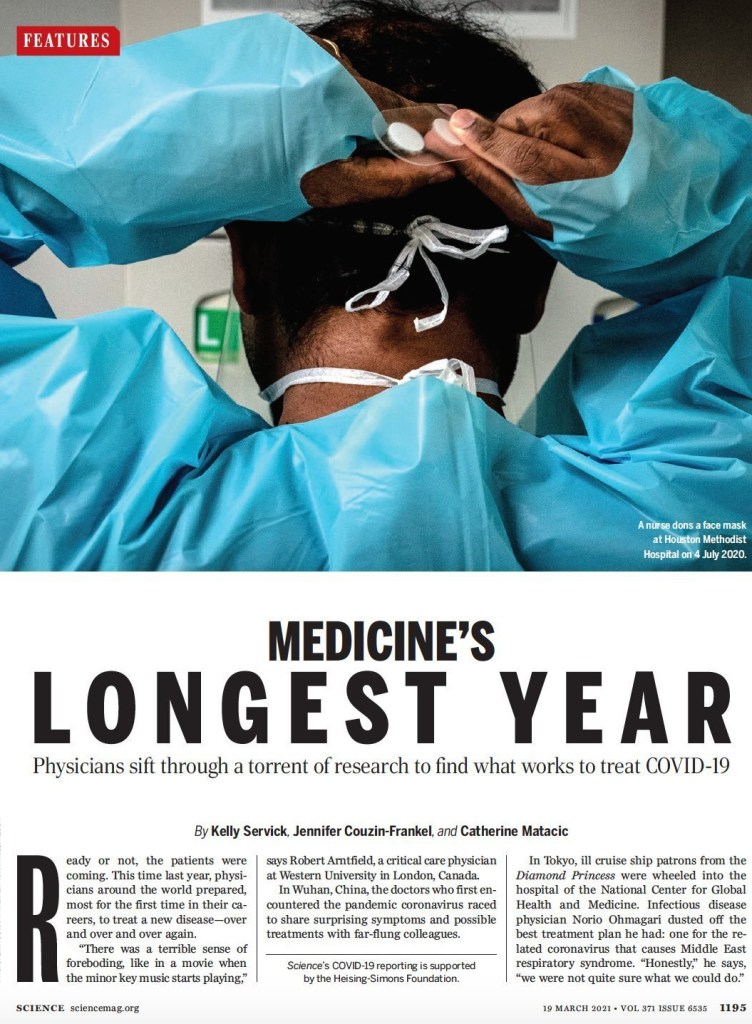
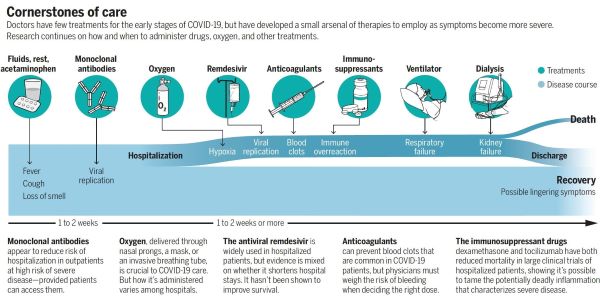
Science Staff Writer Kelly Servick discusses how physicians have sifted through torrents of scientific results to arrive at treatments for SARS-CoV-2.

Sarah also talks with Wesley Reinhart, of Pennsylvania State University’s Department of Materials Science and Engineering and Institute for Computational and Data Science, about why we should be building smart cities from smart materials, such as metamaterials that help solar panels chase the Sun, and living materials like self-healing concrete that keep buildings in good shape.

Science: Gravitational Wave Detectors & Special Oil Spill Cleanup Sponges

Science Staff Writer Adrian Cho joins host Sarah Crespi to talk about plans for the next generation of gravitational wave detectors—including one with 40-kilometer arms. 

 The proposed detectors will be up to 10 times more sensitive than current models and could capture all black hole mergers in the observable universe.

Sarah also talks with Pavani Cherukupally, a researcher at Imperial College London and the University of Toronto, about her Science Advances paper on cleaning up oil spills with special cold-adapted sponges that work well when crude oil gets clumpy.