
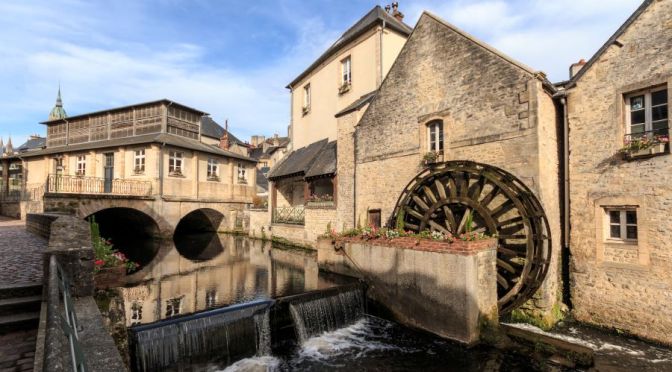
Bayeux is a town on the Aure river in the Normandy region of northwestern France, 10 kilometers from the Channel coast. Its medieval center contains cobbled streets, half-timbered houses and the towering, Norman-Gothic Cathédrale Notre-Dame. The famed 68-meter Tapisserie de Bayeux, an 11th-century tapestry depicting the 1066 Norman invasion of England, is on display in an 18th-century seminary.
Tag Archives: France
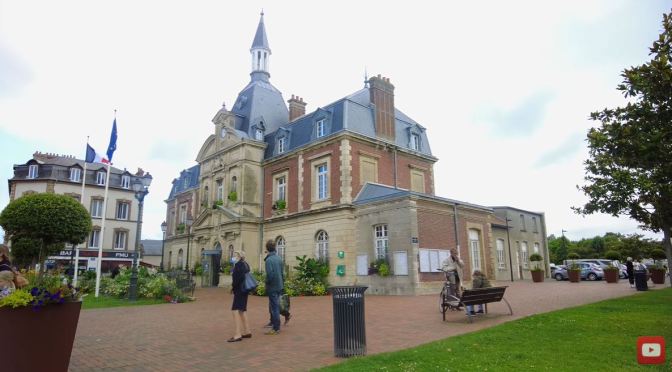
Walking Tour: Cabourg – Northern France (4K)
Cabourg is a commune in the Calvados department in the Normandy region of France. Cabourg is on the coast of the English Channel, at the mouth of the river Dives. The back country is a plain, favourable to the culture of cereal.
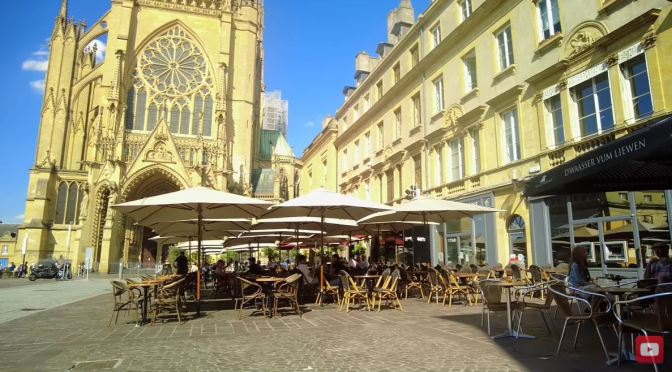
Walking Tours: Metz – Northeastern France (4K)
Metz is a city in France’s northeastern Grand Est region, with gardens and leafy promenades along the Moselle and Seille rivers. In the old town, the Gothic Metz Cathedral is famed for its massive amount of stained glass windows, many by noted artists. Nearby, the Musée de la Cour d’Or displays artifacts from Roman to Renaissance times. The Centre Pompidou-Metz, with its undulating roof, exhibits contemporary art.
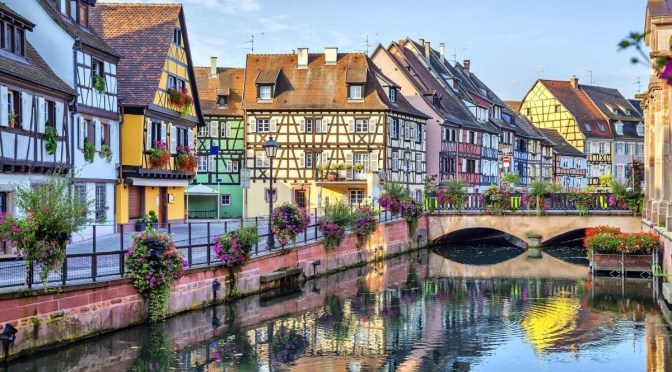
Top Village Walks: Vieux Colmar In France (4K)
Vieux Colmar is known for its canals, cobbled streets lined with half-timbered houses, and Alsatian restaurants. Bakeries, bars, and cafes cluster around Place des Dominicains, and the Koïfhus is an event space inside the old customs house. Cultural treasures include the medieval Isenheim Altarpiece at Unterlinden Museum; the House of Heads, with grotesques by Bartholdi; and St. Martin’s Collegiate, a Gothic church.
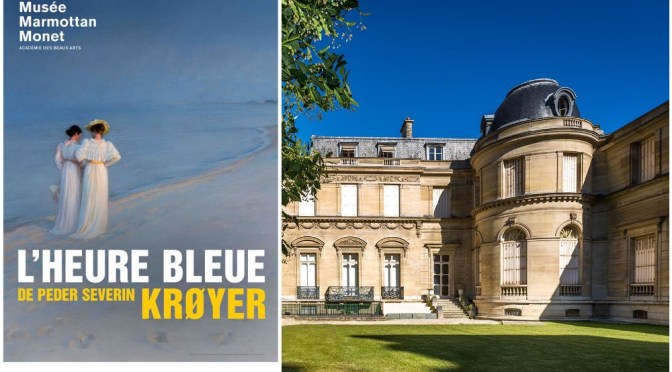
Museum Tour: The Musée Marmottan Monet, Paris
Musée Marmottan Monet features over three hundred Impressionist and Post-Impressionist paintings by Claude Monet, including his 1872 Impression, Sunrise. Marmottan Museum’s fame is the result of a donation in 1966 by Michel Monet, Claude’s second son and only heir.
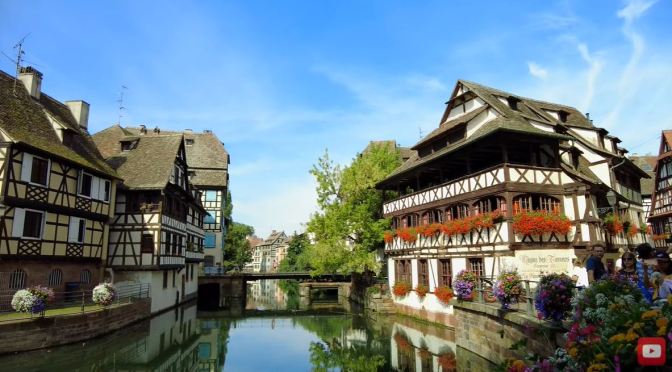
Walks: Petite-France In Strasbourg (4K Video)
Petite France is the city’s lively tourist hub, known for cobblestone streets, canals, and well-preserved half-timbered homes like the Tanners’ House, built in 1572. A terrace atop the 17th-century Barrage Vauban, a covered bridge and dam, offers panoramic views. Alsatian eateries dot the area, while shops on and around Grand’Rue sell clothing and souvenirs such as crockery, wine, and specialty teas.
Strasbourg is the capital city of the Grand Est region, formerly Alsace, in northeastern France. It’s also the formal seat of the European Parliament and sits near the German border, with culture and architecture blending German and French influences. Its Gothic Cathédrale Notre-Dame features daily shows from its astronomical clock and sweeping views of the Rhine River from partway up its 142m spire.
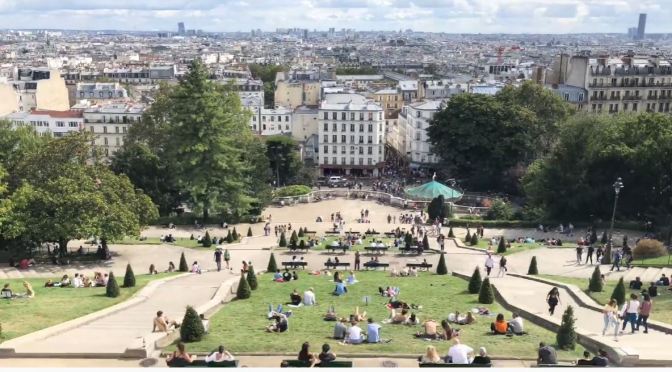
Paris Walks: Sacré-Cœur In The Montmartre (4K)
Montmartre is a large hill in Paris’s 18th arrondissement. It is 130 m high and gives its name to the surrounding district, part of the Right Bank in the northern section of the city.
The Basilica of the Sacred Heart of Paris, commonly known as Sacré-Cœur Basilica and often simply Sacré-Cœur, is a Roman Catholic church and minor basilica in Paris, France, dedicated to the Sacred Heart of Jesus. Sacré-Cœur Basilica is located at the summit of the butte Montmartre, the highest point in the city.
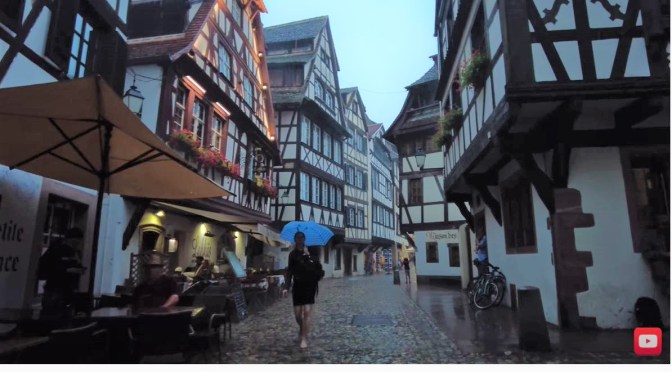
City Walks In The Rain: Strasbourg, France (4K)
Strasbourg is the capital city of the Grand Est region, formerly Alsace, in northeastern France. It’s also the formal seat of the European Parliament and sits near the German border, with culture and architecture blending German and French influences. Its Gothic Cathédrale Notre-Dame features daily shows from its astronomical clock and sweeping views of the Rhine River from partway up its 142m spire.
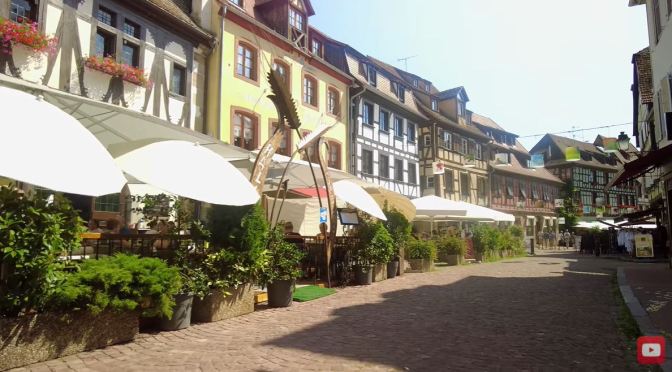
Walks: Obernai – Alsace Region Of France (4K)
Obernai commune in the Bas-Rhin department in Alsace in north-eastern France. It lies on the eastern slopes of the Vosges mountains. Obernai is a rapidly growing city, its number of inhabitants having gone up from 6,304 in 1968 to 11,279 in 2017.
The Obernai region, which was the property of the dukes of Alsace in the 7th century, is the birthplace of St. Odile, daughter of the Duke, who would become the Patron Saint of Alsace. The Obernai name first appears in 1240, when the village acquires the status of town under the tutelage of the Hohenstaufen family. The town then prospered. It became a member of the Décapole in 1354, an alliance of ten towns of the Holy Roman Empire in Alsace. Obernai’s status reaches its apex in the 15th and 16th century. In 1562, Emperor Ferdinand I visited the prosperous town of Obernai.

Walking Tour: Palace Of Versailles In Paris, France
The Palace of Versailles has been listed as a World Heritage Site for 30 years and is one of the greatest achievements in French 17th century art. Louis XIII‘s old hunting pavilion was transformed and extended by his son, Louis XIV, when he installed the Court and government there in 1682. A succession of kings continued to embellish the Palace up until the French Revolution.
Today the Palace contains 2,300 rooms spread over 63,154 m2.

