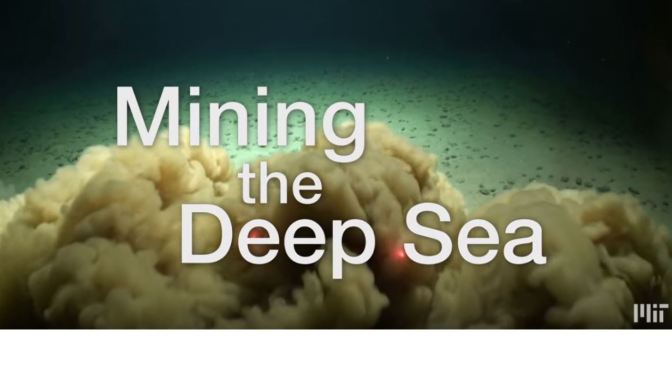
Mining minerals found 15,000 feet below sea level could help secure a low-carbon future, but at what cost? Researchers including Thomas Peacock, professor of mechanical engineering at MIT, are racing to understand the environmental impact of deep-sea mining.
After their life as research subjects, what happens to lab monkeys? Some are euthanized to complete the research, others switch to new research projects, and some retire from lab life. Should they retire in place—in the same lab under the care of the same custodians—or should they be sent to retirement home–like sanctuaries? Online News Editor David Grimm joins host Sarah Crespi to discuss recently penned legislation that pushes for monkey retirements and a new collaboration between universities and sanctuaries to create a retirement pipeline for these primates.
Sarah also talks with Dante Lauretta, principal investigator for NASA’s Origins, Spectral Interpretation, Resource Identification, Security, Regolith Explorer (OSIRIS-REx) and a professor at the University of Arizona in Tucson, about the latest news from the asteroid Bennu. Within 1 week of beginning its orbit of the asteroid, OSIRIS-REx was able to send back surprising images of the asteroid ejecting material. It’s extremely rocky surface also took researchers by surprise and forced a recalculation of the sample return portion of the craft’s mission.
Hear the latest science news, brought to you by Benjamin Thompson and Shamini Bundell. This week, exploring two very differentissues surrounding genomic sequencing, and the latest results from NASA’s Parker Solar Probe.
In this episode:
00:45 The GenomeAsia 100k project
Researchers have released the first data from an ambitious project to sequence the genomes of 100,000 people from populations across Asia. Research Article: GenomeAsia100K Consortium
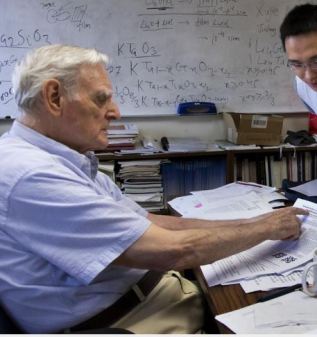
Three-quarters of a century later, at age 97, Goodenough will become the oldest person to receive the Nobel Prize in Chemistry. At a Dec. 10 ceremony in Sweden, he will be honored for pioneering breakthroughs that led to the widespread use of the lithium-ion battery—and helping spark the wireless revolution. The descendants of his batteries now power modern smartphones and hold the potential to one day sustainably harvest solar and wind power.
John B. Goodenough can still remember, word for word, what a University of Chicago professor told him when he arrived on campus following World War II: “I don’t understand you veterans,” said John A. Simpson, a new UChicago instructor who had just helped achieve the first nuclear reaction. “Don’t you know that anyone who has ever done anything significant in physics had already done it by the time he was your age—and you want to begin?”
Researchers are using artificial intelligence techniques to invent medicines and materials—but in the process are they upending the scientific method itself? The AI approach is a form of trial-and-error at scale, or “radical empiricism”. But does AI-driven science uncover new answers that humans cannot understand? Host Kenneth Cukier finds out with James Field of LabGenius…
The National Institutes of Health’s largest loan repayment program was conceived to help scientists pay off school debts without relying on industry funding. But a close examination of the program by investigative correspondent Charles Piller has revealed that many participants are taking money from the government to repay their loans, while at the same time taking payments from pharmaceutical companies. Piller joins Host Sarah Crespi to talk about the steps he took to uncover this double dipping and why ethicists say this a conflict of interest.
Listen to the latest science updated, brought to you by Nick Howe and Shamini Bundell. This week, delving into the results of the latest graduate student survey, and assessing ageism in science fiction literature.
In this episode:
00:45 The graduate student experience
The results of Nature’s 2019 PhD survey are in. David Payne, Nature’s Chief Careers Editor, takes us through them. Nature’s PhD survey collection
Who among us hasn’t wished we could read someone else’s mind, know exactly what they’re thinking? Well that’s impossible, of course, since our thoughts are, more than anything else, our own. Private, personal, unreachable. Or at least that’s what we’ve always, well, thought.
Advances in neuroscience have shown that, on a physical level, our thoughts are actually a vast network of neurons firing all across our brains. So if that brain activity could be identified and analyzed, could our thoughts be decoded? Could our minds be read? Well, a team of scientists at Carnegie Mellon University in Pittsburgh has spent more than a decade trying to do just that. We started our reporting on their work 10 years ago, and what they’ve discovered since, has drawn us back.
You may have seen the aftermath of a landslide, driving along a twisty mountain road—a scattering of rocks and scree impinging on the pavement. And up until now, that’s pretty much how scientists have tracked landslides—roadside observations and spotty satellite images. Now, researchers are hoping to track landslides systematically by instrumenting an entire national park in Taiwan. The park is riddled with landslides—so much so that visitors wear helmets. Host Sarah Crespi talks with one of those visitors—freelance science journalist Katherine Kornei—about what we can learn from landslides.
In a second rocking segment, Sarah also talks with Manvir Singh about the universality of music. His team asked the big questions in a Science paper out this week: Do all societies make music? What are the common elements that can be picked out from songs worldwide? Sarah and Manvir listen to songs and talk about what love ballads and lullabies have in common, regardless of their culture of origin.

 After their life as research subjects, what happens to lab monkeys? Some are euthanized to complete the research, others switch to new research projects, and some retire from lab life. Should they retire in place—in the same lab under the care of the same custodians—or should they be sent to retirement home–like sanctuaries? Online News Editor David Grimm joins host Sarah Crespi to discuss recently penned legislation that
 Hear the latest science news, brought to you by Benjamin Thompson and Shamini Bundell. This week, exploring two very different issues surrounding genomic sequencing, and the latest results from NASA’s Parker Solar Probe.

 Three-quarters of a century later, at age 97, Goodenough will become the oldest person
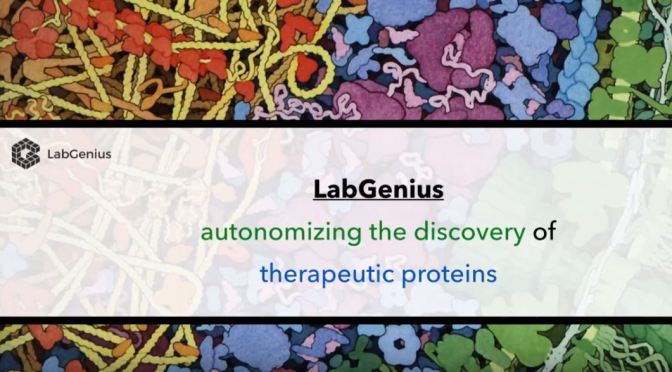
 Researchers are using artificial intelligence techniques to invent medicines and materials—but in the process are they upending the scientific method itself? The AI approach is a form of trial-and-error at scale, or “radical empiricism”. But does AI-driven science uncover new answers that humans cannot understand? Host Kenneth Cukier finds out with James Field of LabGenius…
 tes of Health’s largest loan repayment program was conceived to help scientists pay off school debts without relying on industry funding. But
 Listen to the latest science updated, brought to you by Nick Howe and Shamini Bundell. This week, delving into the results of the latest graduate student survey, and assessing ageism in science fiction literature.

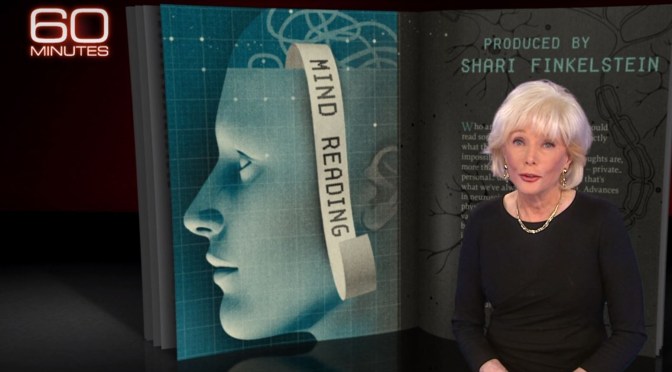
 Who among us hasn’t wished we could read someone else’s mind, know exactly what they’re thinking? Well that’s impossible, of course, since our thoughts are, more than anything else, our own. Private, personal, unreachable. Or at least that’s what we’ve always, well, thought.

