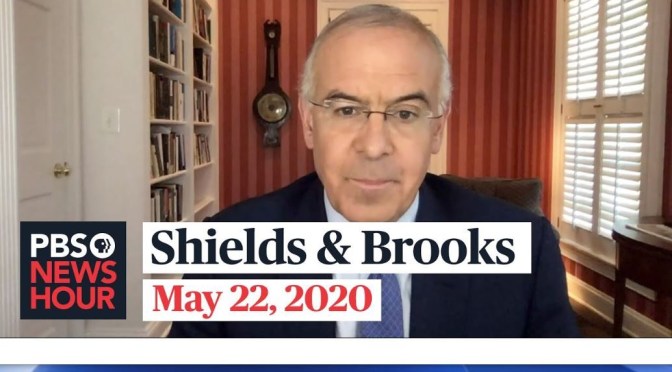
Syndicated columnist Mark Shields and New York Times columnist David Brooks join Judy Woodruff to discuss the week in politics, including President Trump’s call to reopen houses of worship despite the pandemic, controversial comments from Trump and former Vice President Joe Biden, public opinion on reopening the country, the battle over mail-in voting and Trump’s firing of inspectors general.
The first results from vaccine trials are in and they are encouraging, but scientists are still urging caution. We hear the lowdown on the types of vaccines being developed and what hope there is of rolling them out any time soon.
01:38 Trump vs the WHO
President Trump has given the WHO an ultimatum in a tweet, threatening to pull out of the organisation within 30 days unless unclear demands are met. We discuss what this means for the pandemic, the USA and the future of international health cooperation
12:06 Where are we with vaccines?
The first results from vaccine trials are in and they are encouraging, but scientists are still urging caution. We hear the lowdown on the types of vaccines being developed and what hope there is of rolling them out any time soon.
Our hosts pick out things that have made them smile in the last week, including hopeful antibody research, at-home sketch comedy and printable board games.
Interview with Dr. Nicole Lurie on rapid vaccine development, including new tools to facilitate vaccine testing and manufacturing and persistent challenges.
The need to rapidly develop a vaccine against SARS-CoV-2 comes at a time of explosion in basic scientific understanding, including in areas such as genomics and structural biology, that is supporting a new era in vaccine development. Over the past decade, the scientific community and the vaccine industry have been asked to respond urgently to epidemics of H1N1 influenza, Ebola, Zika, and now SARS-CoV-2. An H1N1 influenza vaccine was developed relatively rapidly, largely because influenza-vaccine technology was well developed and key regulators had previously decided that vaccines made using egg- and cell-based platforms could be licensed under the rules used for a strain change. Although a monovalent H1N1 vaccine was not available before the pandemic peaked in the Northern Hemisphere, it was available soon afterward as a stand-alone vaccine and was ultimately incorporated into commercially available seasonal influenza vaccines.
Nicole Lurie is a strategic advisor to the CEO of the Coalition for Epidemic Preparedness Innovations. Stephen Morrissey, the interviewer, is the Executive Managing Editor of the Journal.
Online News Editor David Grimm talks with producer Joel Goldberg about the unique challenges of reopening labs amid the coronavirus pandemic. Though the chance to resume research may instill a sense of hope, new policies around physical distancing and access to facilities threaten to derail studies—and even careers.
Despite all the uncertainty, the crisis could result in new approaches that ultimately benefit the scientific community and the world. Also this week, Joel Podgorski, a senior scientist in the Water Resources and Drinking Water Department at the Swiss Federal Institute of Aquatic Science and Technology, joins host Sarah Crespi to discuss the global threat of arsenic in drinking water. Arsenic is basically present in all rocks in minute amounts. Under the right conditions it can leach into groundwater and poison drinking water. Without a noticeable taste or smell, arsenic contamination can go undetected for years. The paper, published in Science, estimates that more than 100 million people are at risk of drinking arsenic-contaminated water and provides a guide for the most important places to test.
NPR’s Tamara Keith and Amy Walter of the Cook Political Report join Judy Woodruff to discuss the latest political news, including the escalating rhetorical war between President Trump and former President Obama, former Vice President Joe Biden’s campaign strategy and polarization and conspiracy theories related to the coronavirus pandemic.
A selection of three essential articles read aloud from the latest issue of The Economist. This week, has covid-19 killed globalisation? Why the European Union is having a bad crisis (10:55) and how Mike Pompeo is confusing leadership with bashing his opponents (19:20). Zanny Minton Beddoes hosts.
Monocle’s editor in chief, Tyler Brûlé, discusses the weekend’s top stories with his guests. Topics include how the coronavirus outbreak is being felt in Switzerland, the UK and Japan.
From Milan: Salone highlights, interviews and a daily running guide.
News, Views and Reviews For The Intellectually Curious


 The first results from vaccine trials are in and they are encouraging, but scientists are still urging caution. We hear the lowdown on the types of vaccines being developed and what hope there is of rolling them out any time soon.
 Interview with Dr. Nicole Lurie on rapid vaccine development, including new tools to facilitate vaccine testing and manufacturing and persistent challenges.
 Online News Editor David Grimm talks with producer Joel Goldberg about the unique challenges of reopening labs amid the coronavirus pandemic. Though the chance to resume research may instill a sense of hope, new policies around physical distancing and access to facilities threaten to derail studies—and even careers.
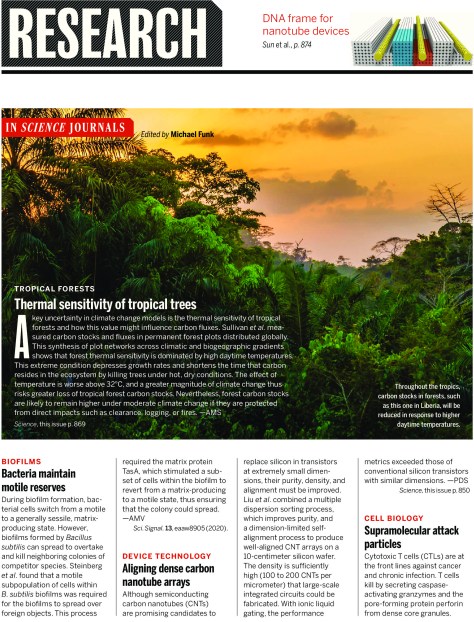
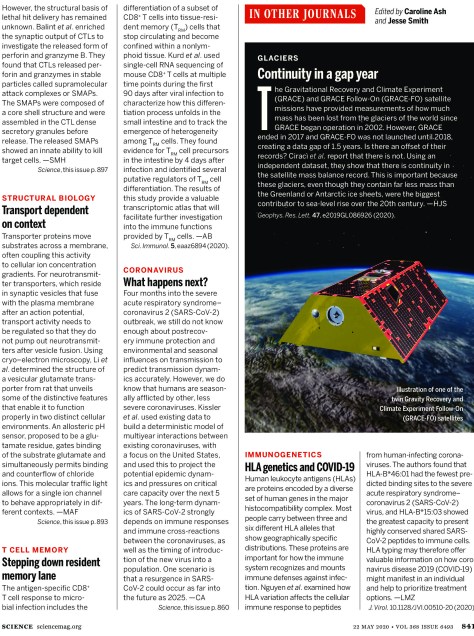
 This week, crafting an artificial eye with the benefits of a human’s, and understanding how disk-galaxies formed by peering back in time.


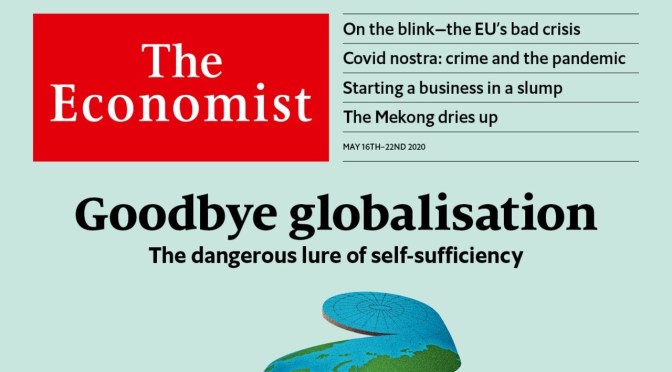
 A selection of three essential articles read aloud from the latest issue of The Economist. This week, has
 Monocle’s editor in chief, Tyler Brûlé, discusses the weekend’s top stories with his guests. Topics include how the coronavirus outbreak is being felt in Switzerland, the UK and Japan.

