Category Archives: Health

Health: Management Of Chronic In Older Adults (Mayo Clinic Video)

Geriatricians like Dr. Brandon Verdoorn see the wide range of effects of chronic pain on older patients. Minor, short-lived pain can be managed at home with ice, heat or over-the-counter medication.

If you have severe pain, persistent pain or pain that affects function, you should see your health care provider to determine the underlying cause and develop a pain management plan. That might mean physical therapy, exercise, massage or acupuncture.

Medication strategies often are used, too — typically starting with lower-risk approaches like acetaminophen and topical medications, and reserving higher-risk medications for more difficult cases.

Website

Physician Profiles: Best-Selling Author Abraham Verghese MD (JAMA Video)

My Own Country A Doctor's Storey Abraham Verghese MD bookIn this video, best-selling author Abraham Verghese, MD, discusses the origins of the study he coauthored identifying 5 practices that foster meaningful connections between physicians and patients.


Health: “Multimorbidity” Is Rising, Creating Greater Demand For “Cluster Medicine” Expertise (BMJ)

From a The BMJ online editorial:

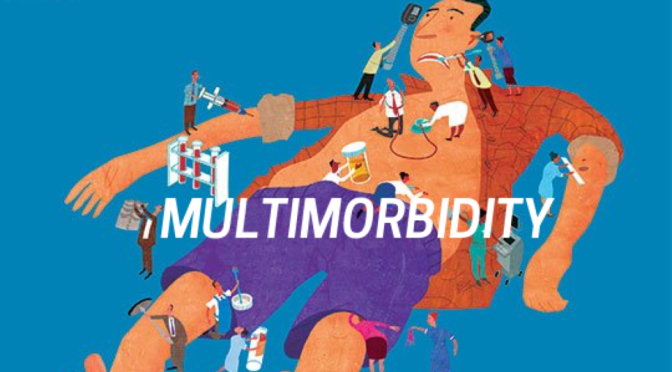
Multimorbidity THE BMJThe proportion of patients who have two or more medical conditions simultaneously is, however, rising steadily. This is currently termed multimorbidity, although patient groups prefer the more intuitive “multiple health conditions.” In high income countries, multimorbidity is mainly driven by age, and the proportion of the population living with two or more diseases is steadily increasing because of demographic change. This trend will continue.

Cluster medicine

The cluster around diabetes is a good example, with the common serious disease affecting the heart, nervous system, skin, peripheral vasculature, and eyes. Diabetologists already provide care for the cluster of multiorgan diseases around diabetes, and some specialties, such as geriatrics or general practice, have multimorbidity at their heart. For most, however, training and service organisation are not optimised to face a multimorbidity dominated future.

The shift includes moving from thinking about multimorbidity as a random assortment of individual conditions to recognising it as a series of largely predictable clusters of disease in the same person. Some of these clusters will occur by chance alone because individuals are affected by a variety of commonly occurring diseases. Many, however, will be non-random because of common genetic, behavioural, or environmental pathways to disease. Identifying these clusters is a priority and will help us to be more systematic in our approach to multimorbidity.

Read more

Health: New Stanford Hospital Features “Patient-Centric” Design (Video)

Precision Health puts the patient at the center of the health care paradigm, and at the newly-opened Stanford Hospital, the patient was the focus throughout the design process.

Learn more about how the building’s design combines with the latest medical and communications technology to put patient wellness first: http://stanmed.stanford.edu/2019fall/…

Medical Care Videos: “Radiofrequency Ablation For Benign Thyroid Nodules” (NYU)

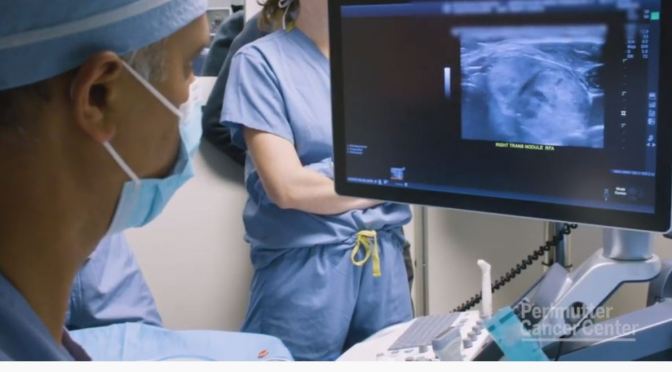
NYU Langone surgeon Dr. Kepal Patel explains radiofrequency ablation, which is a minimally invasive treatment for large, benign thyroid nodules.

Learn more about treatment for benign thyroid nodules: https://nyulangone.org/conditions/thy…

Medical Care: 43% Of Older Adults Review Doctor Ratings Online

From a National Poll on Aging (Univ. of Michigan) online release:

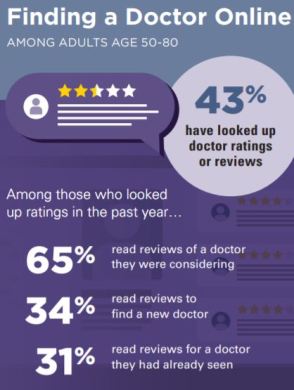
National Poll on Healthy Aging University of Michigan January 6 2020 statisticsAmong older adults age 50–80, 43% had ever reviewed doctor ratings; 14% had reviewed ratings more than once in the past year, 19% had done so once in the past year, and 10% had reviewed ratings more than one year ago.


Among older adults who had looked up doctor ratings within the past year, 65% read reviews of a doctor they were considering, 34% read reviews to find a new doctor, and 31% read reviews for a doctor they had already seen.

National Poll on Healthy Aging University of Michigan January 6 2020Ratings and reviews for nearly everything can be found online these days, including doctors. How are older adults using these ratings in their decisions about choosing doctors? In May 2019, the University of Michigan National Poll on Healthy Aging asked a
national sample of adults age 50–80 about their use and perceptions of online doctor ratings.


Read entire article

Health Studies: Vigorous Daily Exercise Increases Neurotropins, Boosting Cognitive Function

From the Journal of Sport and Health Science:

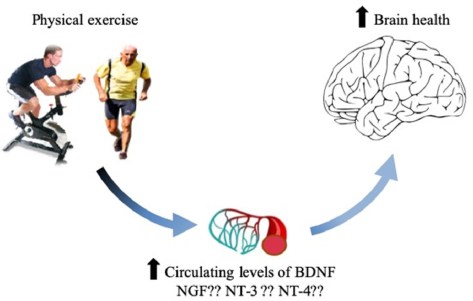
Therefore, promotion of adequate volumes and intensities of physical exercise (i.e., approximately 3 months of moderate-intensity aerobic exercise, with 2–3 sessions/week lasting not less than 30 min) represents an inexpensive and safe strategy for boosting BDNF (brain-derived neurotrophic factor) release that may preserve or restore cognitive function.

Updated overview on interplay between physical exercise, neurotrophins, and cognitive function in humans Journal Of Sport and Health Science Jan 2020

Taken together, the currently available data seemingly confirm the existence of a positive relationship between physical exercise and circulating BDNF levels, both in the short and long term, and also support the beneficial impact of training programs for amplifying the acute BDNF response.

Read full article PDF

Fasting Activates Sirtuin Signaling Proteins (SIRT1), Accelerating Cell Repair

Sirtuins are a family of signaling proteins involved in metabolic regulation. SIRT1 (along with SIRT6 and SIRT7) are proteins are employed in DNA repair.
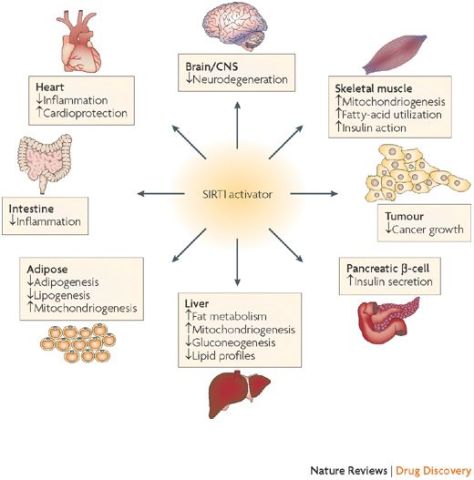
 

Sirtuins - SIRT1 Activator Nature Reviews Drug Discovery

From Wikipedia:

Sirtuins are a class of proteins that possess either mono-ADP-ribosyltransferase, or deacylase activity, including deacetylase, desuccinylase, demalonylase, demyristoylase and depalmitoylase activity. The name Sir2 comes from the yeast gene ‘silent mating-type information regulation 2‘, the gene responsible for cellular regulation in yeast.

From in vitro studies, sirtuins are implicated in influencing cellular processes like aging, transcription, apoptosis, inflammation and stress resistance, as well as energy efficiency and alertness during low-calorie situations. As of 2018, there was no clinical evidence that sirtuins affect human aging.

Aging

Although preliminary studies with resveratrol, an activator of deacetylases such as SIRT1, led some scientists to speculate that resveratrol may extend lifespan, there was no clinical evidence for such an effect, as of 2018.

In vitro studies shown that calorie restriction regulates the plasma membrane redox system, involved in mitochondrial homeostasis, and the reduction of inflammation through cross-talks between SIRT1 and AMP-activated protein kinase (AMPK), but the role of sirtuins in longevity is still unclear, as calorie restriction in yeast could extend lifespan in the absence of Sir2 or other sirtuins, while the in vivo activation of Sir2 by calorie restriction or resveratrol to extend lifespan has been challenged in multiple organisms.

 

Health Podcasts: Benefits Of Exercise For Cancer Patients (Mayo Clinic)

On the Mayo Clinic Radio podcast, Dr. Edward Laskowski, co-director of Mayo Clinic Sports Medicine, shares new exercise guidelines for cancer patients.

This interview originally aired Jan. 4, 2020.

Website

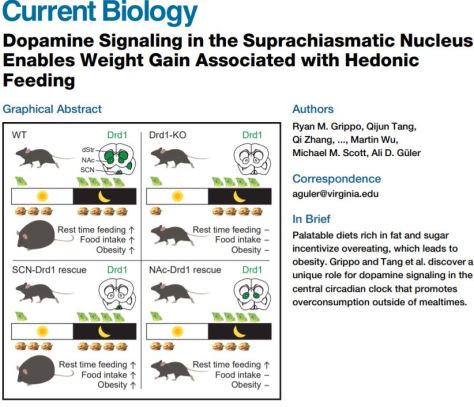
Studies: Disrupted Sleep Cycles & Dopamine Linked; Craving “High-Calorie Food” & Obesity Are Result

From a NeuroscienceNews.com online release article (01/02/20):

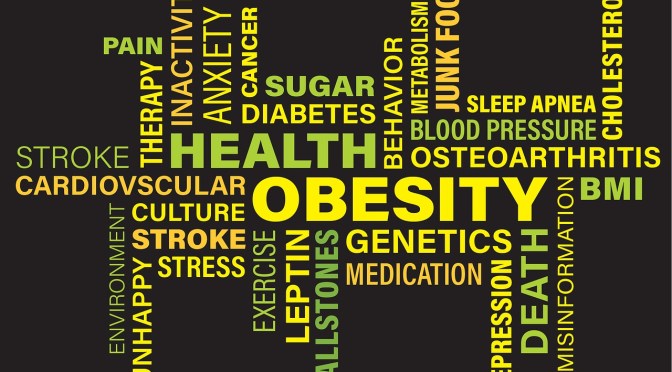
During the years 1976 through 1980, 15% of U.S. adults were obese. Today, about 40%of adults are obese. Another 33% are overweight.

“But, of course, food is now abundant, and our next meal is as close as the kitchen, or the nearest fast-food drive-through, or right here on our desk. Often, these foods are high in fats, sugars, and therefore calories, and that’s why they taste good. It’s easy to overconsume, and, over time, this takes a toll on our health.”

Current Biology Journal Dopamine Signaling and Weight Gain January 2 2020
Dopamine Signaling in the Suprachiasmatic Nucleus Enables Weight Gain Associated with Hedonic Feeding – Current Biology January 2, 2020

Read full study

In a study published Thursday in the journal Current Biology, Güler and his colleagues demonstrate that the pleasure center of the brain that produces the chemical dopamine, and the brain’s separate biological clock that regulates daily physiological rhythms, are linked, and that high-calorie foods – which bring pleasure – disrupt normal feeding schedules, resulting in overconsumption. Using mice as study models, the researchers mimicked the 24/7 availability of a high-fat diet, and showed that anytime snacking eventually results in obesity and related health problems.

Read more