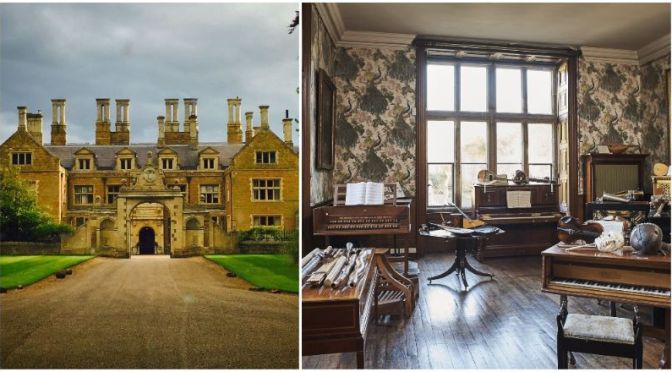
When you visit a stately home like Holdenby, you expect the pomp, the glamor, the sense of history. Less expected, perhaps, is a museum for some of the rarest musical instruments around.
Holdenby House is a historic country house in Northamptonshire, traditionally pronounced, and sometimes spelt, Holmby. The house is situated in the parish of Holdenby, six miles northwest of Northampton and close to Althorp. It is a Grade II* listed building.
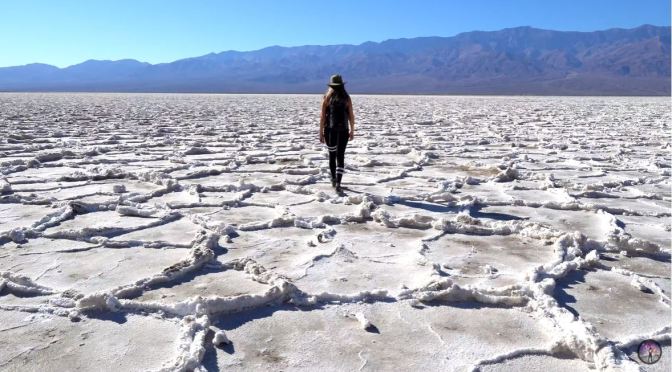
Death Valley is a favorite National Park to visit during the late fall and winter months. During this trip I hike a trail I’ve never hiked before. The Darwin Falls trail which takes me through a canyon into a desert oasis with a waterfall that flows year round. I also visit Badwater Basin and head to Mesquite Dunes to catch the sunset. But first I show you my free camp within the park boundary in the middle of a Joshua Tree Forest where I had the place to myself.
OraSure Technologies has blazed a trail in at-home diagnostic tests. Now, the Pennsylvania-based biotech company is working to produce a quick, over-the-counter coronavirus test that consumers can take in the privacy of their home with results available in minutes. NPR’s Allison Aubrey reports.
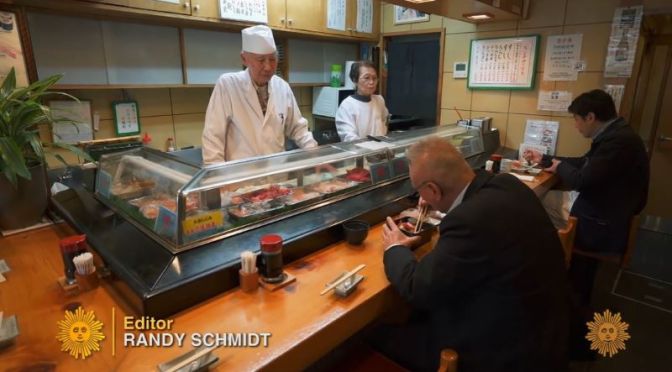
Even before coronavirus, soaring fish prices and competition from big chains had wiped out more than half of Japan’s traditional sushi restaurants. With most owners at or near retirement, the pandemic is accelerating the demise of neighborhood sushi. Correspondent Lucy Craft looks at how fast-food sushi is remaking a dining tradition.
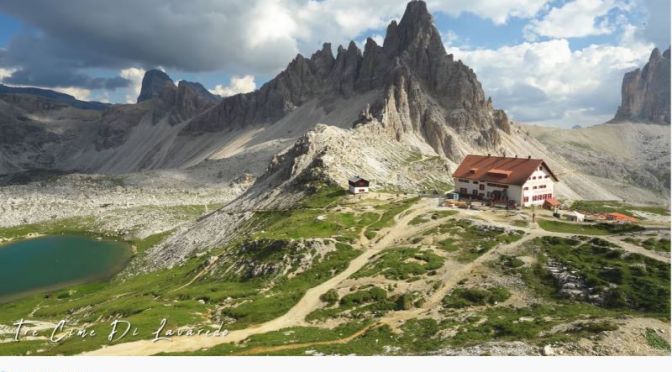
The Dolomites are a mountain range located in northeastern Italy. They form part of the Southern Limestone Alps and extend from the River Adige in the west to the Piave Valley in the east. The northern and southern borders are defined by the Puster Valley and the Sugana Valley.
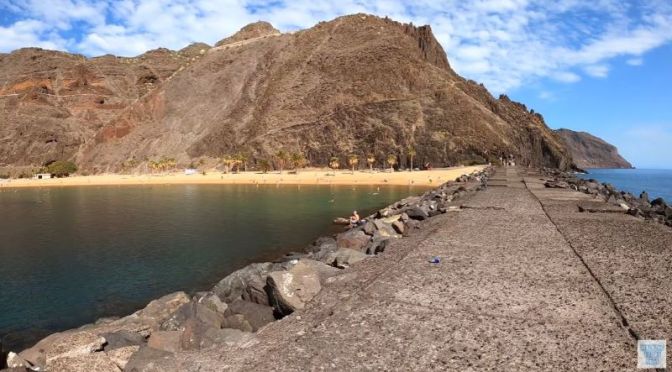
The Playa de Las Teresitas is an artificial, white sand, tourist beach located north of the village of San Andrés, Santa Cruz de Tenerife in Tenerife, Spain.
Tenerife is the largest of Spain’s Canary Islands, off West Africa. It’s dominated by Mt. Teide, a dormant volcano that is Spain’s tallest peak. Tenerife may be best known for its Carnaval de Santa Cruz, a huge pre-Lent festival with parades, music, dancing and colorful costumes. The island has many beaches (with sands from yellow to black) and resort areas, including Los Cristianos and Playa de las Américas.
This is – Scotland cinematic travel video, tourism documentary film, drone 4k. Top 6 Scottish Castles.
Scotland’s turbulent history made its lairds and kings alike seek safety in the stone walls of impregnable fortresses. Today, its castles are one of its top attractions; more than five hundred remain, though it’s estimated there may originally have been more than 2,000. They vary in character from ruins in the rocky wilderness, to well-appointed stately homes, and from extensive royal palaces to small tower houses.
Edinburgh Castle benefits from a magnificent situation, atop an extinct volcano overlooking the Scottish lowlands and the Firth of Forth. Its attractions include the delightful St Margaret’s Chapel, Edinburgh’s oldest building, as well as the Honours of Scotland (the Scottish crown jewels), and the famous ancient siege gun Mons Meg. If you visit, make sure you’re there for the firing of the one o’clock gun, intended as a time signal for ships in the firth.
Stirling Castle was the chief residence of the Stewart kings. It was defensive, on a hill surrounded by steep cliffs on three sides, but under James IV and James V, it became a Renaissance palace borrowing influences from France and Germany, as well as England. The royal apartments have been recently restored to their original splendor, with fine tapestries and painted ceilings.
Tantallon is very different from either of the royal castles; it’s a semi-ruined fourteenth-century building, on a headland with dramatic plunging sea cliffs. It’s only thirty miles or so from Edinburgh, but it’s a completely different world, particularly when the weather is stormy.
Drumlanrig shows the genteel type of Scottish castle to perfection. Its gentle pink sandstone and Renaissance style give it an elegance few other castles can match, and its interiors are equally splendid. It’s still home to the Duke of Buccleuch and Queensberry, whose art collection includes works by Rembrandt and Leonardo; fortunately, the Duke opens the castle to the public on a regular basis.
Dunrobin is a French style turreted castle and quite a recent building as castles go; it was designed by Sir Charles Barry, the Victorian architect better known for his work on the Houses of Parliament in London. The interior is luxurious, and the extensive gardens are planned on the French style, with parterres set around circular pools and fountains.
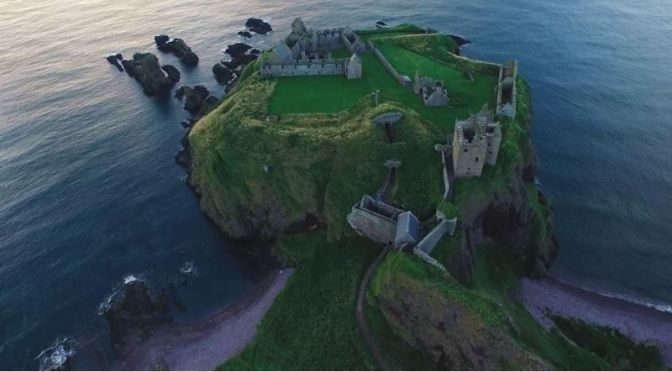
Dunnottar, near Stonehaven, is one of Scotland’s wildest castles. The ruined castle walls surmount a grass-covered rock in the North Sea, linked to the coast only by a thin strip of land. It’s an adventure even getting there.
My main fascination lies within the manipulation of fibres and textiles as an expressive art form. Taking the rural environment as my inspiration,I explore long-term interests of texture, colour, layering and process to create contemplative and ethereal artworks.
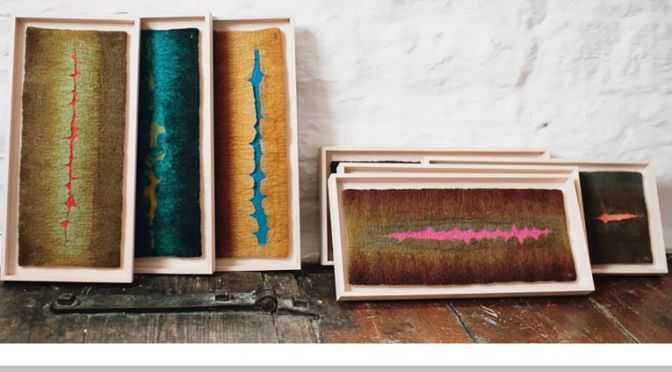
My primary technique is wet felting; a traditional craft technique using wool tops, hot water, soapsuds and friction to interlock the fibres together. The making is muscular and rhythmic as I lay, pour, roll and squeeze again and again. It seems repetition nudges me into a semi-meditative space – it invites me to trust myself, and let the haptic connections sinuously paint a new space for the viewer to contemplate.
The compositions are built in layers, hinting at what may lie beneath, and use translucency and light to create absorbing moods. These are highly textured felt pieces in which cloth is embedded, prints disguised, and threads unravelled as a painter with her brush. The analogy with painting is significant throughout, making the viewing inquisitive, and challenging people’s perception.
Brought up in France and French Polynesia, I originally came to the UK to study textile design and am now a widely exhibited artist working and living in West Yorkshire. In 2015, I was awarded the Embroidery Magazine’s Best Emerging Textile Artist at SIT Select Showcase, as well as Best Picture in Show at theGreat North Art Show.
Monocle’s editor in chief Tyler Brûlé is joined by guests Christoph Lenz, Rob Cox and Chandra Kurt to discuss the weekend’s top stories. Plus: we check in with the newsroom of Iceland’s morgunblaðið newspaper.
News, Views and Reviews For The Intellectually Curious