
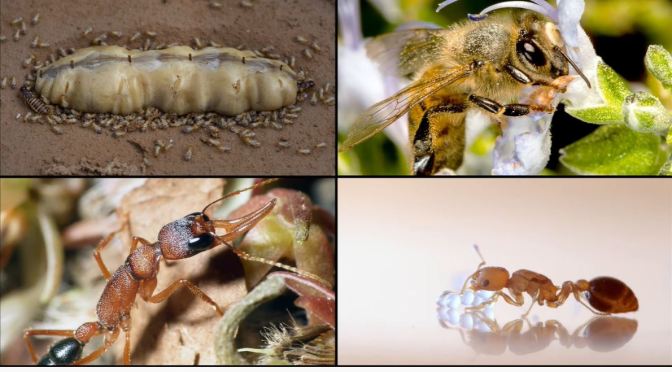
Bees, termites, and ants can teach us a lot about cooperation, communication, and the skills that keep societies together. But these so-called social insects may also hold secrets that could reshape our understanding of human aging. Many social insects exhibit surprising aging characteristics that cause their life spans to shift depending on their roles.
Following the death of a queen Indian jumping ant, for example, workers fight for the right to transform into an egg-laying ant. Much is at stake: the life expectancy of an egg-layer is five times longer than that of a worker’s. Though fruit flies, mice, and nematodes currently dominate aging research, some scientists say social insects’ aging behaviors could help dissect aging mechanisms in humans. This video will take you deep into the catacombs—er, honeycombs—of insect aging.
Read the story ($): https://scim.ag/3cFO0k0
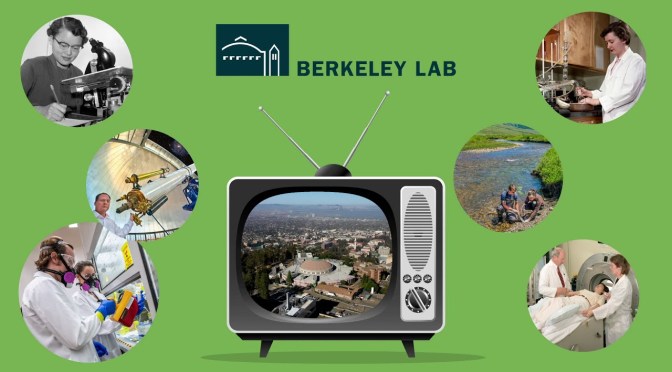
The Lawrence Lab? The Berkeley Lab? Lawrence Livermore Berkeley Lab? Luther Burbank Laboratory? Berkeley Countrywide Laboratory? Nope. Not quite. We’re Lawrence Berkeley National Laboratory, or Berkeley Lab for short. But we do understand the confusion — it’s hard to remember names, especially when so many sound alike! So we jammed 90 years of history into less than 3 minutes to help you get it right.
The Lawrence Berkeley National Laboratory, commonly referred to as Berkeley Lab, is a United States national laboratory that conducts scientific research on behalf of the Department of Energy. Located in the hills of Berkeley, California, the lab overlooks the campus of the University of California, Berkeley.
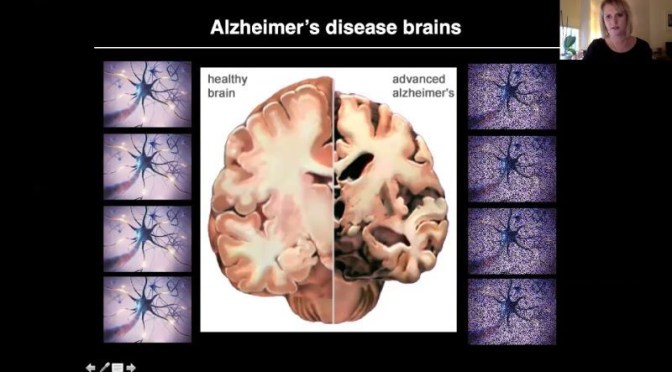
The first event in our Lab Notes online series features two researchers from our South Coast Network Centre talking about early brain changes in Alzheimer’s. Dr Karen Marshall shares her work studying how waste disposal and recycling systems in nerve cells cause damage in Alzheimer’s disease, and whether there could be ways to rescue cells from this. Dr Mariana Vargas-Caballero speaks about her research into brain cell connections and how they are affected in Alzheimer’s. The event is chaired by Dr Katy Stubbs from Alzheimer’s Research UK, and also features a Q&A session.
The pandemic’s unequal toll on the research community, and a newly discovered mitochondria-like symbiosis.
In this episode:
00:48 The pandemic’s unequal toll on researchers
Although 2020 saw a huge uptick in the numbers of research papers submitted, these increases were not evenly distributed among male and female scientists. We look at how this could widen existing disparities in science, and damage future career prospects.
Editorial: COVID is amplifying the inadequacy of research-evaluation processes
09:18 Research Highlights
How a parasite can make viral infections more deadly, and the first known space hurricane.
Research Highlight: Intestinal worms throw open the door to dangerous viruses
Research Highlight: The first known space hurricane pours electron ‘rain’
11:36 Energy without oxygen
Millions of years ago, a microscopic protist swallowed a bacterium and gained the ability to breathe nitrate. This relationship partially replaced the cell’s mitochondria and allowed it to produce abundant energy without oxygen. This week, researchers describe how this newly discovered symbiosis works.
Research Article: Graf et al.
News and Views: A microbial marriage reminiscent of mitochondrial evolution
19:22 Briefing Chat
We discuss some highlights from the Nature Briefing. This time, the weakening of the Gulf Stream, and a new satellite to monitor deforestation in the Amazon.
The Guardian: Atlantic Ocean circulation at weakest in a millennium, say scientists
Science: Brazil’s first homemade satellite will put an extra eye on dwindling Amazon forests
 Intellicurious