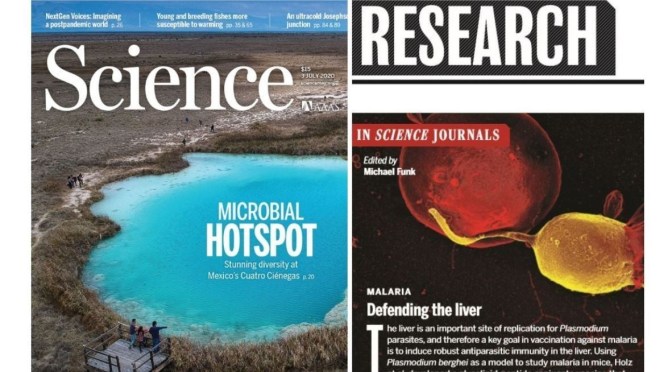

 First up this week, News Intern Rodrigo Pérez-Ortega talks with host Meagan Cantwell about an oasis of biodiversity in the striking blue pools of Cuatro Ciénegas, a basin in northern Mexico. Researchers have published dozens of papers exploring the unique microorganisms that thrive in this area, while at the same time fighting large agricultural industries draining the precious water from the pools.
David Tatnell, a postgraduate researcher at the University of Exeter, talks with host Sarah Crespi about using heat to make sound, a phenomenon known as thermoacoustics. Just like the sound of fire or thunder, sudden changes in temperature can create sound waves. In his team’s paper in Science Advances, Tatnell and colleagues describe a thermoacoustic speaker that uses thin, heated films to make sound. This approach cuts out the crosstalk seen in mechanical speakers and allows for extreme miniaturization of sound production. In the ultrasound range, arrays of thermoacoustic speakers could improve acoustic levitation and ultrasound imaging. In the hearing range, the speakers could be made extremely small, flexible, and even transparent.
 Elderly people in nursing homes make up 45% of COVID-19 related deaths in the US. Nursing home alternatives have been on the rise for the last decade, but the pandemic has made alternatives more urgent.
Guests: Axios’ Kim Hart, Dave Lawler and Mike Allen
 On this week’s podcast, how the molecular structure of tooth enamel may impact decay, adhesive patches to heal heart attacks, and a mysterious planetary core from a half-formed gas giant.
In this episode:
00:46 Unravelling tooth enamel
Researchers have been looking into the structure and composition of enamel in an effort to better understand tooth decay. Research Article: DeRocher et al.
07:02 Research Highlights
An adhesive patch to help heal heart-attacks, and a new technique to inspect the structure of 2D ‘wonder materials’. Research Highlight: A healing patch holds tight to a beating heart; Research Highlight: A snapshot shows off super-material only two atoms thick
09:21 Unusual planet
In the region close to stars known as the ‘hot Neptune desert’ planets of Neptune’s size are rarely found, but this week scientists have uncovered one and are trying to untangle its mysteries. Research Article: Armstrong et al.
14:52 Briefing Chat
We take a look at some highlights from the Nature Briefing. This time we talk about the pitfalls of using CRISPR in human embryos, and renaming of moon craters inadvertently named after Nazi scientists. Nature News: CRISPR gene editing in human embryos wreaks chromosomal mayhem; Prospect Magazine: Astronomers unknowingly dedicated moon craters to Nazis. Will the next historical reckoning be at cosmic level?
The first stimulus package was a lifeline for millions of Americans. The beginning of July means we’ve got just a few more weeks before all those benefits expire. Unlike when the first bill passed in March, Congress is divided on whether people need another stimulus.
Guests: Axios’ Dion Rabouin, Mike Allen, and Amy Harder.
NPR’s Tamara Keith and Errin Haines of The 19th join Judy Woodruff to discuss the latest political news, including the implications of the racist video President Trump recently shared, the U.S. debate over wearing masks and what it says about politicization of the pandemic and how Trump’s coronavirus response could shape his support among voters.
 The coronavirus pandemic has accelerated our cashless society and deepened the divide between those who depend on it and those who now live mostly without it.
Guests: Axios’ Jennifer Kingson, Mike Allen and Kendall Baker.
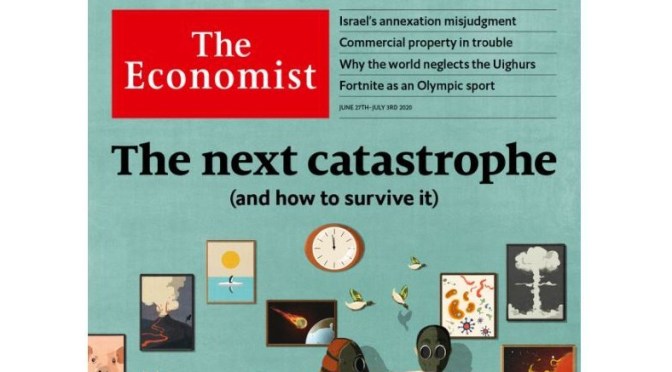
 A selection of three essential articles read aloud from the latest issue of The Economist. This week, the next catastrophe and how to survive it; (9:40) the risks of annexation for Israel; (21:50) and the Wirecard scandal.
Syndicated columnist Mark Shields and New York Times columnist David Brooks join Judy Woodruff to discuss the week in politics, including new polls on the 2020 presidential race and President Trump’s job performance, the federal response to a surging coronavirus pandemic, the administration’s effort to strike down the Affordable Care Act, congressional divergence on police reform and whether Washington, D.C., will become a state.
 We take a look back over the past six months of the pandemic, and discuss how far the world has come. It’s been a period of turmoil and science has faced an unprecedented challenge. What lessons can be learned from the epidemic so far to continue the fight in the months to come?
Also in this episode:
12:55 Unanswered questions
After months of intensive research, much is known about the new coronavirus – but many important questions remain unanswered. We look at the knowledge gaps researchers are trying to fill.
Nature Medicine: Real-time tracking of self-reported symptoms to predict potential COVID-19
20:36 How has lockdown affected fieldwork?
The inability to travel during lockdown has seriously hampered many researchers’ ability to gather fieldwork data. We hear from three whose work has been affected, and what this means for their projects.



 Intellicurious