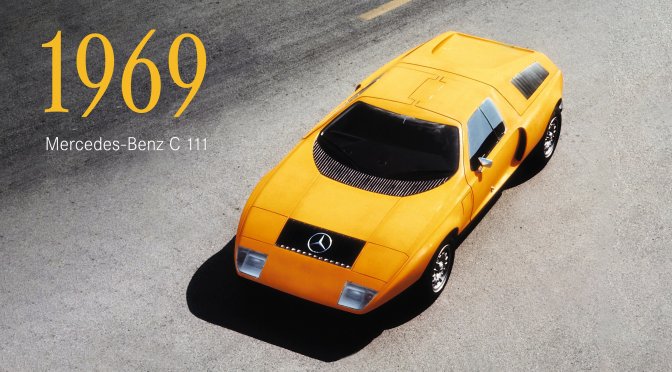
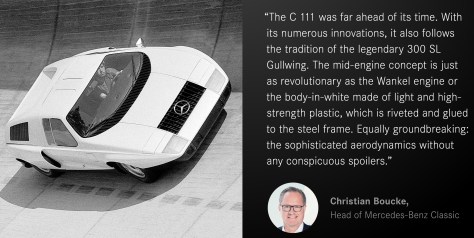
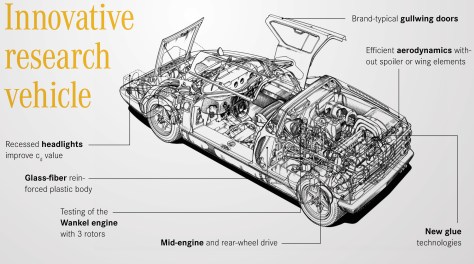
To read more: https://www.mercedes-benz.com/en/classic/history/c-111/?shortener=true

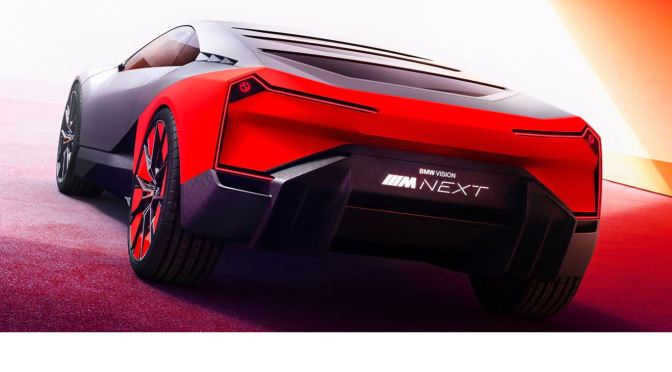
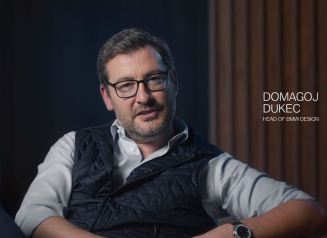 ‘we believe in the power of choice,’ begins domagoj dukec. as cars embrace new technologies such as autonomous systems, BMW and their designers are ensuring customers are still offered their own ultimate driving experience. in fact, they are actually integrating technology into the background of their designs, from the powertrains to the adaptable furniture and interior fabrics, creating mobility spaces that adapt to your needs. the innovations are there to help and enhance the experience but are free to the user to choose when, where and how it affects their journey. this power of choice is exemplified by BMW‘s two driving modes and vision cars: EASE and BOOST, and the Vision iNEXT and Vision M NEXT.

From a DesignBoom online article:
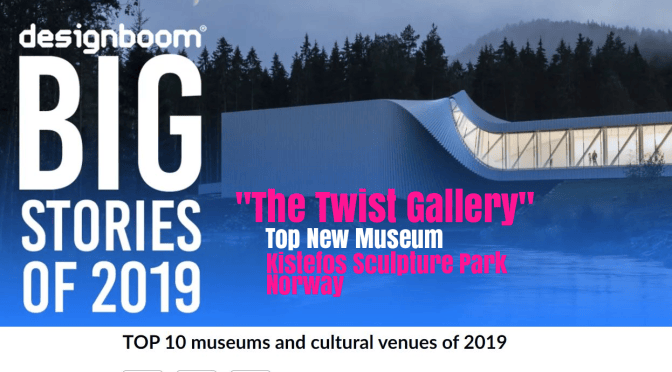
spanning the winding randselva river, a unique new building connects two forested riverbanks at kistefos — northern europe’s largest sculpture park. part museum, part bridge, and part sculpture, ‘the twist’ has been designed by bjarke ingels group (BIG) and represents the firm’s first project in norway. dramatically torqued at its center, the structure not only allows visitors to cross from one riverbank to the other, but is also capable of hosting an international program of contemporary art exhibitions.
To read more: https://www.designboom.com/architecture/twist-bjarke-ingels-group-kistefos-sculpture-park-norway-museum-09-18-2019/
From the Cube Haus Architects website:
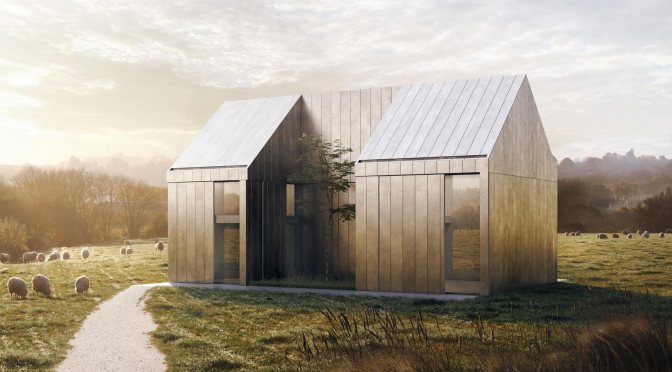
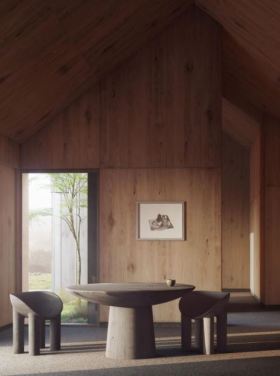 Most notable is Toogood’s sensitive approach to materials. She offers two different, equally alluring solutions to the exterior cladding and the internal finishes. Both external cladding options, raw galvanised steel and dark charred timber, are suggestive of industrial or agricultural structures, making it something of a thrill to see them in a domestic setting. The building clad in raw galvanised steel will have a refined, cream-coloured interior, whilst the structure clad in dark charred timber will have an exposed plywood interior finish.
Faye Toogood’s beguiling design for Cube Haus Commissions proposes a sanctuary that suits both rural and urban contexts. With a simple pitched-roof, single-storey form, it evokes the sort of ordinary, often-ignored buildings that have been built across Britain for centuries. But this being the work of Toogood, a revered designer across multiple disciplines, the scheme that she has created is far from being artless.
From an Apollo Magazine article:
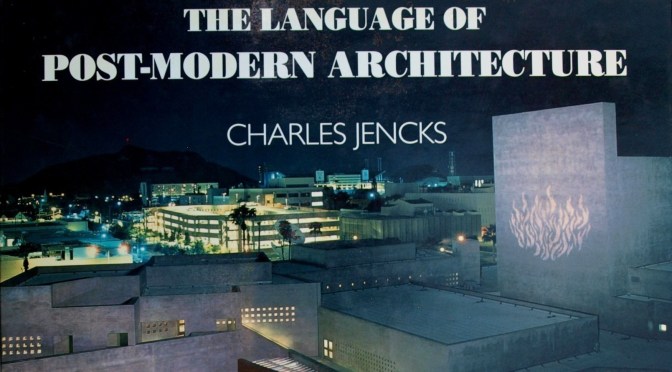
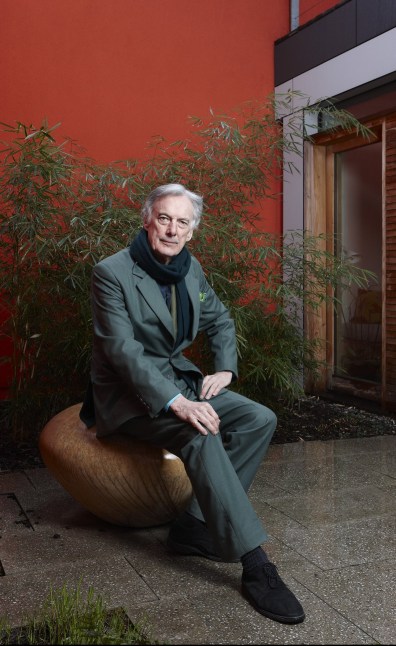 Jencks’s book grew out of his PhD thesis, supervised by Reyner Banham at the University of London in the late 1960s, and paved the way for his later, more explicitly polemical The Language of Post-Modern Architecture (1977). In this bestselling book, Jencks set out his stall for a pluralist architecture that rejected what he saw as modernism’s reductive ‘univalent’ approach, swapping it for a symbolically rich and historically engaged ‘multivalent’ postmodernism. For good or bad it became the defining book of its era, an unabashed rejection of mainstream modernism that ushered in a new architectural style.
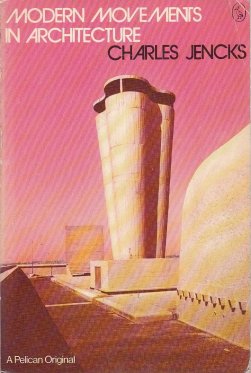 Modern Movements in Architecture (1973) by Charles Jencks was one of the first books on architecture I read, a birthday present given to me the summer before I started my degree. In some ways, it spoiled things: I thought all architecture books would be that much fun. Modern Movements in Architecture is a complex and sophisticated history, but it wears its learning lightly. It relates architecture to a wider cultural discourse and it is unafraid to be critical, even of some architects, such as Mies van der Rohe, who were previously considered to be above criticism.
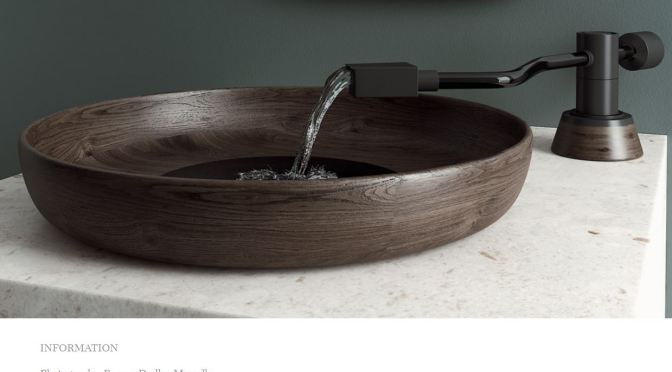
Santuri is a washbasin that pays homage to traditional musical roots.
Designed with cues from the iconic record player it’s a unique piece
aimed at all music lovers.
Its two-tone basin imitates the record players platter together with
its tonearm which in this case is the wash basins custom mixer.
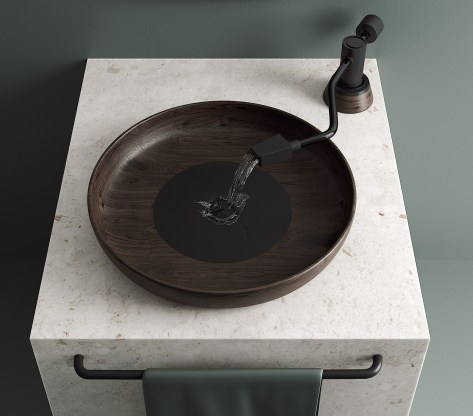
The functionality of the wash basin also borrows cues from how record players had worked. The turning of its tonearm towards the basin allows water to flow through the headshell of the mixer and when the tonearm is moved back into its starting positions stopping the flow of water just as it would work on a record player.
To read more: https://www.behance.net/gallery/79515115/Santuri
From a New Atlas online review:
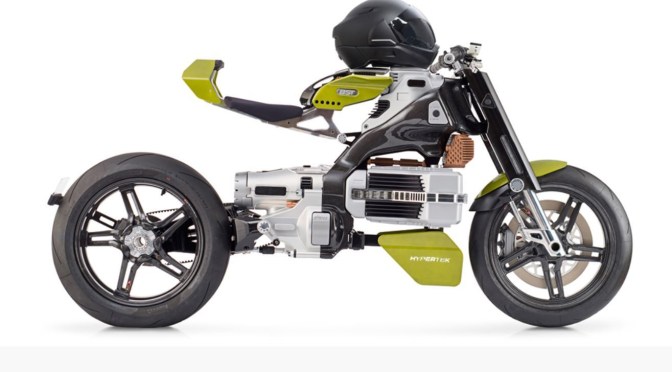
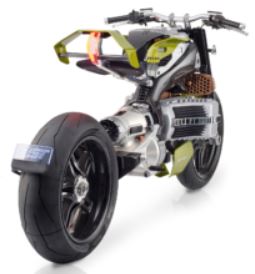 Well, with this extraordinary electric bike, I think I finally understand what Terblanche has been trying to get at all these years, and I absolutely love it. Designed and built in partnership with South African carbon wheel specialists BST, meet the all-electric Hypertek.
There could be no better name for this thing and its unabashed, triumphant futuristicism. Every component and detail seems stripped back, technical, modular, functional. It’s like a Confederate jumped in a teleportation machine without realizing there was already a Dyson vacuum in there.
The Hypertek is built around the reasonably unglamorous DHX Hawk water-cooled PMS electric motor, presumably chosen for its compact size and high torque output of 120 Nm (88.5 lb-ft). BST claims a peak power of 80 kW (107 hp), but we can’t find any motor on the DHX website capable of such peaks – the company’s largest advertised Hawk motor makes 120 Nm but peaks at 55.3 kW (74 hp) and offers a continuous power of 34.5 kW (46.3 hp). So perhaps it’s a custom build.
To read more: https://newatlas.com/motorcycles/bst-hypertek-crazy-electric-motorcycle/
From a Classic Driver online article:
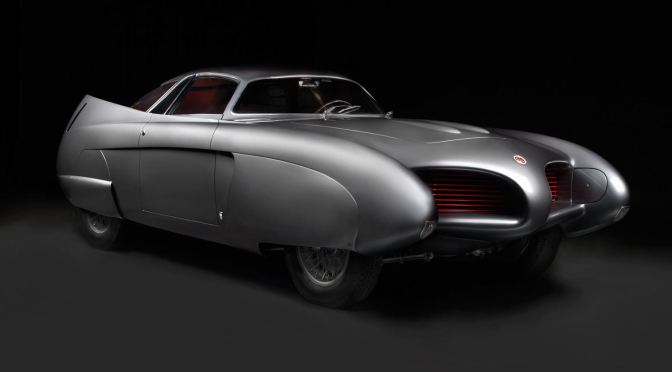
Titled Trinity: B.A.T. 5-7-9 and poised to take place at Phillips Berkeley Square on 20–23 November 2019, the exhibition will highlight B.A.T. 5, 7 and 9s’ visionary aesthetics in addition to their significance in the wider context of 20th-century art, architecture and design.
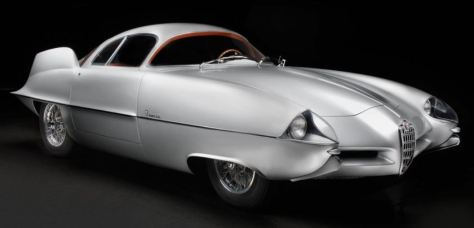
Designed for Bertone by the supremely talented Franco Scaglione in the 1950s, the Alfa Romeo-based Berlinetta Aerodinamica Tecnica concept cars are seminal objects of 20th-century design. Widely known as the B.A.T. cars, the trio of audacious, ultra-aerodynamic and fully functional prototypes pushed the boundaries of automotive design like nothing that had come before and truly embodied avant-garde creativity.
From a Dezeen.com online review article:
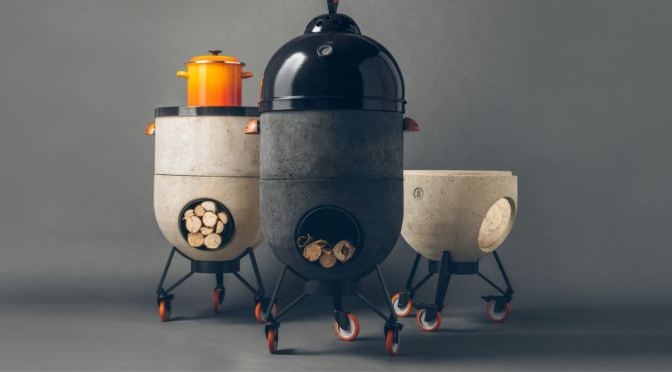
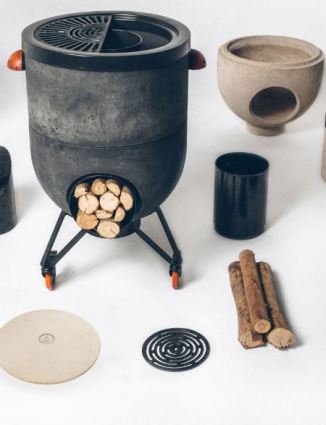 The creators of Noori based the product on the traditional rocket stove design, which burns small-diameter wood fuel in a combustion chamber linked to an insulated vertical chimney.
It was developed by three friends who studied together on the Permaculture Design Course at the IPEMA university in Ubatuba, Brazil. Permaculture focuses on working with, rather than against nature, with the goal of integrating design and ecology.
Brazilian brand Noori aims to transport users to a time when “cooking with fire was at the core of our rituals” with its multipurpose stove, which can be used as a barbecue, a pizza oven or a fire pit.
The Noori stove comprises a curved body made from heat-resistant refractory concrete that is split into two sections. Within the stove an L-shaped enamelled pipe contains the fuel and directs heat up through the centre of the stove towards a grill surface.
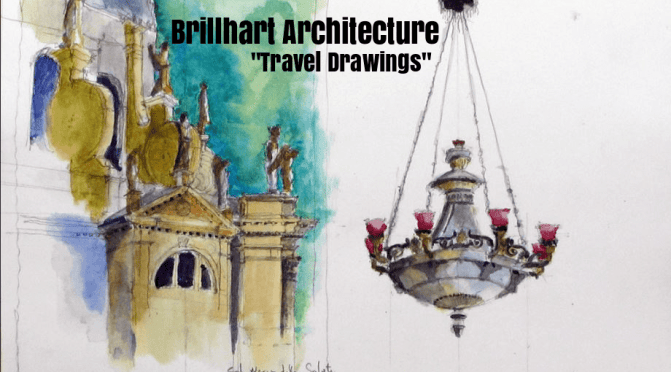
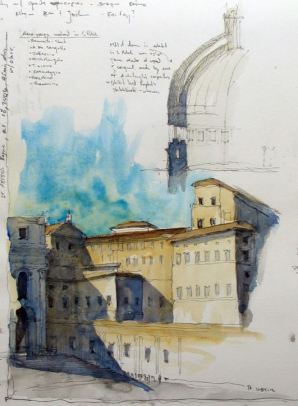 TRAVEL DRAWINGS
The office engages in a hybrid design process that is directed by analog forms of representation and digital production techniques. Each project is explored using a matrix of different media lenses, including painting, hand drawing, physical models and mock-ups as well as cad, hyper-photorealistic renderings and 3D computer models, wherein application and implication are prioritized. We believe this fusing of media provides a larger, more creative palette from which to work. Travel drawing also serves as a platform of inspiration and a fundamental aspect of research and development.
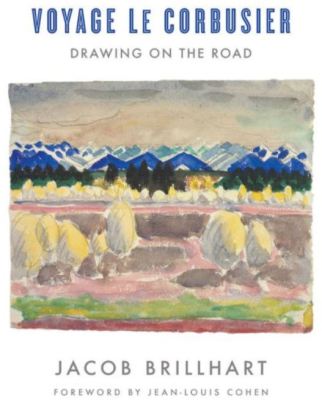 This approach stems from my own formal education and the unique 10-year period in contemporary history in which I studied architecture. Occupying both “paper” and virtual / digital environments, I learned the fundamentals at Tulane University using purely traditional architectural methods of representation. By the time I earned my Masters from Columbia University, the pedagogy had radically changed, wherein the old, analog systems of production were abandoned for a purely paperless studio that solely engaged digital technologies such as Maya, Max and Photoshop. Working within both territories, I learned that each medium has a profound effect on the way in which we draw, design and understand architectural space and form.
Meanwhile, after leaving Columbia, I set out to rediscover the practice of drawing on the road and have since made over 800 paintings, sketches and notes of architectural details, buildings, cityscapes, art and culture. These personal “drawings on the road” have evoked an intensive physical and living architectural investigation of how I process and perceive information. In the authentic and active experience of drawing — of physically recording what we see — I believe we develop a new way of seeing. We bring back sketchbooks that are full of information and analysis as well as a better understanding of architectural persistencies that make what we see matter. This level of engagement furthers the architect’s artistic intuition and enables him or her to see anew.