Tag Archives: Women

New Study: Nearly 50% Of Americans Will Have Obesity By 2030, 25% Severely Obese (NEJM)

From a New England Journal of Medicine online study release:

The findings from our approach suggest with high predictive accuracy that by 2030 nearly 1 in 2 adults will have obesity (48.9%; 95% confidence interval [CI], 47.7 to 50.1), and the prevalence will be higher than 50% in 29 states and not below 35% in any state.

New England Journal of Medicine logo

Nearly 1 in 4 adults is projected to have severe obesity by 2030 (24.2%; 95% CI, 22.9 to 25.5), and the prevalence will be higher than 25% in 25 states. We predict that, nationally, severe obesity is likely to become the most common BMI category among women (27.6%; 95% CI, 26.1 to 29.2), non-Hispanic black adults (31.7%; 95% CI, 29.9 to 33.4), and low-income adults (31.7%; 95% CI, 30.2 to 33.2).
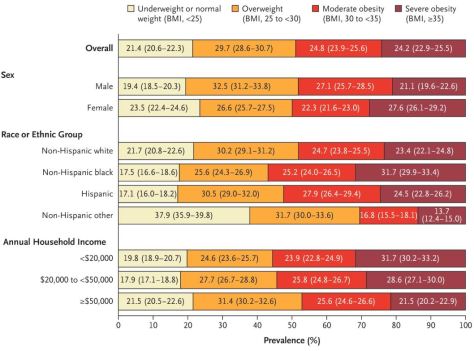
Projected National Prevalence of BMI Categories in 2030, According to Demographic Subgroup. New England Journal of Medicine December 2019

Although severe obesity was once a rare condition, our findings suggest that it will soon be the most common BMI category in the patient populations of many health care providers. Given that health professionals are often poorly prepared to treat obesity,27 this impending burden of severe obesity and associated medical complications has implications for medical practice and education.

In addition to the profound health effects, such as increased rates of chronic disease and negative consequences on life expectancy,25,28 the effect of weight stigma29 may have far-reaching implications for socioeconomic disparities as severe obesity becomes the most common BMI category among low-income adults in nearly every state.

To read more: https://www.nejm.org/doi/full/10.1056/NEJMsa1909301?query=featured_home
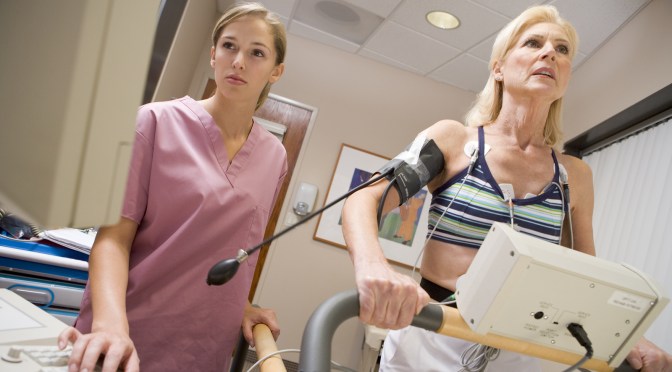
Health Study: Death From Heart Disease Four Times Higher In Women With “Poor Exercise Capacity”

From a European Society of Cardiology online release:

European Society of Cardiology ESCThe annual rate of death from cardiovascular disease was nearly four times higher in women with poor, compared to good, exercise capacity (2.2% versus 0.6%). Annual cancer deaths were doubled in patients with poor, compared to good, exercise capacity (0.9% versus 0.4%). The annual rate of death from other causes was more than four times higher in those with poor, compared to good, exercise capacity (1.4% vs. 0.3%).

Women who can exercise vigorously are at significantly lower risk of dying from heart disease, cancer and other causes. The research is presented today at EuroEcho 2019, a scientific congress of the European Society of Cardiology (ESC).1

During a median follow-up of 4.6 years there were 345 cardiovascular deaths, 164 cancer deaths, and 203 deaths from other causes. After adjusting for factors that could influence the relationship, METs were significantly associated with lower risk of death from cardiovascular disease, cancer, and other causes.

To read more: https://www.escardio.org/The-ESC/Press-Office/Press-releases/Women-exercise-and-longevity

Health Studies: High Levels Of Optimism Can Increase Men’s & Women’s Lifespans By Up To 15%

From a PNAS.org online release:

Optimism Study PNASOur results further suggest that optimism is specifically related to 11 to 15% longer life span, on average, and to greater odds of achieving “exceptional longevity,” that is, living to the age of 85 or beyond. These relations were independent of socioeconomic status, health conditions, depression, social integration, and health behaviors (e.g., smoking, diet, and alcohol use). Overall, findings suggest optimism may be an important psychosocial resource for extending life span in older adults.

Participants with highest versus lowest optimism levels had 1.5 (women) and 1.7 (men) greater odds of surviving to age 85; these relationships were maintained after adjusting for health behaviors. Given work indicating optimism is modifiable, these findings suggest optimism may provide a valuable target to test for strategies to promote longevity.

To read more: https://www.pnas.org/content/early/2019/08/20/1900712116

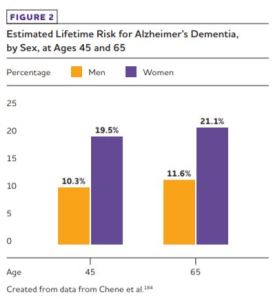
New Health Studies: Alzheimer’s Disease Rates Are Higher For Women Than Men Ages 45 And 65

From and NPR Health News article:

Estimated Lifetime Risk for Alzheimer's Dementia by Sex Ages 45 and 65Scientists are beginning to understand why Alzheimer’s disease affects more women than men and why the disease seems to progress more quickly in women’s brains.
The explanation appears to involve social, biological and genetic differences, researchers reported Tuesday at the Alzheimer’s Association International Conference in Los Angeles.

One study looked at sex differences involving a toxic protein called tau, which tends to spread like an infection through the brains of people with Alzheimer’s.

To read more click on following link: https://www.npr.org/sections/health-shots/2019/07/17/742372403/researchers-search-for-reasons-why-womens-alzheimer-s-risk-is-higher-than-men-s

Figures below are from “2019 Alzheimer’s Disease Facts and Figures Report”:

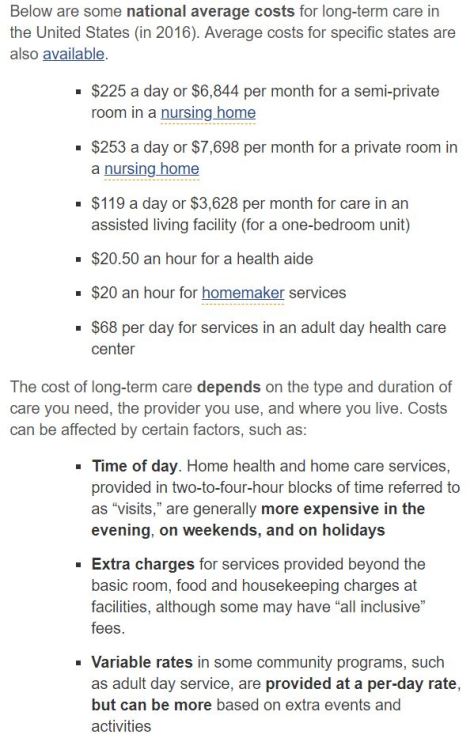
National Costs for Long Term Care

To read full report click on following link: https://www.alz.org/media/Documents/alzheimers-facts-and-figures-2019-r.pdf