

From a Curbed.com online article:
 The fiberglass trailer is cute-as-a-button with a large rear hatch, wide entry door, and classic fender design. Available in a plethora of colors (like Pacific blue, Bishop red, Topanga turquoise, and Mojave sage), the two-tone paint job only adds to the adorableness of the camper, as does a port window on the door. It’s a trailer that makes people stop and do a double take, and a welcome break from the tired swoopy graphics found on most RVs.
The HC1 is easy to tow and weighs only 1,100 pounds dry, meaning it can be towed by most vehicles (but always check your own vehicle’s tow weight). Mounted leveling jacks make setting up camp easy, and our family of two adults and two kids spent more than a few minutes exploring the trailer, ohhing and ahhing over the various components.
To read more click on the following link: https://www.curbed.com/2019/8/14/20805586/rv-camper-travel-trailer-review-happier-camper



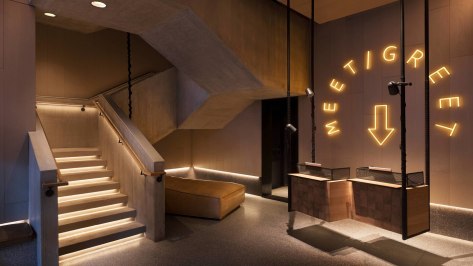
 Guests are able to check themselves in at the Yabu Pushelberg-designed reception behind the flower store – forming part of the Moxy’s stripped-back approach to hospitality. Desks hang down from the ceiling while neon signs flash slogans related to flowers.





 Choosing a landscape for a car is like choosing a wine for a meal. The Country Squire—which, I discovered, handled with all the nimbleness of a riverboat—felt like a natural pairing for the Mississippi River valley south of the Twin Cities. The curves would be gentle, and the views sweeping: high bluffs on one side of the car, water on the other. My family and I would pick up Highway 61 in St. Paul, hopscotching between it and Wisconsin’s fantastically scenic Great River Road, exploring the small waterfront towns along the way. We’d stop for the first night in Red Wing, Minn., and the next in Alma, Wis., 98 miles downriver. The car came with a 150-mile-a-day allowance, and a request that we not venture farther than 100 miles from Minneapolis, should anything happen.








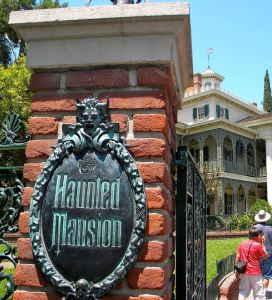 When Disney died in 1966, the mansion was still being planned as a walkthrough experience. As imagineer Rolly Crump



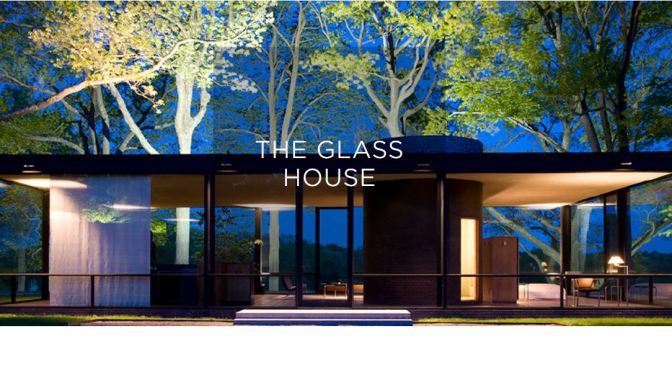
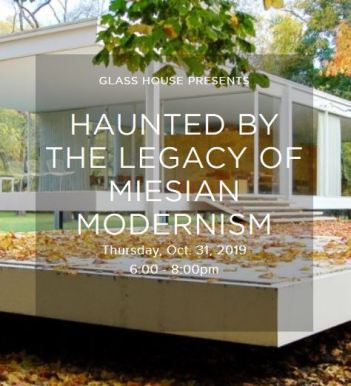 The Glass House, designed by architect Philip Johnson in 1949, when floor-to-ceiling windows were a novelty even in office buildings, is a work of art in itself. But there’s much more art to be found on the lush grounds of this famous home in New Canaan, Connecticut. Amble on over to the Painting Gallery, which houses large-scale works by Frank Stella, Andy Warhol, Robert Rauschenberg, and Cindy Sherman, among others, or the Sculpture Gallery, featuring works by such artists as Michael Heizer, George Segal, Frank Stella, and Bruce Nauman.

